Summary
- It estimated that Punjab loses approximately 5.5 billion cubic metres of groundwater every year, raising concerns about the long-term sustainability of its water resources.
- The report also identified the decline in groundwater recharge sources as another major concern, warning that it has reduced the province’s renewable water resources.
- The FAO identified four major challenges facing the province: increasing water scarcity across different locations and seasons, continuous groundwater depletion, competition among sectors and poorly documented transfers of water between them, and the need to protect renewable water supplies, wetlands and natural landscapes.
Punjab is facing an increasingly serious water crisis, with demand exceeding available supplies across all major sectors, according to a new assessment by the United Nations Food and Agriculture Organisation (FAO).
The report has warned that the province is rapidly depleting its groundwater reserves while surface water resources are also coming under mounting pressure. It estimated that Punjab loses approximately 5.5 billion cubic metres of groundwater every year, raising concerns about the long-term sustainability of its water resources.
The assessment, titled Water and Land Accounting in Punjab, examined the province’s water situation over five water years between 2012 and 2017. It highlighted the urgent need for an integrated strategy to manage water resources and address growing shortages across agricultural, urban and other sectors.
The FAO consulted several water experts during the assessment, including former Water and Power Development Authority chairman Shamsul Mulk and former Indus River System Authority chairman Rao Irshad Ali Khan.
The report recommended establishing a dedicated commission to review Punjab’s water resources, existing policies, institutional responsibilities and management strategies. The proposed body would examine inconsistencies between national and provincial water policies and develop a coordinated approach to managing water-related projects.
It would also assess current and future water requirements, including projected demand up to 2050, identify overlapping responsibilities among government institutions and recommend changes to improve coordination. The report further proposed establishing a coordination cell within the provincial Planning and Development Department to oversee the implementation of water management measures.
According to the assessment, the shortage has become particularly severe in urban areas, where limited access to freshwater and declining groundwater levels have widened the gap between demand and supply.
Agriculture, which remains a major pillar of Punjab’s economy, is also increasingly vulnerable to water shortages. The depletion of underground reserves is threatening agricultural production, while insufficient freshwater supplies are forcing greater dependence on recycled and lower-quality water.
The report also highlighted rising pollution caused by agricultural chemicals and untreated urban wastewater, further affecting the quality of available water resources.
It estimated that Punjab requires an additional 10 billion cubic metres of usable water every year to bridge the existing supply-demand gap and maintain the sustainability of its groundwater aquifer.
To address the situation, the FAO stressed the importance of increasing surface water availability, improving groundwater recharge and developing provincial arrangements for transferring water between seasons.
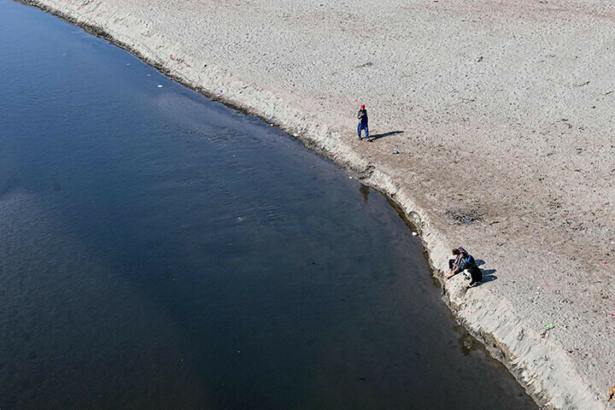
The assessment further pointed out that river flows and freshwater resources have declined considerably over the decades. It estimated that river flows decreased by around 30 billion cubic metres following the 1960 Indus Waters Treaty between Pakistan and India.
Punjab has only 1.7 per cent of its total area covered by wetlands, while its natural landscape has also experienced considerable deterioration. Rainfall remains the primary source of water in areas outside canal command regions and major urban centres.
The report also identified the decline in groundwater recharge sources as another major concern, warning that it has reduced the province’s renewable water resources.
Punjab’s canal irrigation network operates on a run-of-the-river system for approximately half the year, limiting its ability to receive its full authorised share of river water. Reduced drainage flows further indicate a persistent imbalance between water availability and consumption.
The FAO identified four major challenges facing the province: increasing water scarcity across different locations and seasons, continuous groundwater depletion, competition among sectors and poorly documented transfers of water between them, and the need to protect renewable water supplies, wetlands and natural landscapes.
We welcome your contributions! Submit your blogs, opinion pieces, press releases, news story pitches, and news features to opinion@minutemirror.com.pk and minutemirrormail@gmail.com