Summary
- Lahore: A proposed regulatory overhaul by the Punjab government has triggered widespread concern among homeopathic doctors, traditional medicine practitioners and alternative healthcare businesses, with industry representatives warning that thousands of clinics, pharmacies and dispensaries could face closure if the new rules are implemented in their current form.
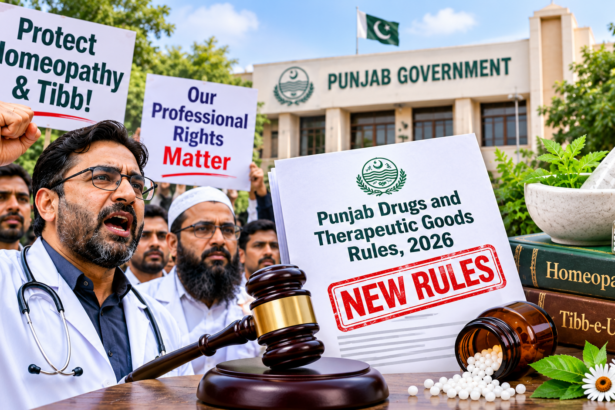
- The proposed Punjab Drugs and Therapeutic Goods Rules, 2026 have become a major point of controversy after reportedly excluding qualified homeopathic doctors holding DHMS and BHMS degrees, along with certified Tibb practitioners, from serving as qualified persons at homeopathic and herbal medicine stores and distributors operating under Form-12.
- PAAM has announced its intention to challenge the proposed regulatory framework through legal channels and resist provisions it considers discriminatory towards alternative medicine professionals.
Lahore: A proposed regulatory overhaul by the Punjab government has triggered widespread concern among homeopathic doctors, traditional medicine practitioners and alternative healthcare businesses, with industry representatives warning that thousands of clinics, pharmacies and dispensaries could face closure if the new rules are implemented in their current form.
The proposed Punjab Drugs and Therapeutic Goods Rules, 2026 have become a major point of controversy after reportedly excluding qualified homeopathic doctors holding DHMS and BHMS degrees, along with certified Tibb practitioners, from serving as qualified persons at homeopathic and herbal medicine stores and distributors operating under Form-12.
Under the proposed framework, an allopathic pharmacist registered under Register-A would be required to supervise these alternative medicine outlets. The move has raised questions about the professional rights of practitioners who have specialised training and experience in homeopathy and Tibb-e-Unani.
Dr Kashif Aslam Malik, chairman of the Pakistan Association of Alternative Medicine (PAAM), strongly criticised the proposed regulations, describing them as a serious threat to the future of alternative medicine in Pakistan.
He questioned the decision to make allopathic pharmacists responsible for alternative medicine businesses, arguing that they may not possess specialised knowledge of homeopathic medicines, including Materia Medica and potencies.
“Our demand is clear: allopathic pharmacists should not be appointed at alternative medicine stores and distributors. Qualified homeopathic doctors and Tibb practitioners must be recognised as the appropriate professionals for these establishments,” Malik said.
He maintained that practitioners with relevant professional qualifications should have the right to use their expertise in managing and supervising businesses dealing with their respective fields of medicine.
Industry sources have warned that implementing the proposed rules without addressing these concerns could create serious difficulties for thousands of small businesses across Punjab. Homeopathic clinics, dispensaries, pharmacies and herbal medicine outlets could potentially lose their operating status if their existing arrangements fail to meet the new requirements.
The proposed provisions concerning Schedule-E and Schedule-C have also become a source of concern. Industry representatives fear that requirements involving specialised facilities, testing procedures and associated costs could place an additional financial burden on small-scale business owners.
PAAM has announced its intention to challenge the proposed regulatory framework through legal channels and resist provisions it considers discriminatory towards alternative medicine professionals.
The controversy has now raised a broader question about professional recognition, regulatory standards and the future of traditional healthcare businesses in Punjab.
With alternative medicine practitioners demanding revisions, attention is turning towards the provincial government and whether it will address the industry’s objections before finalising the rules.
For thousands of practitioners and business owners, the proposed regulations could become a defining test of their professional rights and economic survival.
We welcome your contributions! Submit your blogs, opinion pieces, press releases, news story pitches, and news features to opinion@minutemirror.com.pk and minutemirrormail@gmail.com