Summary
- At the same time, Iranian military officials claimed that Tehran had targeted US military facilities in Jordan, Kuwait and Bahrain during retaliatory operations.
- Iran’s Islamic Revolutionary Guard Corps has meanwhile warned countries supporting US military operations against Tehran.
- US President Donald Trump has also reportedly paused plans for further strikes against Iran after nearly two weeks of military action.
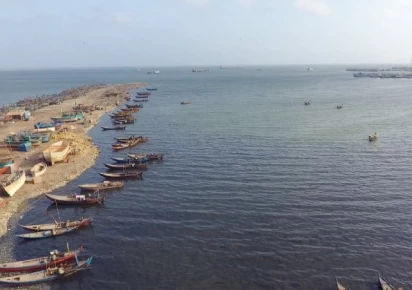
Qatar has fully resumed maritime navigation for all types of vessels after a two-week suspension imposed amid heightened security tensions in the Gulf and around the Strait of Hormuz.
Qatar’s Transport Ministry announced that maritime activities would resume from Sunday. It urged shipping companies, vessel operators and other concerned parties to follow safety regulations and official instructions to ensure safe voyages. The ministry did not provide further details about the reasons behind the decision.
Qatar had suspended maritime navigation on July 12 as regional tensions intensified. It had earlier halted maritime traffic on June 29 before partially restoring operations on July 5. The conflict also prompted several shipping companies to advise vessels to remain outside the Strait of Hormuz because of security concerns.
Meanwhile, Iran said it had made progress in talks with Oman on arrangements for safe shipping through the Strait of Hormuz. Iranian Foreign Ministry spokesman Esmaeil Baqaei said officials from the two countries held discussions in Tehran on Friday and Saturday.
The talks focused on common principles and practical mechanisms for ensuring the safe movement of ships through the strategic waterway. Baqaei described the discussions as productive and said progress had been achieved. He added that technical and political consultations between the two countries would continue.
Iran also said there had been no change in the existing maritime traffic situation in the Strait of Hormuz. The waterway remains a key route for international energy and commercial shipments, making any prolonged disruption a major concern for global trade.
At the same time, Iranian military officials claimed that Tehran had targeted US military facilities in Jordan, Kuwait and Bahrain during retaliatory operations. Brigadier General Mohammad Reza Akraminia said Iran had taken action after accusing Washington of violating previous commitments related to the Strait of Hormuz.
Iranian army spokesman General Abolfazl Shekarchi also claimed that the United States had failed to achieve its objectives against Iran. He described the situation as difficult for Washington and said the US was looking for a new strategy.
Iranian officials further claimed that US military infrastructure in Iraq’s Erbil suffered extensive damage during the conflict. Tehran has warned that its military operations could resume if hostilities escalate again.
The United States, meanwhile, says its naval blockade against Iran remains in effect. US Central Command said American forces had redirected several commercial vessels accused of attempting to breach the blockade. It also reported disabling two vessels and boarding others to verify compliance.
One oil tanker was inspected in the Arabian Sea before continuing its journey, while another vessel was reportedly disabled in the Gulf of Oman after allegedly ignoring repeated warnings. The US actions have added to concerns over the safety of commercial shipping in the region.
Kuwait has rejected reports that it participated in military operations against Iran. Kuwait’s ambassador to the United States said her country had not taken part in attacks against Tehran and had not allowed its territory, airspace or territorial waters to be used for offensive operations.
Kuwait has also condemned attacks against shipping in the Red Sea. Its Foreign Ministry described such attacks as a threat to maritime security, international trade and freedom of navigation. Kuwait expressed solidarity with Saudi Arabia and backed measures taken by Riyadh to protect its security and interests.
The latest Red Sea tensions followed the Houthis’ announcement of a naval blockade targeting Saudi Arabia. Saudi Arabia subsequently launched strikes against Houthi-held areas, while the Houthis later claimed attacks on Saudi oil facilities.
Iran’s Islamic Revolutionary Guard Corps has meanwhile warned countries supporting US military operations against Tehran. An IRGC spokesperson said countries cooperating with Washington could become targets and specifically referred to Britain and Gulf states.
US President Donald Trump has also reportedly paused plans for further strikes against Iran after nearly two weeks of military action. Reports suggested concerns over the availability of US air defence supplies in the region were among the factors behind the decision.
The reported pause could provide additional space for diplomatic efforts, although it remains unclear whether it represents a temporary break or a broader halt to US strikes. US forces are reportedly maintaining contingency plans should major military operations resume.
We welcome your contributions! Submit your blogs, opinion pieces, press releases, news story pitches, and news features to opinion@minutemirror.com.pk and minutemirrormail@gmail.com