Summary
- The ongoing drama, in which Qudsia Ali plays Maham and Abbas Ashraf Awan plays Faris, explores the painful reality of marriages where women find themselves trapped with narcissistic partners.
- She said that many women are deprived of parental love from the very beginning of their lives.
- “Women are deprived of parental love and when they get even a glimpse of love, they lie down and take everything,” she said.
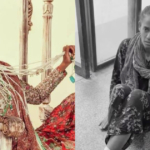
Pakistani dramas have long been a mirror to the society they come from, and Aik Mohabbat Aur is doing exactly that. The ongoing drama, in which Qudsia Ali plays Maham and Abbas Ashraf Awan plays Faris, explores the painful reality of marriages where women find themselves trapped with narcissistic partners. In a candid conversation with Fuchsia Magazine, the two actors stepped out of their fictional roles and spoke plainly about the dynamics they believe are damaging real relationships in Pakistan today.
Abbas Ashraf was direct about where he believes the problem begins, and it is not with men themselves but with how they are raised. He said the narcissistic complex in men is a product of parenting, specifically the way sons are conditioned from childhood to feel superior to everyone around them. Parents, he argued, tell their sons they are the inheritors, the ones who matter, the ones who carry the family forward, while daughters are quietly assigned a lesser place. That imbalance, repeated across generations, plants the seeds of the entitlement and control that later destroys marriages.
His prescription was as straightforward as his diagnosis. “Make both your sons and daughters feel equal if you want to stop your sons from becoming negative narcissists,” he said. It is a simple idea that carries enormous weight precisely because of how rarely it is practised.
Qudsia Ali brought a different but equally sharp perspective to the same conversation, turning her focus toward the women who stay in difficult marriages long past the point of reason. Her explanation was rooted not in weakness but in a specific emotional wound. She said that many women are deprived of parental love from the very beginning of their lives. When they finally encounter even a fragment of affection from a partner, however temporary or conditional it may be, they hold on to it with everything they have because they have never known anything different.
“Women are deprived of parental love and when they get even a glimpse of love, they lie down and take everything,” she said. “They take even a temporary love as they are extremely insecure.” The image is striking and uncomfortably accurate for anyone who has watched a woman accept treatment that from the outside looks impossible to justify.
Qudsia did not offer this observation from a distance. She acknowledged that she herself had carried insecurities of her own, and that she had done the work to understand and overcome them. It was a moment of personal honesty that gave her words additional weight.
Together, their observations form a connected picture of how the same system of unequal parenting produces both the men who expect everything and the women who accept anything. The drama they are appearing in explores exactly this territory on screen. But in this conversation, they chose to name it plainly off screen too, and that directness is what has made their remarks resonate beyond the usual boundaries of a promotional interview.