Summary
- Heat waves are becoming larger more frequent and longer-lasting prompting a Reuters investigation to introduce the term “heat storm” for exceptionally widespread extreme heat events.
- The investigation uses the term “heat storm” for the largest heat waves, which cover at least 1% of the Earth’s surface at their peak — an area roughly half the size of Canada.
- One cascade began on July 6, 2008, and had still not ended at the time of the investigation, meaning the planet had experienced at least one active heat storm continuously for more than 18 years.
- Heat storms rise sharply
- Greenhouse gas emissions linked to growing heat
- Current heat storm affects much of the planet
The investigation analysed hourly global temperature data dating back to 1960 and consulted two dozen climate researchers to examine how extreme heat has changed over the decades. Its findings suggest that events once considered rare are now occurring far more frequently, affecting large areas of the planet.
Reuters defines an ordinary heat wave, for the purposes of its analysis, as five or more consecutive days of unusually high temperatures. The investigation uses the term “heat storm” for the largest heat waves, which cover at least 1% of the Earth’s surface at their peak — an area roughly half the size of Canada.
Heat storms rise sharply
According to the investigation, the world experienced an average of around five active heat storms annually during the 1960s. In the current decade that average has increased to approximately 102 a year highlighting the dramatic change in the scale and frequency of extreme heat.
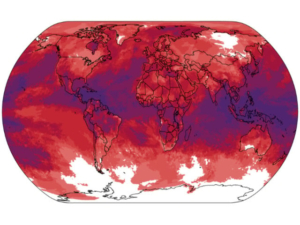
The investigation identified Heat Storm Vera as the largest event on record. It lasted 367 days across 2023 and 2024, at times affecting nearly 85% of the planet. Its impacts included damage to livelihoods, stressed ecosystems and dangerous conditions for people in different regions.
Greenhouse gas emissions linked to growing heat
The findings also point to a close relationship between rising greenhouse gas emissions and the expansion of extreme heat events. Atmospheric carbon dioxide levels have increased by more than 30% since the 1960s, while the average share of the planet likely to be covered by heat waves and heat storms has grown more than twelvefold over the same period.
Researchers also identified a pattern known as “heat storm cascades”, in which multiple heat storms occur consecutively, simultaneously or in overlapping periods. These episodes grew from an average duration of about two months in the 1960s to nine months in the early 2000s.
One cascade began on July 6, 2008, and had still not ended at the time of the investigation, meaning the planet had experienced at least one active heat storm continuously for more than 18 years.
Current heat storm affects much of the planet
Reuters reported that Heat Storm Raimundo began on February 28, 2026 and had affected almost three-quarters of the Earth’s surface. The event was associated with intense European heat and major wildfires in Spain and France during the summer.

The investigation also highlights the importance of communicating climate risks in terms people can relate to. Climate change is often discussed through global temperature targets but widespread heat events offer a more direct illustration of its effects on daily life.
Reuters has introduced an online Heat Storm Tracker as part of its climate coverage to name and monitor these events in real time.
We welcome your contributions! Submit your blogs, opinion pieces, press releases, news story pitches, and news features to opinion@minutemirror.com.pk and minutemirrormail@gmail.com