Summary
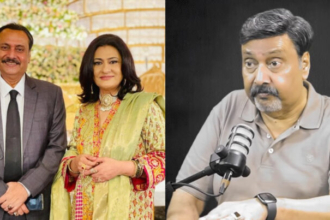
- Renowned Pakistani classical vocalist Riffat Ali Khan has recently offered profound praise for contemporary singer Atif Aslam, declaring that the latter occupies a completely unique space in the music industry that no other artist can ever fill.
- During the podcast, Riffat Ali Khan was asked about the current landscape of South Asian music and the leading vocalists of the era, and without hesitation, he singled out Atif Aslam for special commendation.
- By declaring Atif Aslam as one of a kind, Khan has cemented his legacy as not just a popular star, but as a foundational pillar of modern South Asian music.
Renowned Pakistani classical vocalist Riffat Ali Khan has recently offered profound praise for contemporary singer Atif Aslam, declaring that the latter occupies a completely unique space in the music industry that no other artist can ever fill. Khan, whose career spans decades and who is known for his mastery over live classical singing, qawwali, and ghazals, made these remarks during a podcast appearance, and his words carry immense weight given his own legendary status and deep, technical understanding of musical artistry. Before delving into his comments about Atif Aslam, it is essential to appreciate the stature of Riffat Ali Khan himself. He is a veteran Pakistani classical singer who has delivered numerous timeless hits across various genres, including beloved songs such as “Tu Kuja Man Kuja,” “Chand Se Chehra,” “Kaash Hum Bhi Parhay Likhay Hotay,” “Mola Mola,” “Ishq We Tu,” and “Ranjish Hi Sahi.” Khan is particularly renowned for his powerful command over live classical performances, which require immense technical skill, improvisational ability, and emotional depth. His qawwali rendition of “Tu Kuja Man Kuja” for Coke Studio Pakistan became a cultural phenomenon, amassing over 308 million views on YouTube to date, a staggering testament not only to his vocal prowess but also to his ability to connect with modern audiences while staying firmly rooted in classical traditions. His career serves as a bridge between the old and the new, making his opinions on contemporary artists particularly insightful and valuable.
During the podcast, Riffat Ali Khan was asked about the current landscape of South Asian music and the leading vocalists of the era, and without hesitation, he singled out Atif Aslam for special commendation. Khan observed that Atif has improved tremendously over the years, evolving into a fantastic singer whose artistry has only matured and refined with time. He emphasized that Atif is an example unto himself, a rare artist whose vocal style, phrasing, and emotional delivery are entirely his own and cannot be replicated by anyone else.
Khan then made a striking comparison that has since sparked widespread discussion in music circles. He acknowledged that India also boasts many exceptional singers, including the immensely popular Arijit Singh, whom he admires greatly. However, he drew a clear and deliberate distinction between the two vocalists. According to Khan, while Arijit Singh is a wonderful vocalist and might even sing better than Atif in some purely technical aspects, he is ultimately an extension of Atif Aslam’s stylistic approach. This means that Arijit’s singing methodology, in Khan’s view, follows a trajectory and aesthetic that Atif pioneered and popularized over the years.
The core of Riffat Ali Khan’s argument lies in the concept of originality and inimitability. He stated unequivocally that no one can take Atif Aslam’s place or replace him because his style is absolutely distinct and unprecedented. Unlike Arijit Singh, who can be seen as carrying forward a particular school of contemporary playback singing, Atif Aslam represents a singular, standalone entity. His voice, his unique nasal tonality, his unconventional phrasing, his dramatic pauses, and his overall musical identity are so distinctive that they cannot be cloned, imitated, or substituted by another artist, regardless of how talented that artist might be. Khan’s remarks are not intended to diminish Arijit Singh’s talent; in fact, he praised Arijit profusely and acknowledged his brilliance.
However, he made it crystal clear that imitation and emulation, no matter how well executed, are not the same as being an original force. Atif Aslam, in Khan’s perspective, is an original, a trendsetter rather than a follower, a singer who carved a niche that simply did not exist before him. This is an especially significant compliment coming from a classical purist like Khan, as it acknowledges that contemporary pop and playback singing can also achieve the status of timeless, irreplaceable artistry. His tribute is more than just a celebrity endorsement; it is a seasoned artist’s genuine recognition of true, one-of-a-kind talent. His words remind us that true artistry lies not just in technical perfection or vocal range, but in the ability to create a voice so unique that it cannot be cloned. By declaring Atif Aslam as one of a kind, Khan has cemented his legacy as not just a popular star, but as a foundational pillar of modern South Asian music. For fans and aspiring musicians alike, this validation from a living legend is a powerful reminder that originality and authenticity will always triumph over imitation, and that some artists arrive only once, leaving a mark that no successor can ever truly erase.
We welcome your contributions! Submit your blogs, opinion pieces, press releases, news story pitches, and news features to opinion@minutemirror.com.pk and minutemirrormail@gmail.com