Summary
- Gohar Ijaz has raised serious concerns over Pakistan’s economic direction, warning that growing bank deposits alongside declining industrial activity indicate that capital is moving away from productive sectors.
- 38 trillion,” Ijaz said, arguing that the country needed to encourage investment in manufacturing, exports and employment instead of allowing capital to remain parked in financial institutions.
- The central question, therefore, is whether future economic policies will encourage investment, manufacturing and exports or continue to make bank deposits more attractive than business expansion.
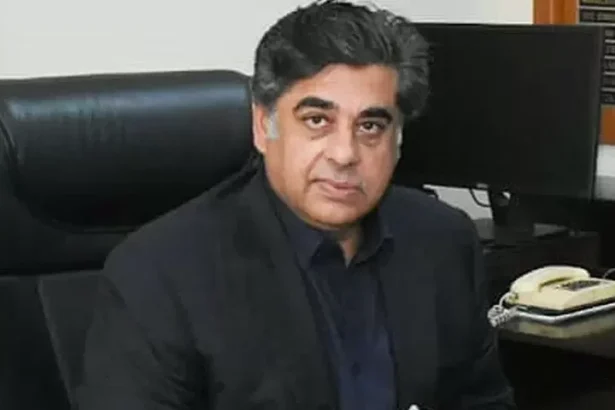
LAHORE: Former caretaker federal minister and prominent industrialist Dr. Gohar Ijaz has raised serious concerns over Pakistan’s economic direction, warning that growing bank deposits alongside declining industrial activity indicate that capital is moving away from productive sectors.
Speaking to *Minute Mirror*, Ijaz said bank deposits had increased from around Rs. 21 trillion three years ago to Rs. 38 trillion, describing the trend as evidence that people were increasingly choosing to keep their money in banks rather than invest in businesses.
He argued that excessive taxation was making industrial activity increasingly difficult. According to Ijaz, an effective tax burden of around 45 percent has discouraged investors and forced several businesses to reduce operations or shut down.
“Three years ago, Rs. 21 trillion was lying in banks. Today, it has increased to Rs. 38 trillion,” Ijaz said, arguing that the country needed to encourage investment in manufacturing, exports and employment instead of allowing capital to remain parked in financial institutions.
He also claimed that Pakistan could address a significant portion of its external debt if the textile industry received appropriate policy support. Ijaz said the All Pakistan Textile Mills Association (APTMA) had been offering for years to help generate enough foreign exchange for Pakistan to repay $10 billion in debt within one year.
According to him, the proposal would require measures such as competitive energy prices, rational taxation, export incentives and a stable policy environment. He maintained that Pakistan’s industrial sector had the capacity to significantly strengthen the country’s foreign exchange position if its competitiveness was restored.
Ijaz also criticised what he described as policy distortions in the sugar sector. He alleged that sugar mill-owning families had benefited from additional profits of approximately Rs. 30 billion per month due to pricing mechanisms, subsidies and regulatory decisions.
He did not present documentary evidence for the figure during the interview but argued that government policies should prioritize consumers, industrial growth and the national economy rather than benefiting a limited number of influential groups.
The former minister further commented on the current political and civil-military leadership, saying the Army and Prime Minister were receiving unprecedented recognition. He expressed optimism that stronger economic policies could enable Pakistan to overcome its financial challenges.
Economists and business leaders have similarly pointed to high interest rates, expensive energy, inflation, taxation and policy uncertainty as major factors behind weak private investment. When bank returns appear more attractive and less risky than establishing or expanding businesses, capital can increasingly shift toward financial assets.
Industry leaders have therefore called for lower and more predictable taxes, competitive electricity and gas tariffs, faster refunds, fewer ad-hoc duties and incentives for export-oriented manufacturing.
Ijaz’s remarks highlight a broader challenge facing Pakistan: having substantial liquidity does not necessarily translate into economic productivity. For the country to generate employment, increase exports and strengthen its ability to repay external debt, more capital needs to flow into productive businesses.
The central question, therefore, is whether future economic policies will encourage investment, manufacturing and exports or continue to make bank deposits more attractive than business expansion.
We welcome your contributions! Submit your blogs, opinion pieces, press releases, news story pitches, and news features to opinion@minutemirror.com.pk and minutemirrormail@gmail.com