Summary
- Its membership of the SCO offers opportunities for regional trade, investment, energy cooperation and diplomatic engagement.
- The government should, therefore, establish three publicly measurable priorities before the Islamabad summit: reducing border clearance delays, improving smaller exporters’ access to regional trade finance, and creating operational partnerships among universities, businesses and relevant public institutions.
- The real test will be whether businesses can trade more efficiently, young people can access new opportunities and regional cooperation improves livelihoods.
By Muhammad Zaman
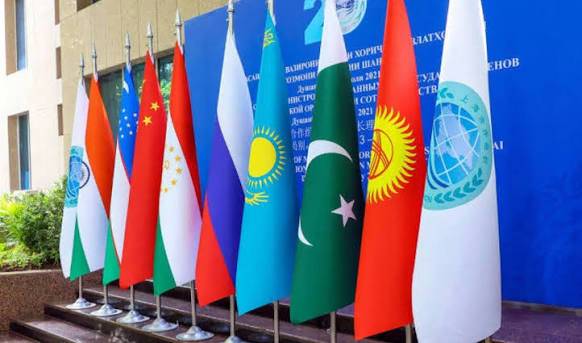
Islamabad is preparing to host the Shanghai Cooperation Organisation (SCO) summit in 2027. The government will invest considerable diplomatic and administrative effort in welcoming regional leaders, strengthening security arrangements and preparing the capital for an international gathering. Yet a fundamental question remains unanswered: will Pakistan’s SCO presidency improve the economic prospects of its citizens or will it become another celebration of diplomatic visibility without meaningful domestic transformation?
Pakistan has legitimate reasons for optimism. Its location connects South Asia with China, Central Asia and the Arabian Sea. Its membership of the SCO offers opportunities for regional trade, investment, energy cooperation and diplomatic engagement. However, geography does not guarantee prosperity. Countries become regional economic hubs through institutional efficiency, productive capabilities and predictable commercial arrangements, not simply through their position on a map.
Pakistan’s 2026-27 SCO presidency presents an opportunity to confront this distinction. The government’s emphasis on connectivity, innovation and shared prosperity reflects worthwhile ambitions. But these objectives require more than summit declarations. They demand measurable institutional reforms and a clear understanding of who benefits from regional integration.
Consider the contradiction between Pakistan’s infrastructure ambitions and its commercial realities. The country continues to invest in transport corridors while exporters confront customs delays, administrative uncertainty and unpredictable border arrangements. Research by the Pakistan Institute of Development Economics identifies significant inefficiencies in cross border trade procedures. These barriers weaken Pakistan’s competitiveness and discourage businesses from treating its territory as a dependable regional transit route.
A highway cannot function as an economic corridor when goods remain stranded at border crossings. Nor can diplomatic agreements generate trade when businesses lack reliable payment mechanism, affordable financing and access to commercial information. Connectivity requires institutions that work together, not merely infrastructure that connects geographical locations.
Afghanistan further complicates Pakistan’s regional ambitions. Its territory provides important overland connections with Central Asia, but border closures, political tensions and security concerns repeatedly disrupt commercial movement. Pakistan cannot build a dependable transit economy on uncertain border arrangements. Sustained diplomatic engagement, predictable customs procedures and commercially viable alternative routes must therefore accompany its regional connectivity agenda.
Yet the deeper problem concerns the unequal distribution of economic opportunities. Large corporations generally possess the financial resources, logistics networks and administrative expertise necessary to navigate complex trade arrangements. Small exporters often lack these advantages. They face difficulties obtaining trade finance, understanding regulatory requirements and establishing commercial relationships across borders.
Consequently, regional integration can reinforce existing economic inequalities unless governments deliberately broaden participation. Pakistan should evaluate and encourage SCO cooperation not merely through aggregate trade or investment commitments, but through the opportunities available to smaller enterprises, agricultural producers, workers and communities situated outside established commercial centres.
A recent development offers a practical opening. Pakistan assumed the chairmanship of the SCO Interbank Consortium for 2026-27 in November. This responsibility provides an opportunity to promote financial cooperation among participating institutions. Rather than treating the chairmanship as another diplomatic distinction, Pakistan should explore mechanism that improve access to trade finance, particularly for small and medium sized exporters.
Existing banks could develop information sharing arrangements, strengthen trade finance services and examine financial instruments that reduce commercial risks. Such initiatives would require agreement among participating institutions and appropriate regulatory safeguards. Nevertheless, they would connect regional financial cooperation with identifiable domestic economic needs.
Pakistan must also recognise the SCO’s political limitations. China, Russia, India and the Central Asian states pursue different strategic and economic interests. The organisation’s consensus-based structure facilitates dialogue but restricts collective action when members disagree. It cannot independently resolve Pakistan’s disputes with India or eliminate instability along the Afghan border.
However, these limitations should not prevent cooperation where interests converge. Pakistan’s planned participation in the SCO Civilisational Dialogue in New Delhi this November illustrates the diplomatic space that multilateral institutions can preserve despite bilateral tensions. Climate adaptation, disaster management, public health and academic exchanges offer practical opportunities for engagement without requiring immediate agreement on longstanding political disputes.
The social dimension deserves equal attention. Pakistan’s leadership of the SCO Special Working Group on Poverty Alleviation provides an institutional platform to connect regional cooperation with everyday development challenges. Member states could exchange experience in social protection, employment generation, digital public services and local economic development.
Such cooperation would broaden the meaning of regional security. Terrorism and border instability remain serious concerns, but unemployment, economic exclusion and environmental vulnerability also threaten social stability. Regional integration should strengthen the productive and social capacities of participating societies rather than concentrate exclusively on state security and large-scale commercial interests.
Pakistan’s greatest obstacle, however, lies within its own institutions. Ministries negotiate agreements while customs authorities, financial regulators, transport agencies and provincial administrations determine whether those commitments produce results. Fragmented responsibilities and weak coordination frequently undermine implementation.
The government should, therefore, establish three publicly measurable priorities before the Islamabad summit: reducing border clearance delays, improving smaller exporters’ access to regional trade finance, and creating operational partnerships among universities, businesses and relevant public institutions. Each priority should have an accountable institution, a realistic timetable and publicly reported progress.
Pakistan need not establish another expensive bureaucracy to pursue these objectives. Better coordination among existing institutions would provide a more practical starting point. Universities could support research and technical cooperation, chambers of commerce could identify barriers confronting smaller enterprises, and regulatory authorities could monitor progress in trade facilitation.
The 2027 summit will undoubtedly attract diplomatic attention. Yet its significance should extend beyond visiting delegations, official receptions and carefully negotiated declarations. The real test will be whether businesses can trade more efficiently, young people can access new opportunities and regional cooperation improves livelihoods.
Pakistan’s greatest challenge within the SCO is not persuading other members of its strategic importance. It is demonstrating that strategic importance can generate public value. Geography has already secured Pakistan a place at the regional table. Institutional performance must now justify that place.
The writer is Professor of Sociology and Founder of the School of Sociology at Quaid-i-Azam University, Islamabad.
We welcome your contributions! Submit your blogs, opinion pieces, press releases, news story pitches, and news features to opinion@minutemirror.com.pk and minutemirrormail@gmail.com