Summary
- Emergency responders in southwestern Japan are racing against time to locate survivors trapped in rubble following a powerful 7.1-magnitude earthquake that killed at least 13 people in the Kumamoto region of Kyushu island.
- Japanese Prime Minister Sanae Takaichi confirmed the death toll during an official address in Tokyo, while chief cabinet spokesman Minoru Kihara noted that at least seven individuals suffered severe injuries and more than 9,000 residents sought safety across hundreds of emergency evacuation shelters.
- The seismic shock registering at the maximum level on Japan’s intensity scale caused widespread logistical disruption across Kyushu island, derailing a cargo train, suspending high-speed bullet train lines, and causing structural collapses at the historic centuries-old Kumamoto Castle.
Emergency responders in southwestern Japan are racing against time to locate survivors trapped in rubble following a powerful 7.1-magnitude earthquake that killed at least 13 people in the Kumamoto region of Kyushu island.
The powerful tremor, which struck at a shallow depth of ten kilometres, flattened residential homes, triggered severe fires, ruptured critical bridges, and cut electricity to nearly 37,000 households.
Japanese Prime Minister Sanae Takaichi confirmed the death toll during an official address in Tokyo, while chief cabinet spokesman Minoru Kihara noted that at least seven individuals suffered severe injuries and more than 9,000 residents sought safety across hundreds of emergency evacuation shelters.
Search operations remain heavily concentrated in the town of Kashima, where part of the Aeon Mall collapsed after a gas explosion ripped through the structure shortly after the primary quake.
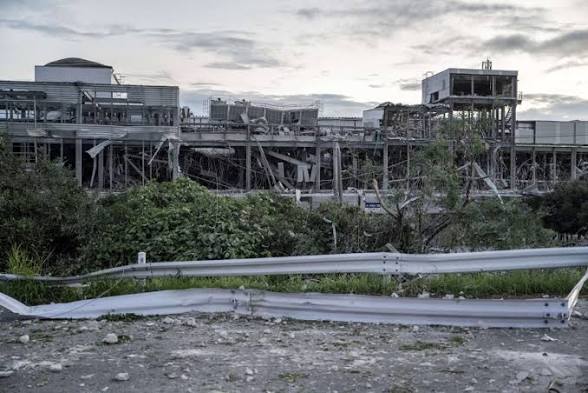
Rescue teams in specialised gear navigated twisted steel girders and fallen concrete inside the shopping centre, where at least two women lost their lives and eight others were pulled from the debris. Meanwhile, in Yatsushiro city, search crews continue to look for nine workers unaccounted for at a Nippon Paper Industries plant after a large smokestack collapsed onto the facility below.
The seismic shock registering at the maximum level on Japan’s intensity scale caused widespread logistical disruption across Kyushu island, derailing a cargo train, suspending high-speed bullet train lines, and causing structural collapses at the historic centuries-old Kumamoto Castle.
In response, the Japanese military has deployed 3,600 personnel alongside 20 reconnaissance aircraft to support disaster relief efforts, clear impassable roads, and assess localised damage in remote communities.
We welcome your contributions! Submit your blogs, opinion pieces, press releases, news story pitches, and news features to opinion@minutemirror.com.pk and minutemirrormail@gmail.com