Summary
- Information Minister Attaullah Tarar on Tuesday accused Pakistan Peoples Party (PPP) Chairman Bilawal Bhutto-Zardari of adopting double standards, saying political leaders could not enjoy government privileges while presenting themselves as opposition figures.
- He maintained that discussions about administrative reforms and the creation of new provinces were legitimate democratic matters that could not be silenced.
- The controversy over new provinces gained momentum on July 30 when Interior Minister Mohsin Naqvi called for the creation of additional administrative units as part of wider governance reforms.
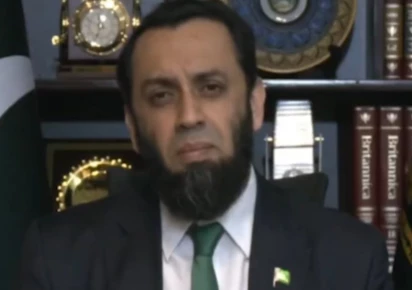
Information Minister Attaullah Tarar on Tuesday accused Pakistan Peoples Party (PPP) Chairman Bilawal Bhutto-Zardari of adopting double standards, saying political leaders could not enjoy government privileges while presenting themselves as opposition figures.
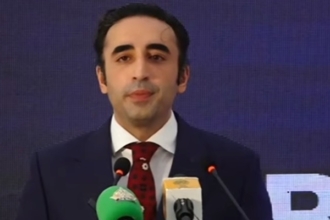
His remarks came in response to Bilawal’s call for a political reset to restore public confidence in state institutions. Bilawal had argued that Pakistan’s political system had not collapsed naturally but had been deliberately weakened.
Reacting to the PPP chairman’s comments, Tarar said the public wanted better governance, improved public services and greater accountability from those in power. He maintained that discussions about administrative reforms and the creation of new provinces were legitimate democratic matters that could not be silenced.
Taking aim at the PPP, the minister questioned how a political party could benefit from government ministries, official protocol and other privileges while simultaneously adopting an opposition stance and claiming the moral high ground.
Tarar said the debate over new provinces had gained momentum across the country and should be allowed to continue both inside and outside parliament. He described it as a democratic and constitutional necessity, arguing that citizens had the right to discuss changes aimed at improving governance.
He further said no political party should fear taking the issue directly to the public. A referendum, he added, was provided for in the Constitution and should not be portrayed as an attempt to bypass democratic procedures.
According to Tarar, the people must have the final say on whether additional provinces are needed. He said that if citizens across Pakistan, including Sindh, supported the creation of new provinces, their wishes should be respected.
The minister also rejected suggestions that the debate could lead to violence, saying he could not understand why discussions about administrative restructuring were being linked to bloodshed. He urged political parties to approach the proposal constructively rather than turning it into a source of confrontation.
Tarar maintained that administrative reforms and better governance should remain shared priorities for all political parties. He also argued that those who had been part of the country’s political system for decades could not distance themselves from its shortcomings.
On accountability, the minister said political considerations should not be used to escape scrutiny under the law. He also questioned criticism directed at the National Accountability Bureau (NAB), pointing out that reforms to the institution had been introduced by political leaders who were now criticising its performance.
The controversy over new provinces gained momentum on July 30 when Interior Minister Mohsin Naqvi called for the creation of additional administrative units as part of wider governance reforms. He argued that restructuring was necessary to improve public service delivery, ensure access to justice and create opportunities for the country’s growing population.
The proposal drew strong opposition from the PPP, which rejected any move to divide Sindh. Chief Minister Murad Ali Shah dismissed claims that the provincial governance system had collapsed and warned against attempts to alter Sindh’s territorial boundaries.
The issue gained further political significance after Muttahida Qaumi Movement-Pakistan (MQM-P) endorsed the creation of new provinces and called for a national dialogue. The party argued that population growth, administrative challenges and the concentration of political authority made greater decentralisation necessary.
The PPP, however, maintained that improving governance and dividing Sindh were two separate matters. Provincial Minister Nasir Hussain Shah expressed willingness to discuss administrative reforms and the devolution of powers but rejected any link between these measures and the creation of a separate province.
On September 3, the Sindh Assembly unanimously passed a resolution opposing any division of the province or changes to its territorial boundaries. The resolution described Sindh as a historic, civilisational and constitutional entity and reaffirmed that it would remain united.
Naqvi subsequently reiterated his support for new provinces, saying the decision should ultimately rest with the public. He called for citizens to be informed about the potential advantages and disadvantages of administrative restructuring before expressing their views.
The debate also raised constitutional questions about holding a referendum. Article 48(6) of the Constitution allows a matter of national importance to be referred to the public through a referendum after approval by a joint sitting of parliament. However, creating a new province would still require the constitutional process, including the necessary parliamentary approvals and consent of the relevant provincial assembly.
PTI Chairman Barrister Gohar Ali Khan had also cautioned against dividing Sindh or any other province without the consent of its people and elected representatives. He called for a dedicated commission and extensive consultations before any decision.
Defence Minister Khawaja Asif likewise stressed the importance of political consensus, acknowledging Sindh’s right to determine its position on the matter. He said any final decision would have to emerge through agreement among political stakeholders.
We welcome your contributions! Submit your blogs, opinion pieces, press releases, news story pitches, and news features to opinion@minutemirror.com.pk and minutemirrormail@gmail.com