Summary
- They walked out on the final day of the debate; meanwhile, the PPP proceeded to pass the resolution against the “division of Sindh.” without taking the opposition into confidence, In doing so, the PPP achieved two objectives with a single move: not only secured the resolution but also succeeded in declaring the province of Sindh indivisible ‘Hallowed land’.
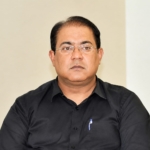
- Opposition Leader and Muttahida Qaumi Movement-Pakistan (MQM-P) lawmaker Ali Khurshidi said that the party was not seeking the division of Sindh but the distribution of powers.
- In Sindh, meanwhile, questions about the performance of the provincial government are at times met with references to the province’s five-thousand-year history, while political debate over the creation of new provinces can become highly charged, including confrontational rhetoric directed at those advocating such proposals.
Last week, the Sindh Assembly passed, by a majority vote, a resolution opposing the division of Sindh. The Pakistan Peoples Party (PPP) maintains that Sindh is our Dharti Maa, and that we will not allow our motherland to be divided. The Muttahida Qaumi Movement-Pakistan (MQM-P), which had been advocating the case for the creation of new administrative units, while playing on front foot. They walked out on the final day of the debate; meanwhile, the PPP proceeded to pass the resolution against the “division of Sindh.” without taking the opposition into confidence, In doing so, the PPP achieved two objectives with a single move: not only secured the resolution but also succeeded in declaring the province of Sindh indivisible ‘Hallowed land’.
It was difficult to miss the impression that one political party was, in an unmistakably authoritarian manner, taking democratic revenge in the name of democracy.
We can, of course, fault the MQM-P for failing to make an unequivocal case for a separate province. Instead, it remained largely on the defensive, seeking to defend its Muhajir identity while repeatedly assuring the PPP of its reverence for Sindh. Yet, given the difficult position in which the MQM-P found itself, I am inclined to give it passing marks. It was not merely required to answer for the serious allegations associated with its past; it was also being put through a test of its loyalty and devotion for Dharti Maa.
For the first time, we saw patriotic Pakistani members of the Sindh Assembly being branded as traitors to Sindh. Meanwhile, PPP lawmakers were loudly issuing themselves certificates of being the “legitimate sons” of Sindh, while supporters of the creation of new provinces, including the MQM-P, were branded “illegitimate” without even being explicitly told so.
Whatever the merits of the arguments, the old saying holds true: no one here has clean hands. Yet, in the MQM-P’s case, its own notoriety ultimately came back to haunt it.
Opposition Leader and Muttahida Qaumi Movement-Pakistan (MQM-P) lawmaker Ali Khurshidi said that the party was not seeking the division of Sindh but the distribution of powers. Clarifying his position, he said that by “division” he meant distribution, not the creation of separate administrative territories. According to him, Sindh’s six existing divisions are already administrative units and should therefore be empowered, while powers should be devolved from the provincial government to the grassroots level in line with the spirit of the 18th Amendment.
Calling poor governance the fundamental issue facing Sindh, Mr Khurshidi said the government should focus on improving governance instead of repeatedly bringing resolutions against the division of the province. He also pointed out that 98 of the 102 members of the Sindh Assembly had voted in favour of the One Unit scheme in the past, arguing that political decisions should be viewed in their proper historical context.
Several other members also put forward compelling arguments. Yet the debate was less a contest of arguments than a confrontation between arguments and sanctity. As a result, the Pakistan Peoples Party (PPP) was under no pressure to offer either arguments or a defence. The slogan, “Sindh is our motherland,” proved sufficient to secure its victory.
From the floor of the House, the PPP appeared more concerned with reassuring its voters, nationalist and separatist pressure groups than listening to the representatives of Karachiites.
On the concluding day of the debate, the Muttahida Qaumi Movement-Pakistan (MQM-P) walked out when a resolution declaring Sindh “indivisible” was tabled. The Next day, the MQM-P sought to move a resolution opposing Sindhudesh, but Sindh Assembly Speaker Syed Owais Qadir Shah did not allow it to be taken up. The MQM-P later submitted the resolution to the Assembly Secretariat.
As the debate entered its fourth day in the Sindh Assembly highlighted a broader concern: that a system which appears democratic on the surface can, in practice, reflect majoritarian politics. Those with greater numbers tend to have greater influence in determining political outcomes. In such a situation, Pakistan’s numerical political minorities — whether Muhajirs, Saraikis or Hazarewals — may feel increasingly politically vulnerable.
The demand for a separate Hazara province has not made significant headway, in part because Khyber Pakhtunkhwa has a clear Pashtun majority and there is little political consensus on the issue. Similarly, the creation of a Saraiki province has remained contentious because of its potential political and administrative implications for Punjab and the interests of the Pakistan Muslim League-Nawaz (PML-N). A separate Saraiki province would also alter the existing political balance within Punjab.
In Sindh, meanwhile, the creation of new provinces remains a sensitive issue, with the argument frequently advanced that Sindh is a historic homeland and therefore holds a special status. Yet this raises a broader question: if Punjab and the other provinces are viewed primarily as administrative and constitutional units, on what basis should Sindh be regarded differently? Sindh, like Punjab and the other provinces, is also a territorial and constitutional unit of Pakistan.
If we look back into the past, under the cover of Cultural Day celebrations, the Pakistan Peoples Party has, since the province received greater autonomy following the 18th Amendment in 2010, allowed nationalist groups, including separatist organisations, to hold rallies and public processions at various locations, often under police protection.
One more prominent example was the “Freedom March” organised by the Jeay Sindh Qaumi Mahaz (JSQM) under its separatist leader Bashir Khan Qureshi on March 23, 2012, Pakistan Day. The march began in Gulshan-i-Hadeed and proceeded to Tibet Centre in Karachi. At the rally, Qureshi called for Sindh’s independence from Pakistan and concluded his speech with the slogan, “Sindh wants freedom.” Contemporary reports confirm that the rally involved calls for Sindh’s independence and the rejection of the Pakistan Resolution.
Separatist groups have continued to hold rallies and public gatherings on March 23 in subsequent years. The question, therefore, is whether similar political space and freedom of assembly are available to separatist groups in Balochistan. If not, does this suggest that Sindh enjoys a distinct political space or status in this regard?
Viewed from the perspective of political minorities, Pakistan can sometimes appear to be a federation of provinces rather than a federation centred on a shared national identity. The balance of power has shifted significantly towards the provinces, particularly since the 18th Amendment, which substantially expanded provincial authority.
At the same time, the country’s four provinces have developed distinct linguistic and ethnic political identities, while their respective minority communities often find themselves navigating the politics of the dominant group. In many cases, linguistic politics is viewed as legitimate when pursued by the majority, but is treated with suspicion when articulated by a minority community.
This dynamic can be seen in different forms across the country. In Khyber Pakhtunkhwa, the Hazara community continues to seek greater recognition of its distinct identity, including through the demand for a separate province. In Punjab, the Saraiki movement has long sought recognition of a distinct linguistic and regional identity, while the issue remains politically contentious. In Sindh, many Muhajirs have resisted attempts to subsume their distinct identity under a broader Sindhi identity. At the same time, some Baloch communities in Sindh who had identified Sindhi as their mother tongue in previous censuses have subsequently reconsidered that identification.
Balochistan, too, has its own complex ethnic dynamics, with the distinction between Baloch and Pashtun identities becoming increasingly visible in the province. These competing identities raise a larger question about whether Pakistan’s federal structure is sufficiently accommodating of its linguistic and ethnic diversity — and whether provincial autonomy can be reconciled with the political security of communities that constitute minorities within individual provinces.
Mohsin Naqvi may have said much later that the system had “collapsed”, but this is a concern that ordinary Pakistanis have been voicing for years: the benefits of the system are simply not reaching the common citizen. For many, economic hardship has only deepened.
When a provincial government can spend billions of rupees on an aircraft for the use of its chief minister, the federal government appears to have lost even the limited authority it once had to question or hold provincial leadership to account. The purchase of the aircraft for the Punjab chief minister has itself become a subject of public criticism.
In Sindh, meanwhile, questions about the performance of the provincial government are at times met with references to the province’s five-thousand-year history, while political debate over the creation of new provinces can become highly charged, including confrontational rhetoric directed at those advocating such proposals.
Sohail Afridi, Maryam Nawaz and Murad Ali Shah, each in their own way, appear to exercise considerable political authority within their respective provinces. The larger question, therefore, is: where does the federation stand? And where, ultimately, is Pakistan?
We welcome your contributions! Submit your blogs, opinion pieces, press releases, news story pitches, and news features to opinion@minutemirror.com.pk and minutemirrormail@gmail.com