


Summary
- A market built on trust, without adequate safeguards Most education advisers are not criminals, and Pakistan does not lack laws against fraud.
- A failed application is not fraud, and a refund dispute is not proof of criminal intent.
- Families should not have to guess whether an adviser is authorised to represent a university.
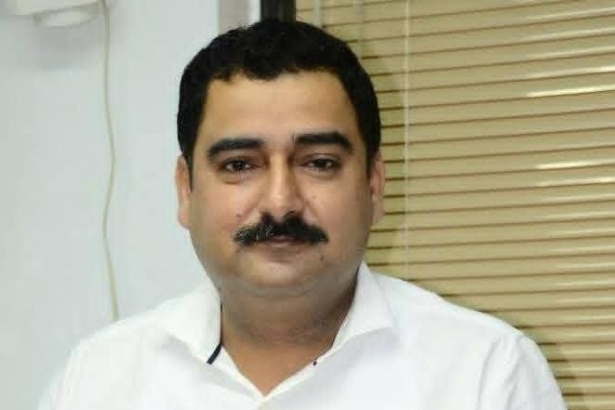
By Shabir Ahmed Chandio
In our towns, a letter from abroad was once an event. Families gathered around it and read it twice, slowly, as if the paper itself carried the future. Today, the letter arrives as a PDF bearing a university crest, and families still read it the same way: as a promise.
Sometimes, the promise is forged.
Laiba Aijaz was 20. She had studied physics at the International Islamic University Islamabad and wanted to continue her education in the United States. According to the FIR, as reported by Dawn on 13 October 2026, her father, Mohammad Aijaz, agreed to pay Rs9.3 million to a man who allegedly promised Harvard admission, travel arrangements and employment for her brother. About Rs5 million was reportedly paid. In return, the family was allegedly given fake travel documents.
Laiba later took her own life. A suspect and two alleged accomplices were arrested, and the main suspect was remanded for investigation. Police registered a case involving qatl-bis-sabab, while the Federal Investigation Agency registered a separate case involving alleged cheating and immigration-related fraud. These are allegations, not convictions, and responsibility must be established in court.
But the case raises a question no trial can answer: how can a family commit millions of rupees to a promise it has no reliable way to verify?
A forged admission letter is not merely paper. It is a mortgage on a family’s hope.
A market built on trust, without adequate safeguards
Most education advisers are not criminals, and Pakistan does not lack laws against fraud. The problem is that criminal law usually arrives after the money has disappeared. Prevention matters as much as punishment.
The Express Tribune reported that complaints against fraudulent study-abroad firms in five major Punjab cities rose from 400 in 2021 to 1,409 in 2024. These are complaints, not convictions, and they cover one province. Yet a more than threefold rise in three years is not noise. It is a signal.
Anyone can rent an office, print business cards, build a website and display a university logo. Company registration proves business identity, not honesty; a tax number does not authenticate an admission offer.
Licensing may seem the obvious response, but a licence can become another certificate on a fraudulent office wall. Poorly designed regulation burdens legitimate advisers, invites rent-seeking and lends dishonest operators official credibility. The aim should be to make deception harder to commit, easier to detect and costlier to repeat.
Follow the money before it disappears
The simplest safeguard is to separate the adviser’s fee from the university’s money. Tuition, application charges and deposits should be paid directly to the institution, through payment details verified on its official website. A demand to transfer university fees into a personal account, or to pay large sums in cash without receipts, is itself a warning.
An adviser’s own fee should be set out in a written contract specifying services, total charges, payment stages and refund conditions. Any university commission or affiliation should be disclosed. No adviser should guarantee admission, a scholarship or a visa, because those decisions belong to universities and governments.
Banks also have a part to play. Repeated deposits from unrelated families into one personal account, followed by rapid onward transfers, are exactly the pattern existing suspicious-transaction reporting is meant to catch. The task is not new surveillance but better use of the controls already in place.
Investigate the pattern, not the isolated complaint
Some disputes involve nothing more than poor service, a rejected application or a refund. But when the same phone numbers, bank accounts or document templates appear across complaints, the dispute is no longer private. It is a network.
Investigators should verify offers and receipts directly with institutions, preserve messages, emails and payment records, trace funds and connect related complaints across districts. A single complaint may look like misfortune; a pattern of linked complaints may reveal a business model.
Precision cuts both ways. A failed application is not fraud, and a refund dispute is not proof of criminal intent. Enforcement should distinguish commercial failure from deliberate deception, not criminalise every disappointment.
What international practice teaches us
Australia’s National Code of Practice for Providers of Education and Training to Overseas Students 2018 requires registered providers to maintain written agreements with the agents they engage, monitor their conduct and take corrective action when obligations are breached. Under Standard 4, a university answers for the agents who represent it.
The United Kingdom’s Agent Quality Framework promotes ethical recruitment, professional knowledge and transparency among agents used by education providers. It is a sector framework, not a universal licence. Both models support a principle Pakistan should adopt: institutions must take responsibility for the recruitment relationships they establish.
Pakistan cannot regulate Harvard University. It can regulate conduct within its own jurisdiction and seek cooperation from foreign institutions. Universities should be encouraged to publish their recognised agents and offer independent channels for verifying claimed affiliations. Families should not have to guess whether an adviser is authorised to represent a university.
Five reforms Pakistan should implement
First, a public verification register. The Higher Education Commission, working with the Federal Investigation Agency, should maintain a searchable register of commercial study-abroad advisers showing business identity, declared institutional partnerships and established disciplinary findings. Registration should be simple and low-cost, with fair procedures for correction and appeal, and it must never be advertised as a guarantee of honesty.
Second, direct institutional payment as the default. University fees and deposits should go through verified institutional channels. Professional fees should be separate, itemised and receipted.
Third, standard written contracts and a ban on deceptive guarantees. Contracts should specify services, charges, commissions, refund terms and the limits of the adviser’s authority. A promise of guaranteed admission, scholarship or visa should be treated as misrepresentation.
Fourth, a single public complaint channel. Students should be able to file a complaint once, receive a reference number and know which authority, whether the FIA, the police or a regulator, is handling it. Linked complaints should be investigated together.
Fifth, published outcomes. Authorities should report complaints, investigations, prosecutions, convictions, money recovered and refunds, distinguishing allegations from proven offences. Success should be measured by remedies delivered and repeat offending prevented, not by FIRs registered.
These reforms should be introduced in stages, after consultation with advisers, universities, students and enforcement agencies, and reviewed annually to test whether they reduce fraud without imposing needless cost.
A register without verification is a directory. A complaint channel without follow-up is a mailbox. A law without measurable enforcement is a promise.
Protect the ambition, verify the promise
Families should contact universities through their official admissions offices, confirm offers and payment instructions, and insist on contracts and receipts. Screenshots and logos prove nothing on their own.
But responsibility cannot be shifted onto families. A father in Sargodha should not need to become a fraud examiner to send his daughter abroad. The state must make verification accessible, payments traceable and complaints meaningful.
Studying abroad can transform a life, which is precisely why the aspiration attracts people who claim to control the gateway. Families sell land, borrow money and exhaust years of savings. When deception destroys those sacrifices, the damage extends beyond money: it deepens debt, breaks trust and makes genuine opportunity look dangerous.
Laiba Aijaz’s death must not become a headline that fades with the next news cycle. Nor should grief replace evidence; the investigation must run its lawful course. But policy need not wait for a verdict to repair preventable weaknesses. Pakistan can demand verifiable claims, traceable payments and accountable advisers, protecting legitimate businesses while ensuring that deliberate deception carries real consequences.
A student’s future should rest on merit, not on whether a stranger with a letterhead turns out to be honest.
The dream should cost effort. It should never cost a life.
Shabir Ahmed Chandio is a PhD student in Criminology and a researcher in law and justice. He can be reached at srchandio@gmail.com
We welcome your contributions! Submit your blogs, opinion pieces, press releases, news story pitches, and news features to opinion@minutemirror.com.pk and minutemirrormail@gmail.com







