Summary
- ISLAMABAD: Almost three years after the caretaker federal government proposed appointing officers from the Pakistan Army Medical Corps to lead the Pakistan Institute of Medical Sciences (PIMS) and Federal Government Polyclinic (FGPC), the proposal remains unimplemented.
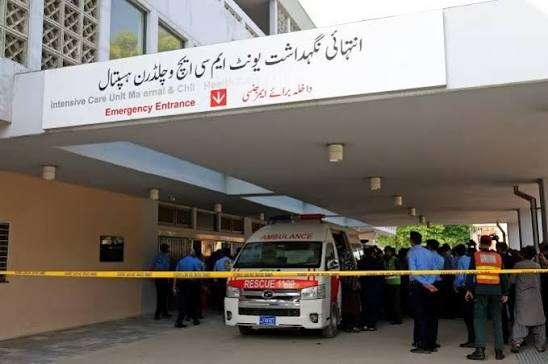
- Following the August 26, 2026 fire in the PIMS Mother and Child Health (MCH) Ward that claimed the lives of several newborns, questions are being raised over whether prolonged administrative delays contributed to weaknesses in hospital management On October 9, 2023, the Ministry of National Health Services approached the Ministry of Defence seeking BS-21 officers from the Army Medical Corps for three-year deputations as Executive Directors of PIMS and FGPC.
- October 9, 2023: Defence ministry approached for Army Medical Corps officers.
ISLAMABAD: Almost three years after the caretaker federal government proposed appointing officers from the Pakistan Army Medical Corps to lead the Pakistan Institute of Medical Sciences (PIMS) and Federal Government Polyclinic (FGPC), the proposal remains unimplemented. Following the August 26, 2026 fire in the PIMS Mother and Child Health (MCH) Ward that claimed the lives of several newborns, questions are being raised over whether prolonged administrative delays contributed to weaknesses in hospital management On October 9, 2023, the Ministry of National Health Services approached the Ministry of Defence seeking BS-21 officers from the Army Medical Corps for three-year deputations as Executive Directors of PIMS and FGPC.
The ministry cited vacant executive positions and a shortage of eligible officers in the relevant cadre as reasons for seeking experienced hospital managers. The proposal was described as an interim measure intended to improve the management and service delivery of two of Islamabad’s busiest public hospitals.
The proposal faced opposition from sections of the medical community. On October 30, 2023, the Islamabad chapter of the Pakistan Medical Association criticized the plan, arguing that bringing military officers into civilian hospitals could undermine the role of civilian doctors.
Legal complications subsequently emerged. The Islamabad High Court restricted the appointment of outside deputationists as permanent heads, pushing authorities toward appointments from within the existing health system.
The health ministry also maintained that appointments would ultimately be made according to established procedures and merit.
Nearly three years later, the absence of permanent leadership at the hospitals has renewed criticism of the government’s handling of the issue.
A senior health-sector observer argued that timely implementation of the original proposal might have improved management, reduced financial leakages and strengthened oversight of procurement, medicines, machinery, construction and renovation projects.
PIMS has already faced concerns over staffing and expenditure. Figures cited in the debate include Rs22 billion allocated over three years, an alleged Rs670 million over spend against a budget of Rs6.84 billion last year, and 949 vacant positions out of 2,451 sanctioned posts at PIMS. More than 1,470 posts are reportedly vacant across four federal hospitals in Islamabad.
The August 26 fire has intensified these concerns. Prime Minister Shehbaz Sharif took notice of the incident, while Health Minister Mustafa Kamal was directed to submit a report. Health Secretary Aslam Ghauri was suspended and a high-powered inquiry was ordered.
The controversy has now moved beyond the question of who should manage federal hospitals to whether those responsible for prolonged administrative shortcomings should be held accountable.
Critics are questioning whether officials who managed billions of rupees in public funds should face consequences if negligence or poor oversight is established. They have also warned against allowing the inquiry to end with routine transfers, suspensions or committees without meaningful reforms.
Supporters of the original proposal point to the management of military-run Combined Military Hospitals (CMHs), arguing that they demonstrate stronger discipline, cleanliness and operational management.
However, opponents maintain that civilian healthcare institutions should be strengthened through transparent, merit-based appointments rather than relying on military deputations.
With legal restrictions and opposition to military appointments, the government may need to move quickly toward permanent, merit-based leadership for PIMS and FGPC.
The recent tragedy has made the issue more urgent. The central question is no longer simply whether the 2023 proposal should have been implemented, but whether years of administrative uncertainty contributed to systemic weaknesses.
Ultimately, an independent inquiry must determine the causes of the fire and establish responsibility based on evidence. The priority now should be ensuring that Islamabad’s major public hospitals have competent leadership, adequate staffing, effective safety systems and transparent financial oversight.
August 25, 2023: Health ministry stresses merit-based appointments.
October 9, 2023: Defence ministry approached for Army Medical Corps officers.
October 30, 2023: PMA Islamabad opposes the proposal.
Late 2023–2024: Legal restrictions emerge over outside deputations.
August 26, 2026: Fire breaks out in PIMS MCH Ward, resulting in multiple deaths.