Summary
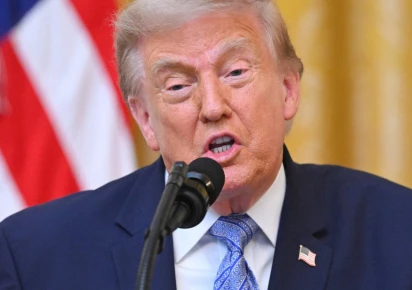
- US President Donald Trump has announced that he is postponing plans for a new military strike against Iran, saying he is giving diplomacy another opportunity to resolve tensions over Tehran’s nuclear programme and restore navigation through the Strait of Hormuz.
- In a statement posted on his social media platform, Trump said Iran, along with other countries in the Middle East, had requested additional time to finalize an agreement aimed at reopening the strategic waterway and addressing international concerns over Iran’s nuclear activities.
- Araqchi also stressed that Iran would respond proportionately if the United States, Israel or any regional country participated in military action against Iranian territory.
US President Donald Trump has announced that he is postponing plans for a new military strike against Iran, saying he is giving diplomacy another opportunity to resolve tensions over Tehran’s nuclear programme and restore navigation through the Strait of Hormuz.
In a statement posted on his social media platform, Trump said Iran, along with other countries in the Middle East, had requested additional time to finalize an agreement aimed at reopening the strategic waterway and addressing international concerns over Iran’s nuclear activities.
Trump said he had agreed to suspend military action for the time being, provided that negotiations lead to a rapid and meaningful agreement. He added that the decision was made in the interest of regional stability, global security and the future prosperity of Iran. He also claimed that Israel supports the diplomatic approach, although Israeli officials had not publicly commented on the statement.
Despite the temporary pause, tensions remain high across the region. Iranian officials warned that any military action by the United States or its allies would trigger an immediate and decisive response. Tehran maintained that it would defend its sovereignty against any form of aggression.
Iranian Foreign Minister Abbas Araqchi held separate telephone conversations with senior officials from Pakistan, Türkiye and Saudi Arabia to discuss the rapidly evolving regional situation. During the talks, he warned that any attack on Iran would have serious consequences for regional peace and stability.
Araqchi also stressed that Iran would respond proportionately if the United States, Israel or any regional country participated in military action against Iranian territory. The discussions focused on preventing further escalation and encouraging diplomatic efforts to avoid a wider conflict.
Meanwhile, Saudi Crown Prince Mohammed bin Salman also held talks with President Trump to seek clarification on Washington’s plans regarding Iran. Although officials confirmed that the conversation took place, no further details were released.
Iranian media affiliated with the country’s security establishment warned that attacks on Iran’s energy infrastructure could result in retaliatory strikes against oil and gas facilities across the Gulf region. The warning has heightened concerns among energy producers and international markets.
President Trump acknowledged that negotiations remain difficult and admitted that his confidence in reaching an agreement has weakened. However, he said his administration continues to pursue diplomatic engagement before considering further military action. Senior US officials remain involved in efforts to secure a negotiated settlement.
The conflict has already had a significant impact on global energy markets. Fighting between US, Israeli and Iranian forces has disrupted regional stability and increased uncertainty over international oil supplies.
The Strait of Hormuz remains one of the world’s most important shipping routes for crude oil exports. Continued security threats have reduced commercial shipping through the passage, raising concerns over global energy supplies and increasing pressure on oil prices.
Analysts say prolonged instability in the Gulf could further affect international markets if diplomatic efforts fail. Rising oil prices have already placed additional economic pressure on many countries dependent on imported energy.
Regional security concerns have also expanded beyond the Strait of Hormuz. Maritime authorities reported separate incidents involving commercial vessels near Oman, including damage to a tanker after it was struck by an unidentified projectile. Another vessel reported a nearby explosion but escaped without damage.
We welcome your contributions! Submit your blogs, opinion pieces, press releases, news story pitches, and news features to opinion@minutemirror.com.pk and minutemirrormail@gmail.com