Summary
- The United Nations General Assembly has approved a second four-year term for UN High Commissioner for Human Rights Volker Turk.
- They say the UN human rights chief must be able to challenge powerful countries when fundamental freedoms are threatened.
- With the General Assembly’s latest decision, Turk will become the first UN human rights chief to serve two complete four-year terms.
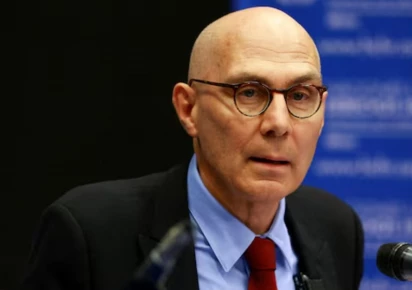
The United Nations General Assembly has approved a second four-year term for UN High Commissioner for Human Rights Volker Turk. The decision was made despite strong opposition from the United States, Russia and Israel.
The 193-member General Assembly voted overwhelmingly in favour of the extension. A total of 144 countries voted for the proposal. Ten opposed it, while 13 abstained.
UN Secretary-General Antonio Guterres had proposed Turk for another full term. His current term is due to end in October.
The vote came amid growing tensions between Washington and the United Nations. The US administration has reduced funding for several UN agencies. It has also withdrawn from a number of UN bodies.
Washington had asked the General Assembly to delay the vote. US officials said more time was needed for consultations and review.
The United States also warned that it could reconsider its relationship with the UN if the proposal was approved.
US Representative for UN Management and Reform Jeff Bartos criticised the process before the vote. He said the decision did not allow enough time for discussion and oversight by member states.
Bartos warned that the US could reassess its engagement, participation and funding of the United Nations.
Despite the warning, most member states supported Turk.
The European Union backed the extension. Several African and Latin American countries also voted in favour. China supported the proposal as well.
Russia strongly opposed Turk’s reappointment.
Russian Deputy Ambassador to the UN Dmitry Chumakov accused the rights chief of bias against Moscow. He also criticised Turk for making what Russia described as unfounded allegations against the country.
Russia had proposed a shorter extension for Turk. Its plan would have kept him in the position only until the end of 2026. The General Assembly rejected that proposal by a large majority.
Israel also opposed the decision.
The Israeli Foreign Ministry criticised Guterres’ proposal and said the decision should have been left to the next UN secretary-general.
Turk has faced criticism from several powerful countries because of his strong position on human rights issues.
He has criticised Russia’s war in Ukraine. He has also raised concerns about Israel’s actions in Gaza. Turk has further called for investigations into deaths involving people held in US immigration custody.
Human rights organisations have defended his position.
They say the UN human rights chief must be able to challenge powerful countries when fundamental freedoms are threatened.
The position has become increasingly important as conflicts and restrictions on civil liberties continue in different parts of the world.
Turk is an Austrian lawyer. He has worked with the United Nations for decades.
His UN career has included senior positions in Geneva. He has also served in field locations, including Kosovo.
With the General Assembly’s latest decision, Turk will become the first UN human rights chief to serve two complete four-year terms.
His reappointment is likely to keep human rights at the centre of international debate. It may also further test relations between the United Nations and countries that have opposed his approach.
We welcome your contributions! Submit your blogs, opinion pieces, press releases, news story pitches, and news features to opinion@minutemirror.com.pk and minutemirrormail@gmail.com