Summary
- Afghanistan’s massive stockpiles of opium are continuing to support the global heroin market despite a dramatic fall in poppy cultivation, according to the latest World Drug Report 2026 released by the United Nations Office on Drugs and Crime.
- The United Nations estimates that opium production in Afghanistan has fallen by about 95 percent since the Taliban introduced a nationwide ban on poppy cultivation.
- According to the UN report, no other country has managed to replace Afghanistan’s dominant position in global opium production despite the sharp decline in cultivation.
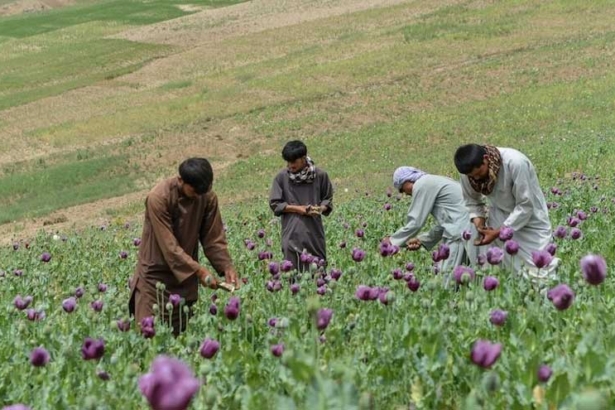
Afghanistan’s massive stockpiles of opium are continuing to support the global heroin market despite a dramatic fall in poppy cultivation, according to the latest World Drug Report 2026 released by the United Nations Office on Drugs and Crime. The report says that although the Taliban’s ban on poppy farming has sharply reduced production, previously stored supplies are still reaching international drug markets.
The United Nations estimates that opium production in Afghanistan has fallen by about 95 percent since the Taliban introduced a nationwide ban on poppy cultivation. This has been one of the biggest reductions in illicit drug production ever recorded. However, experts say the large reserves built up before the ban have prevented an immediate shortage of heroin around the world.
For many years Afghanistan was the world’s leading producer of illegal opium, supplying nearly 80 percent of global demand. The country’s drug economy became a major source of income for criminal organizations, smugglers, and trafficking networks. It also contributed to corruption, organized crime, and instability across the region. According to the UN report, no other country has managed to replace Afghanistan’s dominant position in global opium production despite the sharp decline in cultivation.
While heroin remains available because of existing stockpiles, the report says supplies are gradually becoming tighter. In several major markets, the price of pure heroin has increased significantly over the past two years. At the same time, the quality of the drug has declined as traffickers struggle with reduced availability. These changes suggest that the impact of lower production is beginning to affect international markets.
The report also warns that criminal groups are increasingly turning toward synthetic opioids such as fentanyl and nitazenes. These drugs are cheaper to produce, easier to transport, and much more powerful than heroin. The United Nations fears this shift could create a more serious global health crisis because synthetic opioids have been linked to a growing number of overdose deaths in many countries.
Despite the cultivation ban, drug trafficking has not come to a halt. Authorities continue to seize heroin and opium in Afghanistan and neighboring countries, showing that smuggling networks remain active. Although the volume of seizures has declined, trafficking routes are expected to remain in use until the remaining stockpiles are exhausted.
The report also highlights the economic impact of the poppy ban on Afghanistan’s rural communities. Thousands of farming families who relied on poppy cultivation have lost their main source of income. With poverty and unemployment already widespread, many communities are facing severe financial hardship. The United Nations warns that unless farmers are provided with reliable alternative livelihoods, there is a risk that illegal cultivation could return in the future.
The report also points to signs that criminal networks are exploring new production areas outside Afghanistan. Increased destruction of poppy fields in countries such as India suggests traffickers may be searching for alternative cultivation zones. However, experts believe these countries are unlikely to match Afghanistan’s previous production levels.
The United Nations concludes that Afghanistan’s influence on the global heroin trade is far from over. While the country’s role is changing because of the cultivation ban, its existing opium reserves are expected to keep supplying international markets through at least the end of 2026. As heroin supplies slowly decrease, the growing spread of synthetic opioids is emerging as an even greater challenge for governments and public health authorities worldwide.
We welcome your contributions! Submit your blogs, opinion pieces, press releases, news story pitches, and news features to opinion@minutemirror.com.pk and minutemirrormail@gmail.com