Summary
- In finance, it is a given fact that building the infrastructure will always help realize quick economic development but truly nurturing the population through the provision of the institutions of people’s secured growth, as well as the enhancement of the soft capital, which, in the end, is the main source of sustainability, will consolidate the sector over the long run.
- Reorganizing the priorities in favor of human capital development, as well as the adoption of solid policy reforms and the determination to deal with the deep-lying structural challenges are all prerequisites for reaching sustainable economic progress.
- The final distribution of various infrastructure investment projects, according to the long-term strategies that stress human development, social equity, and economic resilience is the URAAN Pakistan success story.
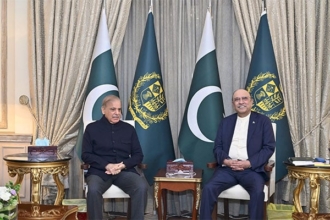
Pakistan has set off on an ambitious mission to pilot the 13th Five-Year Plan from the year 2024-29 called URAAN Pakistan. This transformative initiative seeks and tries to prioritize critical reforms and projects as defined and outlined in the 5Es National Economic Transformation Plan (NETP). The overarching goal is to rejuvenate and regenerate the country’s economy, foster sustainable development, and promote inclusive growth.
The 5Es framework focuses on five critical pillars: Exports, E-Pakistan, Environment and climate change, Energy and infrastructure, and Equity and empowerment. The initiative emphasizes enhancing the export sector to drive economic growth, increase foreign exchange earnings, and improve Pakistan’s competitiveness in global trade. Accelerating digital transformation is another key priority, aimed at improving operational efficiency, fostering innovation, and strengthening Pakistan’s global standing in technology. Sustainable practices are being implemented to address climate change, conserve natural resources, and ensure water and food security for long-term ecological balance. Furthermore, the framework is geared towards the construction of cost-effective, environmentally friendly, and efficient energy sources which will not only promote industrial growth, but will also increase energy efficiency and thus lessen the dependence on energy. Social equity is considered in this strategy, which is a promise to the different parts of the community to allow the economic enrichment and growth to be enjoyed by all.
The Economic Transformation Plan seeks to focus on short-, medium-, and long-term challenges through identification and implementation of projects that conform to these pillars. The overarching vision is to make Pakistan the trillion-dollar economy by the year 2035. For that purpose, National Economic Transformation Unit (NETU) has been established to streamline effective execution of the Policy. NETU works in collaboration with government agencies, stakeholders from the private sector, academia and international partners while relying on evidence-based policies and a comprehensive monitoring and evaluation framework ensuring, transparency and accountability.
URAAN Pakistan has ambitions of elevating with the aid of certain measures, yet these are hampering the country’s developing strategy. Pakistan has been suffering from political instability, policy interruption, and leader’s corruption, and sectarianism ever after it was carved out in 1947. Hence, these challenges have rendered institutional efficiency, which traditionally fostered good governance, null and void, and in consequence, they have become a barrier in the way of the progress and development of the country. The URAAN Pakistan initiative lacks sufficiency in the process of social investment in the human capital. In finance, it is a given fact that building the infrastructure will always help realize quick economic development but truly nurturing the population through the provision of the institutions of people’s secured growth, as well as the enhancement of the soft capital, which, in the end, is the main source of sustainability, will consolidate the sector over the long run. Characteristics of the mentioned grouped activity are education, health, governance, and competence, which by their nature are rampant in the strong or soft forms. The disregarding of these facts manifests a typical attitude in development strategies that emphasizes asphalt and cement and ignores the primary needs of working and productive people.
Sustainable economic growth will not be achieving without substantial investments in human capital. Education, skills training, and ethical leadership are essential for building a capable and innovative workforce. However, Infrastructure is indeed built with a short-term and visible output in mind primarily a growth rate for economy or export volume figures, thereby losing the focus of long-term welfare and social equity so needed in development. Such an approach is bound to result in deepening inequalities without adding to the scope for sustained economic progress. Some critical questions are raised about the practicality and feasibility of the URAAN Pakistan plan. For instance, what will be the effect of sectoral performance-in agriculture, industry, and services-on policy? Is production in agriculture to be effectively induced by the government through subsidies or relief in taxation? What measures to restore the ailing sectors, like complete manufacturing and construction? How political stability and governance reforms drive the overall economic view? How can fiscal and trade policies overcome their differences and unite around a common goal to further growth in the midst of such global shocks, e.g. global financial crisis or natural disaster?
Current data highlights the challenges facing Pakistan’s economy. 1st Quarterly growth rates for 2022-23, 2023-24, and 2024-25 stand at 1.17%, 2.30%, and 0.92% respectively, which demonstrates the stagnation of the industrial sector as this sector is the mainly affected one. The debt-to-GDP ratio is 73%, and the fiscal deficit hires education worldwide account for 7% of GDP. The low tax-to-GDP ratios and inflationary pressures intensified by political instability have aggravated the country’s economic complexities. Moreover, the capital structure lacks the necessary requisite to translate the plan’s outlets like the 6% growth rate and the sum of appealing $10 billion in private financing annually into the realm of actual feasibility. The manufacturing sector, which is instrumental in economic models, has been the main block of the problem due to low investment and job creation restrictions. Although infrastructure and export-oriented initiatives are emphasized, the absence of targeted industrial policies further jeopardizes the plan’s success.
URAAN Pakistan presents an inspiring vision for the nation’s economic future, yet it lacks the detailed roadmaps and realistic mechanisms necessary for its implementation. Reorganizing the priorities in favor of human capital development, as well as the adoption of solid policy reforms and the determination to deal with the deep-lying structural challenges are all prerequisites for reaching sustainable economic progress. The final distribution of various infrastructure investment projects, according to the long-term strategies that stress human development, social equity, and economic resilience is the URAAN Pakistan success story. Through these multi-faceted initiatives, the nation can scale the peak of a one trillion-dollar economy by 2035.
We welcome your contributions! Submit your blogs, opinion pieces, press releases, news story pitches, and news features to opinion@minutemirror.com.pk and minutemirrormail@gmail.com