Summary
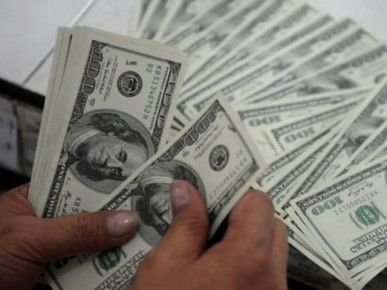
- The US dollar remained firm in early trading on Monday and was on course to record its strongest monthly performance in almost a year, as escalating geopolitical tensions in the Gulf and expectations surrounding upcoming US economic data continued to support demand for the world’s reserve currency.
- Analysts say the dollar’s strength reflects a combination of geopolitical uncertainty, resilient US economic performance and shifting expectations for US monetary policy.
- Strong labour market data could reinforce expectations that the Federal Reserve will maintain a restrictive monetary policy, further strengthening the dollar.
The US dollar remained firm in early trading on Monday and was on course to record its strongest monthly performance in almost a year, as escalating geopolitical tensions in the Gulf and expectations surrounding upcoming US economic data continued to support demand for the world’s reserve currency.
Market sentiment remained cautious after the United States and Iran exchanged fresh accusations over the weekend, despite both sides agreeing to halt retaliatory attacks and hold diplomatic talks in Qatar on Tuesday. While the planned negotiations have offered some hope for de-escalation, investors remain concerned that the ceasefire could prove fragile.
Adding to market uncertainty, oil prices advanced after renewed military strikes disrupted shipping activity through the strategically important Strait of Hormuz. The rise in crude prices has reinforced inflation concerns and boosted demand for traditional safe-haven assets, including the US dollar.
In the currency market, the euro was largely unchanged at $1.1387, following last week’s slide to its weakest level against the dollar in more than a year. The single European currency is on track to register a monthly decline of approximately 2.3%.
The British pound also weakened, slipping 0.1% to $1.3198, leaving sterling on course for a monthly loss of around 2%.
Commodity-linked currencies continued to face pressure as risk appetite remained subdued. The Australian dollar eased 0.1% to $0.6885, extending its monthly decline to about 4.1%, while the New Zealand dollar traded near $0.5635, heading for an even steeper monthly loss of nearly 5.9%.
Meanwhile, the Japanese yen remained under pressure, trading around 161.75 per US dollar, close to levels not seen in roughly four decades. Persistent weakness in the yen has kept market participants alert for any signs of potential intervention by Japanese authorities.
The US Dollar Index (DXY), which tracks the greenback against a basket of six major currencies, edged slightly higher to 101.36. The index is set to post a gain of approximately 2.5% in June, marking its strongest monthly advance since July last year.
Analysts say the dollar’s strength reflects a combination of geopolitical uncertainty, resilient US economic performance and shifting expectations for US monetary policy.
The conflict involving Iran has heightened concerns over global inflation, particularly through rising energy costs. At the same time, financial markets have reassessed the outlook for US interest rates following a more hawkish policy stance from Federal Reserve Chair Kevin Warsh earlier this month. Investors who had previously anticipated multiple rate cuts this year are now expecting borrowing costs to remain higher for longer.
A broad sell-off in global technology stocks has further encouraged investors to move funds into safe-haven assets, providing additional support to the US currency.
Attention is now turning to this week’s key US economic releases, particularly the closely watched non-farm payrolls report and unemployment figures. Strong labour market data could reinforce expectations that the Federal Reserve will maintain a restrictive monetary policy, further strengthening the dollar.
“We expect the US dollar to continue appreciating over the coming weeks due to the ongoing narrative of US economic exceptionalism,” said Joseph Capurso, Head of Foreign Exchange at Commonwealth Bank of Australia.
He noted that continued strength in the US labour market would likely support higher interest rates and sustain demand for the greenback.
Investors are also closely monitoring the European Central Bank’s annual policy forum, where global central bankers are expected to discuss inflation, monetary policy and the evolving economic outlook.
ECB President Christine Lagarde is scheduled to open the forum on Monday, while a closely watched policy discussion later this week will feature Federal Reserve Chair Kevin Warsh.
We welcome your contributions! Submit your blogs, opinion pieces, press releases, news story pitches, and news features to opinion@minutemirror.com.pk and minutemirrormail@gmail.com