Summary
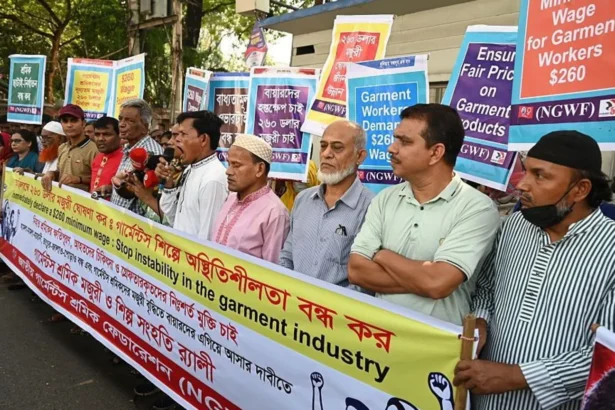
- Nearly 150 garment factories across Bangladesh have been shut down after workers launched protests demanding a significant increase in the minimum monthly wage amid rising living costs.
- Joly Talukder, vice president of the Garment Workers Trade Union Centre, defended the workers’ demands, saying they were seeking wages sufficient to meet their basic living expenses.
- The revised wage structure is expected to take effect from December 1, although continued protests and factory closures have raised concerns about the industry’s production and export operations.
Nearly 150 garment factories across Bangladesh have been shut down after workers launched protests demanding a significant increase in the minimum monthly wage amid rising living costs.
The industrial unrest has affected major textile manufacturing hubs, including Savar, Ashulia and Gazipur, where workers have stopped production to press for better wages.
The workers are demanding a minimum monthly salary of 30,000 taka, equivalent to around $182. The existing minimum wage stands at 12,500 taka, which employees say is insufficient to meet their basic needs amid the ongoing cost-of-living crisis.
Protests intensified on Sunday when hundreds of workers gathered on the Dhaka-Tangail highway in Gazipur and blocked traffic. The road remained closed for approximately an hour before police intervened to disperse the demonstrators.
Police said several factories had suspended operations following the workers’ walkouts. According to Police Superintendent Mohammad Amjad Hossain, 13 factories were closed on Saturday night, while another 16 shut down during unrest on Sunday morning.
The situation has raised concerns about disruptions to Bangladesh’s vital garment industry, which generates nearly $40 billion in annual exports and contributes around 10 per cent of the country’s gross domestic product (GDP).
The sector employs approximately four million people and supplies international fashion brands, including H&M, Primark and Zara. Bangladesh is also the world’s second-largest exporter of ready-made garments after China.
Industry representatives have urged the government to ensure the security of manufacturing facilities and prevent further disruptions.
The Bangladesh Garment Manufacturers and Exporters Association (BGMEA) and the Bangladesh Knitwear Manufacturers and Exporters Association (BKMEA) have expressed concerns over the ongoing unrest. They warned that factories unable to maintain production could remain closed indefinitely under the country’s labour laws.
The law’s ‘No Work, No Pay’ provision allows factory owners to suspend operations and withhold wages when production is disrupted.
However, workers’ representatives argue that employees have continued to bear the burden of low wages while factory owners and international retailers benefit from the industry’s profits.
Joly Talukder, vice president of the Garment Workers Trade Union Centre, defended the workers’ demands, saying they were seeking wages sufficient to meet their basic living expenses.
Meanwhile, the government has established a minimum wage board to review workers’ salaries and recommend a revised pay structure. The board, formed on November 1, held its first meeting and is expected to finalise its recommendations by the end of November.
The revised wage structure is expected to take effect from December 1, although continued protests and factory closures have raised concerns about the industry’s production and export operations.
We welcome your contributions! Submit your blogs, opinion pieces, press releases, news story pitches, and news features to opinion@minutemirror.com.pk and minutemirrormail@gmail.com