Summary
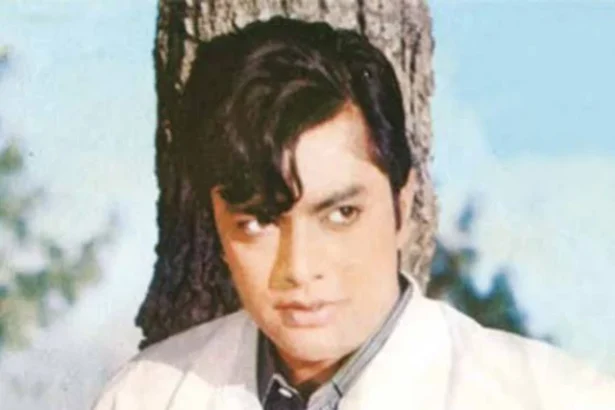
- Legendary Pakistani actor Waheed Murad is being remembered on his 43rd death anniversary, with his remarkable performances and contributions to the country’s film industry continuing to inspire generations.
- Widely celebrated as the ‘Chocolate Hero’, Murad earned a lasting place in Pakistani cinema through his distinctive screen presence, expressive acting and sophisticated personality.
- Beyond acting, he also made significant contributions as a film producer, writer and director.
Widely celebrated as the ‘Chocolate Hero’, Murad earned a lasting place in Pakistani cinema through his distinctive screen presence, expressive acting and sophisticated personality. Beyond acting, he also made significant contributions as a film producer, writer and director.
Born on October 2, 1938, in Karachi, Murad was the son of film distributor Nisar Murad. His early exposure to the film industry developed alongside a strong academic background. He studied at SM Arts College before earning a master’s degree in English literature from the University of Karachi.
His filmmaking journey began behind the camera. In 1960, he established his production company, Film Arts, and produced films including Insaan Badalta Hai and Jabse Dekha Hai Tumhen. His acting career gained momentum with Aulad in 1962, while Heera Aur Pathar (1964) established him as a leading actor and earned him a Nigar Award for Best Actor.
One of the defining achievements of his career was Armaan (1966), in which he served as actor, producer and writer. Directed by Pervez Malik, the film became a major success and featured the iconic song Ko Ko Korina, sung by Ahmed Rushdi. The track remains an important part of Pakistan’s musical heritage.
During his career, Murad appeared in 124 films, including 38 black-and-white and 86 colour productions. His notable performances included Andaleeb, Mastana Mahi, Awaaz and Bahen Bhai. He also received several honours, including Nigar, Graduate and Rooman awards, followed by the Sitara-e-Imtiaz in 2011.
Despite his professional achievements, Murad faced health complications during his later years. He underwent major surgery in January 1983 after suffering from a serious stomach ulcer and later sustained facial injuries in a road accident.
He died in Karachi on November 23, 1983, aged 45, and was laid to rest in Lahore. More than four decades later, his films, music and artistic legacy continue to preserve his status as one of the most influential figures in Pakistani cinema.