Summary
- The Pakistani writer and poet Mubarak Haider asked people to read what they had written twice before making it public.
- A tradition worth passing on can bear questions about what its heirs have done in its name.6 That is where Mubarak Haider’s advice about rereading acquires its public force.
- Mubarak Haider, Facebook post on rereading public writing, religion and scientific education.
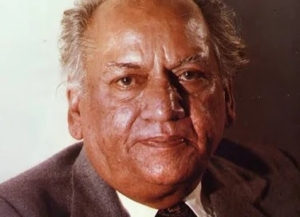
The Iranian thinker Dr. Ali Shariati asked Allah for the capacity to tolerate a contrary opinion. The Pakistani writer and poet Mubarak Haider asked people to read what they had written twice before making it public. A prayer and a piece of practical advice deserve equal attention. Both asked the writer to pause at the moment when conviction feels sufficient. That interval, between feeling sure and putting a sentence before others, is where much of the work of public writing takes place. Faiz Ahmad Faiz knew what a sentence could cost, especially when it reached people who had already decided what to make of its author.
In “The Philosophy of Supplication”, Dr. Ali Shariati asks for the patience to understand a person or an idea before passing judgement. He names four prisons from which he seeks release: nature, history, society and the self. The last is particularly difficult to recognise. One may be perfectly alert to the prejudices of one’s opponents while remaining indebted to the certainties of one’s own circle.
Dr. Ali Shariati asks for doubt fierce enough to burn through ideas impressed upon him by others, in the hope that whatever conviction emerges will be his to answer for. The prayer places that demand upon the person praying.1
Mubarak Haider starts with the advice to “read twice what we write for public view”. A rereading may disclose that the second sentence contradicts the first, that a confident claim rests on a detail nobody checked, or that a sweeping assertion has filled the space where an argument should be.
Mubarak Haider takes this advice into more difficult territory when he questions the recurring effort to offer Islam as a ready-made social, economic and political order for all humanity. He makes the case for science and technology in meeting material needs, for tolerance in living together and for scientific education in preparing the next generation. The strongest part of his argument concerns what happens when a proposal leaves the circle of those who already believe in it. Its consequences must be open to examination by everyone who will live with them.2
Mubarak Haider’s own argument deserves the second reading he asks of others. Fourteen centuries are too varied to be treated as a single attempt to persuade the world of a single proposition.
People have drawn public commitments to justice, mutual aid and learning from their faith. Those commitments can enter public discussion on the same terms as any other.
A programme for reducing hunger must explain who gets fed, who pays and how the results will be measured. A school curriculum must answer for what its pupils learn and for the freedom they have to ask questions. Science can test whether a measure does what it promises. Citizens still have to decide together whose needs come first and which costs they are prepared to bear.
Faiz gives this discipline an emotional dimension. “Do Ishq” begins with the remembered beloved and turns, in its second part, to the homeland. The imagery of the first love returns in the second. To speak of the country in the language of intimacy is to make its injuries felt at close quarters.
The poet remembers prison and public disgrace, the thunder from the pulpit and the anger of those in authority. Then come the arrows of abuse from outsiders and every manner of reproach from his own. The difference between nāwak-e-dushnām and tarz-e-malāmat matters. Faiz can tell the wounds apart. A rebuke from one’s own people carries the weight of a relationship that a stranger’s taunt has never had. The poem ends with the heart taking stock.3
اس عشق نہ اس عشق پہ نادم ہے مگر دل
ہر داغ ہے اس دل میں بجز داغ ندامت
The heart regrets neither love. It bears every scar save the scar of regret. There is no easy victory in that ending. The injury is still felt, and the two loves still have a claim on the speaker. The memorable word is dāgh. By using it for the wounds the heart bears and for the one mark it has escaped, Faiz makes room for hurt and an undiminished attachment in the same line. That is a harder achievement than returning an insult. In public writing, it means that even an adversary retains the dignity owed to a person whose argument can be answered. Accusations should be exact enough for the person named to reply and for a reader to judge.
There are occasions when an unjust arrangement deserves all the anger a poet can summon. In “Dastoor”, Habib Jalib asks whose palaces receive the light and whose happiness the order serves. The repeated refusal draws its force from that distribution of light. It gives readers a way of recognising an arrangement they may have been told to accept as natural. Anyone who has been deprived of a voice has good reason to resent a lecture on manners before being heard. The discipline belongs above all to those with the power to publish, to demand deference or to close a discussion. A truthful sentence may offend the powerful. Its force should come from what it makes visible.4
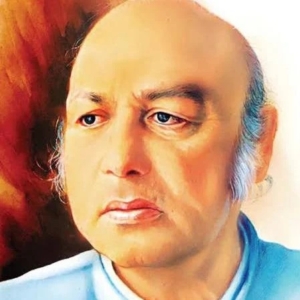
In Tehzeebi Nargisiyat (Cultural Narcissism), Mubarak Haider examines the roots of extremism in Muslim societies, with particular attention to Pakistan.5 The book gives a name to a temptation that reaches beyond any one faith or nation. A community can take such satisfaction in its own account of itself that it treats every criticism as a slight and every failure as somebody else’s doing.
Amjad Islam Amjad, writing about Mubarak Haider’s discussion of the book, drew attention to the ease with which past achievements can become an excuse for avoiding present responsibilities. A tradition worth passing on can bear questions about what its heirs have done in its name.6
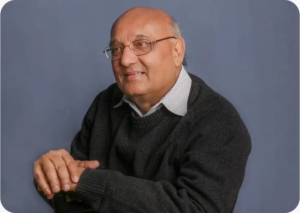
That is where Mubarak Haider’s advice about rereading acquires its public force. When a writer calls a critic disloyal, the reader learns which side the writer is on and may still have no idea whether the critic is right. A second reading can restore the missing question. It can also expose a double standard. If a sweeping claim about the superiority of a civilisation would sound extravagant coming from another community, it deserves the same scrutiny when it comes from one’s own.
Faiz’s distinction between the abuse of outsiders and the reproach of his own people gives this test an added difficulty. It takes patience to hear what may be true in a rebuke that comes from people whose regard matters.
A literary page in Pakistan has room for the believer, the sceptic and the reader whose convictions are still taking shape. Each should be able to recognise their own position in an account by someone who disagrees with them. That entitles readers to sharp questions about practices that injure people, ideas that excuse cruelty and arrangements that distribute dignity by rank or creed.
It also leaves room for a writer to discover, on reading a reply, that a cherished argument was faulty. In Faiz’s poem the wounds are real enough to be named, and love survives the naming. A public argument worthy of that example would leave the person it addresses a place in the conversation the following morning.
Notes:
- Ali Shariati, “The Philosophy of Supplication”, Part 1, English text.
- Mubarak Haider, Facebook post on rereading public writing, religion and scientific education.
- Faiz Ahmad Faiz, “Do Ishq”, Rekhta.
- Habib Jalib, “Dastoor”, Rekhta.
- Mubarak Haider, Tehzeebi Nargisiyat, Lahore, Sanjh, 2009. Catalogue record.
- Amjad Islam Amjad, “Tehzeebi Nargisiyat”, Daily Express, 24 April 2016.
____________________________________________
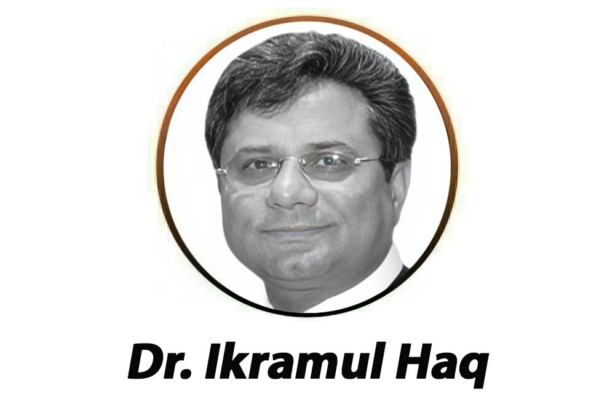
Dr. Ikramul Haq, Advocate Supreme Court, Adjunct Faculty at Lahore University of Management Sciences (LUMS), member Advisory Board and Visiting Senior Fellow of Pakistan Institute of Development Economics (PIDE), holds an LLD in tax laws. He was full-time journalist from 1979 to 1984 with Viewpoint and Dawn. He also served Civil Services of Pakistan from 1984 to 1996.
We welcome your contributions! Submit your blogs, opinion pieces, press releases, news story pitches, and news features to opinion@minutemirror.com.pk and minutemirrormail@gmail.com