Summary
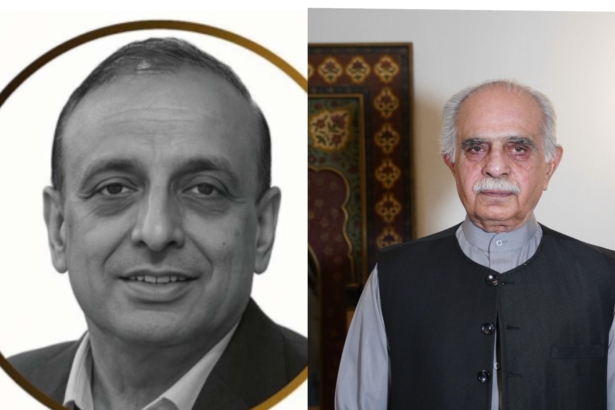
- By General Ghulam Mustafa (Served in different staff and command assignments, commanded a Corps, raised and commanded Army Strategic Force Command) & Engineer Arshad H Abbasi, Co-founder, Energy Excellence Centres at NUST and Engineering University Peshawar, International Transboundary Water Expert Prime Minister Sahib, With the deepest respect, and as one voice among the 260 million you lead, we write to you today not to doubt your resolve, but to place before you what we believe you deserve to see in full — because a nation that trusts its Prime Minister also trusts him to be given the whole picture.
- “I declare in clear terms that every single drop of Pakistan’s water is our red line,” you said, warning that if India “does not come to its senses,” it would be “responded to directly.” We were moved by those words, Sir, as was the nation.
- We say this as your loyal citizens, not your critics: if these ministries have indeed been tracking every check dam, every accelerated project, every cubic metre diverted, then the nation would be grateful, Sir, to see that tracking laid before you and before us — not only in speeches from Islamabad, but in a full and continuing account.
By General Ghulam Mustafa (Served in different staff and command assignments, commanded a Corps, raised and commanded Army Strategic Force Command)
&
Engineer Arshad H Abbasi, Co-founder, Energy Excellence Centres at NUST and Engineering University Peshawar, International Transboundary Water Expert
Prime Minister Sahib,
With the deepest respect, and as one voice among the 260 million you lead, we write to you today not to doubt your resolve, but to place before you what we believe you deserve to see in full — because a nation that trusts its Prime Minister also trusts him to be given the whole picture.
On August 13, 2026, on the eve of our Independence Day, you stood at the inauguration of the Yadgar-e-Fatah monument in Islamabad and gave voice to what every Pakistani feels in their heart. “I declare in clear terms that every single drop of Pakistan’s water is our red line,” you said, warning that if India “does not come to its senses,” it would be “responded to directly.” We were moved by those words, Sir, as was the nation. It was the latest chapter in a warning you have repeated for over a year, since India placed the 1960 Indus Waters Treaty in abeyance following the April 2025 Pahalgam attack — a treaty that had, for six decades, survived three wars precisely because water was once considered too sacred, too existential, to be weaponized.
It is with humility, then, and not with any wish to add to your burdens, that we ask you to consider what has been happening quietly at the river’s source while that red line was being drawn.
What Has Been Happening in Ladakh: Almost two and a half months before your Independence Day address, on May 27, 2026, India inaugurated what it proudly called a first: the country’s inaugural Rock Check Dam, built across the Indus itself near Upshi village in Leh district, at 11,400 feet. Built in a mere seven days from 180 metric tonnes of interlocking riverbed boulders, without a gram of cement, it now holds back a 1,500-foot pool capable of storing 40 million litres — roughly 200 acre-feet — of Indus water. We respectfully submit that it may be something more: the opening move of the Sindhu Jal Samriddhi Abhiyan, a Ladakh-wide water campaign launched by Lieutenant Governor Vinai Kumar Saxena.
It does not stand alone, Sir. It sits alongside the newly restored 43-kilometre Igoo–Phey canal; the Mahey Tokpo–Raldho canal at 14,000 feet, drawing from Yaya Tso Lake; the Brakdongthang Bodh Kharbu canal in Kargil; solar-powered lift-irrigation schemes at Latoo and Karsha; and Project Him Sarovar, a plan for fifty to one hundred small reservoirs across Leh and Kargil, unveiled on April 10, 2026, to capture glacier melt that would otherwise flow downstream toward us.
We ask this humbly: for whom is all this water truly being gathered? Leh district is home to barely 160,000 people. It is also home to the Western Air Command’s most strategically dense high-altitude military footprint on India’s borders — Leh Air Force Station, the newly upgraded Mudh-Nyoma fighter base, Thoise Air Force Station feeding the Siachen front, and the world’s highest airstrip at Daulat Beg Oldi. Add the XIV “Fire and Fury” Corps and the newly raised divisions garrisoning eastern Ladakh, and a different picture may be emerging — one where the deepest beneficiary of this irrigation campaign is not the Ladakhi farmer but the soldier and the forward base that no longer wishes to depend on a single vulnerable mountain road. The massive military presence, characterized by extensive garrisons and airbases in the fragile Siachen and Ladakh regions, acts as a primary catalyst for glacial retreat, directly exacerbating climate vulnerabilities in downstream Pakistan We say plainly, Sir, out of fairness: under Annexure E of the treaty, India is permitted non-consumptive storage of up to 0.40 million acre-feet on the Indus main stem in the Ladakh sector, and a 200-acre-foot check dam, judged alone, is a small thing against that number. Our concern is not any single dam. It is the pattern — check dams, canals, lift schemes, and a hundred small reservoirs, each defensible on its own, together forming a system capable of holding back water at precisely the moment a suspended treaty leaves India no obligation to release it.
You declare that Pakistan will not cede a single drop of water, yet the reality is otherwise. The diversion of Indus waters—driven by a stated Indian policy of zero flow to Pakistan—is already underway. Regrettably, your own ministries have taken this matter to global forums, even as the people of Ladakh bravely oppose this very diversion into their fragile permafrost lands.
Respectfully, we also note that your own minister is now questioning the very stability of governance in Pakistan. If that is so, Sir, we urge you—with humility and candour—to look inward before raising your voice outward.
And downstream, Sir, is where our entire modern economy waits. Tarbela Dam alone generates close to 4,888 megawatts today, with capacity meant to rise toward 6,418. The 4,500-megawatt Diamer-Bhasha Dam and the 4,320-megawatt Dasu Dam were built on the assumption of a river that keeps flowing. To choke that flow at its source, even gradually, even in the name of a farmer’s canal, is to threaten the affordability of electricity for a nation already straining under its cost — and the food and economic security bound up with it.
We wish to be clear: this is not written against Ladakh’s own people, or their right to a better harvest. It is worth remembering, respectfully, that Ladakh’s own most prominent son, the engineer and activist Sonam Wangchuk, our friend too, has spent years warning — through repeated hunger strikes over Ladakh’s fragile ecology and constitutional status — that his homeland’s landscape is being reshaped less for its own people than for priorities decided in Delhi. He has carried that protest in his own body, across multiple fasts since 2024.
A Humble Word on Timing- We say this, Prime Minister Sahib, with the greatest respect for the office you hold and for the conviction behind your Independence Day words. But we would be failing you if we did not gently note the timing. Your red line was declared after the treaty had already sat in abeyance for well over a year — a year in which the water security of 200 million citizens had already been left to unilateral decisions made far upstream, with no mechanism compelling India to release a single acre-foot it chooses to hold. A red line drawn after the line may already have been crossed is, we submit humbly, less a deterrent than a declaration — and we only wish, Sir, for it to be backed by the fullest possible information.
Which leads us, with some hesitation, to a quieter question — not for New Delhi, but closer to home. We do not for a moment doubt that you consider your Ministry of Water Resources and your Ministry of Foreign Affairs to be the strong arms of this cause, committed, as we are, to defending every drop the treaty still allows us. We say this as your loyal citizens, not your critics: if these ministries have indeed been tracking every check dam, every accelerated project, every cubic metre diverted, then the nation would be grateful, Sir, to see that tracking laid before you and before us — not only in speeches from Islamabad, but in a full and continuing account. A check dam at Upshi, a fast-tracked Sawalkote, a tunnel carrying Chenab water into another basin, flows deliberately stanched at Baglihar and Kishanganga — none of this is hidden intelligence, Sir. It has been reported in India’s own press, discussed by India’s own officials, cleared by India’s own cabinet. We ask only, with respect, that the ministries entrusted with this fight ensure that you, and through you the nation, are never the last to know rather than the first. Silence where information was available would not be caution, Sir — it would, however unintentionally, hand India’s quiet work an easier path.
We close, Sir, with one small and humble suggestion, offered in the same spirit of loyalty in which this letter is written. You have drawn your red line in words, and we believe you meant every one of them. Sonam Wangchuk, disagreeing with his own government on other matters entirely, has drawn his in the only currency that reliably moves power that isn’t listening: his own body, twenty-six days without food, once carried from the protest site itself. We do not ask you to fast, Prime Minister Sahib. We ask only that the same seriousness he brought to his cause be visible, plainly and continuously, in ours — so that when we say, together with you, that not a single drop will be compromised, the whole nation can see, and not merely hear, that it is being defended.
We welcome your contributions! Submit your blogs, opinion pieces, press releases, news story pitches, and news features to opinion@minutemirror.com.pk and minutemirrormail@gmail.com