
Summary
- In other words, how can people take their success to the next level?
- After exchanging introductions, I told Dr Anil that I was from Pakistan, that millions of people followed me on social media, and that I had travelled to Baku for the launch of my book.
- Dr Anil then explained that the people accompanying him were already billionaires.
I am currently in Baku, Azerbaijan, where my book has been translated into Azerbaijani. Yesterday, a grand ceremony was held at the University of Languages, attended by members of parliament, professors, university rectors, educationists, and our State Minister. This morning, before going down for breakfast, I offered my usual prayer: “O Allah, bless my day with goodness and prosperity.” Within minutes, I received what felt like an answer to that prayer.
As I headed towards the lift, I noticed a gentleman standing outside. I smiled and said, “Good morning!” Then I initiated a conversation by asking where he was from. He told me that he was from India and had travelled to Baku to attend a workshop. When I asked about its subject, his answer immediately caught my attention.
He explained that millionaires, billionaires, and even trillionaires from India had gathered for a workshop focused on moving from one level of wealth to the next: how to progress from being a millionaire to a billionaire, and from a billionaire to a trillionaire. In other words, how can people take their success to the next level?
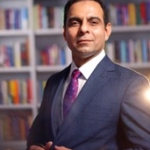
I asked who was conducting the workshop. He replied, “Dr Anil Balachandran.” Just then, the lift doors opened, and a gentleman in his forties appeared. My companion introduced him as Dr Anil himself.
After exchanging introductions, I told Dr Anil that I was from Pakistan, that millions of people followed me on social media, and that I had travelled to Baku for the launch of my book. He immediately invited me to join him for breakfast so that we could talk.
During our conversation, Dr Anil asked me an interesting question: “How many of your fans and followers are millionaires? How many are billionaires? And how many are still striving to achieve success?”
I admitted that I did not have precise data. However, I had heard many success stories, and numerous people quietly supported my foundation and charitable initiatives.
Dr Anil then explained that the people accompanying him were already billionaires. Surprised, I asked, “If they are already billionaires, what are they doing here? What do they still need to learn?”
He smiled and replied, “They want to move to the next level.”
I asked him what he taught. He explained that he had started nine businesses throughout his life, experiencing both success and failure. Over time, he had transformed these experiences into training programmes and workshops.
This made me reflect on an important reality: many people achieve success without fully understanding how they achieved it. Very few can identify the principles behind their success, turn their experiences into a practical formula, and teach those principles to others. Achieving success is one thing; understanding its underlying causes and explaining how it can be replicated is an entirely different skill.
Another scene during breakfast made me think deeply. Breakfast had begun at seven in the morning. Having travelled to numerous countries, I have observed that breakfast is often available by 6:30 a.m. People in many societies wake up early, learn new things, and begin working towards their goals. Meanwhile, many Pakistanis appear more interested in enjoying their sleep than starting their day with purpose.
As we sat at the breakfast table, Dr Anil introduced me to his followers as Qasim Ali Shah, a well-known Pakistani motivational speaker with millions of social media followers. One of the participants responded with genuine surprise and respect. His reaction made me realise how much value people in that environment placed on knowledge, personal development, and positive thinking.
My friend Hanan Abbasi once showed me data suggesting that India had approximately 5,300 YouTubers with at least one million subscribers each. These creators, collectively, contribute to education and personal development. Across India, one can find street singers and ordinary people whose extraordinary abilities and wisdom attract public attention. Films are made about them, while books explore the lives of intellectuals and political leaders, examining both their strengths and their weaknesses.
When I look at our own society, however, I often see criticism dominating public discourse. Everyone seems ready to pass judgement, question intentions, and find faults. Social media has created an army of what I would call “blue-tick negative thinkers”—people who appear influential online but use their platforms to spread suspicion, negativity, and resentment. Envy has become so widespread that another person’s success is frequently viewed as a personal threat rather than a source of inspiration.
Another serious problem is our reluctance to appreciate anything good. In our society, people who promote hope, knowledge, and constructive thinking are often mocked instead of encouraged. Rather than learning from those who are doing meaningful work, we search for reasons to undermine them. We question their motives, dismiss their achievements, and discourage those who are trying to make a difference.
India, despite its own economic and social challenges, offers examples of individuals who have built successful careers by identifying opportunities within their immediate environments. Dr Anil Balachandran is one such example. Working in Kerala, a state in southern India, he has developed a specialised training programme in the Malayalam-speaking community.
His approach reflects a valuable principle. As he puts it, “I am not a big fish in a big pond; I am a big fish in a small pond.”
Dr Anil has demonstrated how focused expertise, practical experience, and a commitment to teaching can create value even within a specialised market. The question we must ask ourselves is simple: what are we doing to develop similar initiatives in Pakistan? Rather than constantly comparing ourselves with others, we need to examine our own shortcomings and identify the changes required to move forward.
During our meeting, Dr Anil presented me with a book that was actually a workbook containing his training programme for billionaires and trillionaires. When I turned its pages, I was genuinely impressed. The design was professional, the printing was excellent, the layout was carefully organised, and the content was presented with remarkable attention to detail. Every page reflected effort, planning, and a commitment to quality.
He called his assistant and arranged another copy for me. Standing between the flags of Pakistan and India, he presented the workbook as a gift. The moment was symbolic in its own way. Despite our national differences and regional rivalries, there is much we can learn from one another. Knowledge has no borders, and the pursuit of excellence should never be restricted by nationality.
This encounter reinforced a fundamental lesson: people who genuinely want to progress never stop learning. Whether they are millionaires or billionaires, they continue to read books, attend workshops, seek guidance from experienced mentors, and identify new destinations for themselves. Their wealth does not make them believe that they know everything. Instead, their achievements encourage them to learn even more.
Unfortunately, in our society, even a modest achievement can sometimes inflate the ego to such an extent that learning from a teacher, reading a book, or seeking guidance from a mentor begins to feel like an insult. We become so impressed with our own accomplishments that we close the doors to further growth.
This attitude prevents individuals and societies from reaching their true potential. The moment we believe that we have learned enough, we begin to fall behind. The world continues to evolve, businesses change, technologies advance, and new opportunities emerge. Those who refuse to adapt eventually lose their relevance, regardless of their previous achievements.
My message to everyone is simple: never stop learning. Whatever your position in life, whatever your professional standing, and whatever level of success you have achieved, there is always something new to discover. A successful entrepreneur can learn from a struggling business owner. An experienced professor can learn from a young researcher. A wealthy individual can learn from someone who has yet to earn their first million.
The principle of demand and supply applies not only to business but also to society. If we increase the demand for rubbish, rubbish will be produced in greater quantities. If we reward noise, noise will dominate public spaces. If we constantly consume hopelessness, pessimism will become more widespread, and hope will gradually disappear from our collective consciousness.
The same principle applies to knowledge, character, and constructive thinking. If we create demand for good books, more quality books will emerge. If we appreciate educators, mentors, researchers, and people who contribute positively to society, their work will receive greater recognition. If we encourage integrity, discipline, innovation, and optimism, these qualities will become more visible in our communities.
We must therefore change what we value and what we choose to support. We need to seek good books, pursue meaningful knowledge, surround ourselves with capable and constructive people, and develop a genuine appetite for learning. Instead of celebrating controversy, we should celebrate contribution. Instead of spreading suspicion, we should encourage excellence. Instead of pulling successful people down, we should learn from their experiences and apply their lessons to our own lives.
Above all, we should continue to seek goodness through prayer and sincere effort. My experience in Baku reminded me that a simple prayer can open the door to an unexpected opportunity. An unfamiliar person standing outside a lift can introduce you to an entirely new world of ideas, experiences, and possibilities.
Sometimes, the next step towards success begins with something as ordinary as waking up early, greeting a stranger, asking a thoughtful question, or being willing to learn from someone else.
The real question is not simply why Pakistanis are struggling to become billionaires. It is whether we are developing the mindset, discipline, learning culture, and positive social environment that allow individuals to grow beyond their existing limitations. Wealth is influenced by many factors, including opportunity, sound decisions, access to capital, innovation, and sustained effort. However, a society that discourages learning and celebrates negativity makes progress considerably more difficult.
If we want to advance as individuals and as a nation, we must begin by changing our habits, priorities, and attitudes towards success. We must learn to appreciate knowledge, respect expertise, and remain humble enough to keep growing.
And we must never forget to ask our Creator for goodness. Sometimes, when such a prayer is answered, even a stranger in a lift can become the source of an extraordinary opportunity.
We welcome your contributions! Submit your blogs, opinion pieces, press releases, news story pitches, and news features to opinion@minutemirror.com.pk and minutemirrormail@gmail.com