Summary
- She became an important symbol of women’s political participation and helped encourage Muslim women to take an active interest in the future of the community.
- Long before the demand for Pakistan became the central political objective of Indian Muslims, Bi Amma had already demonstrated that Muslim women could play a role in political movements.
- Women participated in political mobilisation, social reform and nation-building, helping establish the principle that they had a legitimate and important role in Pakistan’s public life.
When the history of Pakistan’s independence is discussed, the narrative often focuses on the male political leaders who negotiated with the British, addressed large public gatherings and worked toward the creation of a separate homeland. However, women also played an important and often overlooked role in the Pakistan Movement. They organised political activities, mobilised communities, created awareness, participated in protests, assisted refugees and challenged traditional expectations about women’s place in public life.
Among the prominent women of the movement, Fatima Jinnah remains one of the most widely recognised figures. However, her contribution extended far beyond her relationship with Muhammad Ali Jinnah as his sister. She worked closely with her brother and played an active role in encouraging Muslim women to participate in political activities.
At a time when women’s involvement in public politics was socially restricted, Fatima Jinnah’s visibility carried considerable significance. Her participation demonstrated that the struggle for Pakistan was not intended to be limited to men. She became an important symbol of women’s political participation and helped encourage Muslim women to take an active interest in the future of the community.
Following Partition in 1947, Fatima Jinnah continued her public service. She became involved in efforts to support refugees and assist with their rehabilitation. She also continued to speak for greater participation of women in the political and social development of Pakistan.
Another important figure was Abadi Bano Begum, popularly known as Bi Amma. Long before the demand for Pakistan became the central political objective of Indian Muslims, Bi Amma had already demonstrated that Muslim women could play a role in political movements. She was the mother of prominent leaders Maulana Muhammad Ali Jauhar and Maulana Shaukat Ali and became actively involved in the Khilafat Movement.
Bi Amma addressed public gatherings and encouraged people to support the political struggle against British rule. Her involvement was significant because political activism was still considered unusual for many Muslim women. By entering the public sphere, she helped challenge the idea that politics was exclusively a man’s responsibility.
Begum Jahan Ara Shah Nawaz was another influential woman associated with Muslim League politics. Rather than remaining a passive supporter, she actively participated in political mobilisation and worked to increase women’s involvement in the Pakistan Movement. During the politically tense period of 1946–47, Muslim League women participated in protests in Punjab, with some even facing arrest.
Her political involvement had begun well before Pakistan was established. She participated in the First Round Table Conference and raised concerns about discrimination against women in political rights, government employment, business and professional opportunities.
After independence, Begum Jahan Ara Shah Nawaz became one of the two women members of Pakistan’s first Constituent Assembly. Alongside Shaista Ikramullah, she worked to bring women’s rights and legal equality into discussions about the new state.
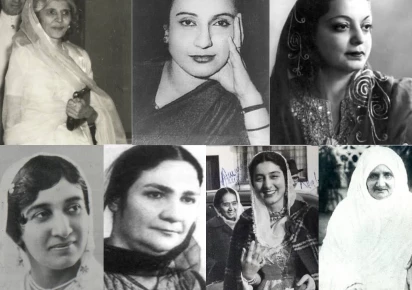
The contributions of these women show that Pakistan’s independence was not achieved through the efforts of men alone. Women participated in political mobilisation, social reform and nation-building, helping establish the principle that they had a legitimate and important role in Pakistan’s public life.
We welcome your contributions! Submit your blogs, opinion pieces, press releases, news story pitches, and news features to opinion@minutemirror.com.pk and minutemirrormail@gmail.com