Summary
- Islamabad: Child marriage has cost Pakistan an estimated $800 million in economic losses, while official research cited by the Ministry of Human Rights places the country sixth globally with approximately 1.9 million married girls, exposing serious weaknesses in child protection, law enforcement, birth registration and access to education.
- The government report also reveals that 18.3 percent of Pakistani women aged 20 to 24 were married before reaching 18, while 3.6 percent entered marriage before the age of 15, according to the Pakistan Demographic and Health Survey for 2017 to 2018.
- The government report identifies weak law enforcement, limited training of police and judicial personnel, inadequate child protection services and poor coordination between institutions as serious obstacles to preventing child marriage.
Islamabad: Child marriage has cost Pakistan an estimated $800 million in economic losses, while official research cited by the Ministry of Human Rights places the country sixth globally with approximately 1.9 million married girls, exposing serious weaknesses in child protection, law enforcement, birth registration and access to education.
The government report also reveals that 18.3 percent of Pakistani women aged 20 to 24 were married before reaching 18, while 3.6 percent entered marriage before the age of 15, according to the Pakistan Demographic and Health Survey for 2017 to 2018.
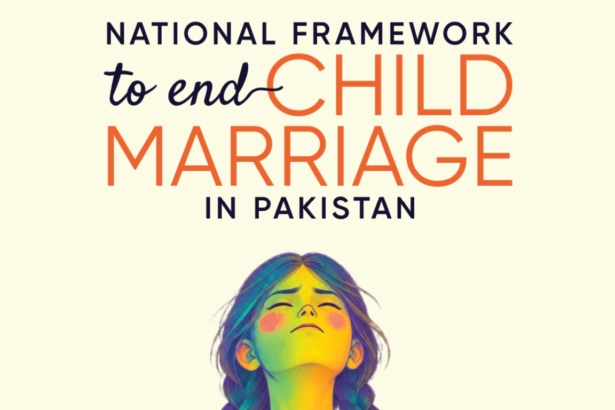
The findings form part of the National Framework to End Child Marriage in Pakistan for 2027 to 2031, prepared by the Ministry of Human Rights in collaboration with the United Nations Population Fund and Group Development Pakistan.
Published in 2026, the framework presents a five year national strategy to address child marriage through legal reforms, stronger enforcement, education, healthcare, poverty reduction and better protection of children.
One of the most serious findings concerns the financial impact of child marriage on Pakistan’s economy.
The report cites an economic study estimating that child marriage caused losses of approximately $800 million, equivalent to 0.42 percent of the country’s gross domestic product, during the 2019 to 2020 period.
The losses reflect the wider economic consequences of girls leaving education early, having fewer employment opportunities and facing greater dependence on their families.
The report identifies poverty as one of the main reasons behind child marriage, observing that families facing financial difficulties sometimes arrange early marriages to reduce household expenses.
However, it warns that the practice often creates further poverty because children, particularly girls, lose opportunities to complete education, develop skills and earn a living.
Another major concern is the lack of accurate official information about the number of child marriages taking place across Pakistan.
According to the report, many marriages are not formally registered, making it difficult for government authorities to determine the actual scale of the problem.
The document identifies weaknesses in birth and marriage registration systems as a major obstacle to preventing underage marriages.
Without reliable age records, authorities face difficulties establishing whether a person has reached the legal age for marriage.
The report recommends strengthening birth registration and marriage registration systems, improving age verification and removing registration fees to encourage families to register their children.
A further controversy concerns different minimum marriage ages across Pakistan.
According to the framework, the minimum marriage age has been raised to 18 for both girls and boys in Islamabad, Punjab, Sindh and Balochistan.
However, the report states that the older legal framework continues to permit girls to marry at 16 in Khyber Pakhtunkhwa, Azad Jammu and Kashmir and Gilgit Baltistan.
The difference highlights the absence of a uniform minimum marriage age for girls across the country.
The government framework calls for stronger coordination between federal and provincial authorities to address differences in the laws and improve enforcement.
The report also refers to concerns expressed by the United Nations Committee on the Rights of the Child in January 2026.
According to the document, the UN committee raised objections to judicial decisions that it said had validated marriages involving girls aged 15 on the basis of puberty.
The UN committee also expressed concern about the continuation of harmful practices such as Swara, Vani and Watta Satta, along with forced conversions associated with marriages involving girls from religious minorities.
It recommended stronger investigations, prosecution of offenders and proper protection and support for affected children.
The government report identifies weak law enforcement, limited training of police and judicial personnel, inadequate child protection services and poor coordination between institutions as serious obstacles to preventing child marriage.
It also points to shortages of trained social workers capable of identifying children at risk and helping those already affected by early marriage.
The framework warns that the failure to identify vulnerable children at an early stage can allow harmful practices to continue.
Another alarming finding concerns the impact of child marriage on girls’ education.
The report cites survey findings indicating that 18.4 percent of girls who dropped out of school did so to get married, compared with 1 percent of boys.
In urban areas, the figure for girls was 22.3 percent, compared with 15.9 percent in rural areas.
The report also states that only 13 percent of girls remain in school by the ninth grade, highlighting broader problems with educational participation.
It warns that marriage at an early age often prevents girls from returning to school, completing their education and obtaining employment.
The proposed national framework therefore recommends flexible learning opportunities, support for married and pregnant girls to resume education, vocational training and financial assistance for vulnerable families.
The report further highlights the serious health consequences associated with early marriage and pregnancy.
It cites the Pakistan Maternal Mortality Survey of 2019, which recorded 186 maternal deaths per 100,000 live births, compared with the international development target of fewer than 70.
The report warns that pregnancy at a young age increases the risk of medical complications for adolescent girls and their babies.
It also cites research suggesting that between 4,000 and 5,000 women in Pakistan suffer from obstetric fistula annually, a serious childbirth injury associated with complications during delivery.
According to the document, only 7.4 percent of married girls aged 15 to 19 use contraception, compared with 34.2 percent of married women aged 15 to 49.
The report further states that only 5 percent of adolescent mothers receive information about family planning during visits after childbirth.
These findings point to serious gaps in healthcare information, access to services and the ability of young married girls to make decisions about their health.
Another significant concern involves domestic violence and its financial consequences.
The government framework cites a study estimating that 34 percent of domestic violence incidents in Pakistan were associated with child marriage.
The same section of the report records annual wage losses linked to physical abuse amounting to Rs 5.23 billion in Punjab, Rs 5.86 billion in Sindh, Rs 1.24 billion in Khyber Pakhtunkhwa and Rs 310 million in Balochistan.
Together, these provincial figures amount to Rs 12.64 billion.
The report warns that girls married before 18 face increased risks of domestic violence, exploitation, emotional distress and restrictions on their personal freedom.
It also raises concern about child trafficking and the use of forced marriages to facilitate exploitation.
According to the framework, growing access to digital platforms has created additional risks, including online grooming, coercion, blackmail and other forms of exploitation that may contribute to child marriage.
The government proposes closer cooperation among child protection institutions, police, cybercrime investigators, internet service providers and digital platforms to address these threats.
The report also identifies floods, displacement, economic emergencies and climate related disasters as factors that can increase the risk of child marriage.
It warns that families who lose their homes or sources of income may view early marriage as a way to reduce financial pressure or protect children during periods of insecurity.
The framework calls for stronger social protection programmes, financial assistance and emergency support for vulnerable families.
Federal Minister for Human Rights Senator Azam Nazeer Tarar, in his message included in the report, emphasized the government’s commitment to protecting children from early marriage and ensuring their access to education, healthcare and equal opportunities.
The framework was developed under the supervision of Federal Secretary for Human Rights Abdul Khalique Shaikh, with technical and strategic contributions from Dr Muhammad Arif and support from international and civil society partners.
The United Nations Population Fund and UNICEF have also emphasized that ending child marriage requires more than passing laws.
Their joint statement calls for adequate funding, clear responsibilities for government departments, reliable information and effective monitoring of results.
The framework proposes national oversight led by the Ministry of Human Rights, provincial monitoring arrangements and district level child protection mechanisms.
It also recommends strengthening the role of marriage registrars, local government officials, police, healthcare workers, teachers and community leaders in identifying and reporting underage marriages.
The framework also notes that Pakistan’s GSP Plus trade status is due for assessment in 2027, making the country’s progress on human rights commitments an important area of international attention.
The government has set out a five year roadmap covering 2027 to 2031, but its success will depend on whether federal and provincial authorities translate the proposed measures into effective action
We welcome your contributions! Submit your blogs, opinion pieces, press releases, news story pitches, and news features to opinion@minutemirror.com.pk and minutemirrormail@gmail.com