Summary
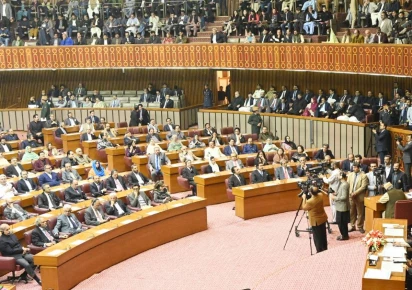
- Islamabad: A long running agreement involving government land, a private training institute and millions of rupees came under intense scrutiny as lawmakers questioned the terms of the Hazza Institute of Technology arrangement during a meeting of the National Assembly Standing Committee on Federal Education and Professional Training.
- Members raised serious questions over how a private institute continued operating on government provided land, why the agreement was extended for another 15 years and whether public interest was fully protected in the deal. The committee was informed that around 20 kanals of land were provided to Hazza Institute under a Public Private Partnership model, but lawmakers questioned whether the government was receiving proper benefits from the arrangement.
- The committee members asked for details of the agreement and questioned why a private organisation was allowed to continue using government property without clear financial benefits for the state.
Islamabad: A long running agreement involving government land, a private training institute and millions of rupees came under intense scrutiny as lawmakers questioned the terms of the Hazza Institute of Technology arrangement during a meeting of the National Assembly Standing Committee on Federal Education and Professional Training.
Members raised serious questions over how a private institute continued operating on government provided land, why the agreement was extended for another 15 years and whether public interest was fully protected in the deal. The committee was informed that around 20 kanals of land were provided to Hazza Institute under a Public Private Partnership model, but lawmakers questioned whether the government was receiving proper benefits from the arrangement.
The issue was discussed during the 25th meeting of the committee after members raised concerns about repeated projects being given to the same institute and questioned whether Hazza had received special preference over other organisations.
The Executive Director of the National Vocational and Technical Training Commission (NAVTTC), Muhammad Amir Jan, rejected allegations of favouritism and said no institution was being supported unfairly. He told the committee that decisions regarding Hazza were made by previous administrations and that he was responsible for dealing with the existing agreement according to government rules.
According to the briefing, the Hazza Institute project started in 2010 under a Public Private Partnership model. A Saudi Arabia based training company along with its local partner was selected after a process at that time. Under the original plan, the government was supposed to provide land and invest Rs 340 million through the Workers Welfare Fund. Officials informed the committee that while the land was provided, the planned investment was not released.
The agreement was later rewritten in 2018 by the National Training Bureau, which transferred responsibilities to NAVTTC. The new arrangement continued for 15 years starting from 2018 and would remain effective until 2033. During the meeting, members questioned why the government did not take action earlier to review or end the agreement.
The committee members asked for details of the agreement and questioned why a private organisation was allowed to continue using government property without clear financial benefits for the state. NAVTTC officials explained that the agreement was legally valid and the institute was considered an authorised occupant under the existing contract. However, the Executive Director admitted that some terms of the agreement were one sided and needed to be reviewed.
He informed the committee that under the agreement, the government had limited powers to remove the institute before the completion period. Officials said efforts were now underway to renegotiate the terms and ensure that the government receives proper value from the land the institute is using.
The committee was informed that NAVTTC had already taken back around 4,000 square feet of built up space from the total area for establishing a NAVTTC incubation centre. The official said the total built up area was around 20,000 square feet and explained that under the Built Operate Transfer model, ownership would eventually return to the government after the agreement period ends.
The financial side of the matter also came under discussion. Officials informed the committee that Hazza was linked with an overseas training programme and was expected to train thousands of young Pakistanis for foreign employment opportunities.
The committee was told that the institute was involved in a programme targeting 4,000 trainees, out of which 780 had already completed training and moved forward. The Executive Director stated that no additional funds would be released unless the programme produced results and overseas employment targets were achieved.
He also informed the committee that disputes and complaints involving Hazza had reached different forums, including government platforms, with competing groups filing complaints against each other. Members demanded greater transparency and said that government land and public resources must be managed in a way that protects national interest.
The committee also questioned the extension of the agreement period, noting that the original partnership documents from 2010 and 2011 had different timelines. Officials explained that the agreement was revalidated in 2018, restarting the 15 year period from that year.
The committee directed NAVTTC to review the matter carefully and provide a progress report after two months. Chairperson Mahtab Akbar Rashdi said the committee wanted practical action and clear decisions rather than further delays. She stressed that while investment made by private partners should be considered, government interests and accountability must remain the priority.
We welcome your contributions! Submit your blogs, opinion pieces, press releases, news story pitches, and news features to opinion@minutemirror.com.pk and minutemirrormail@gmail.com