Summary
- Cities like Karachi, Lahore, and Jacobabad are now among the hottest urban areas in the world.
- World Environment Day is not just a date on the calendar.
- This World Environment Day, let us not just celebrate nature, let us stand for it.
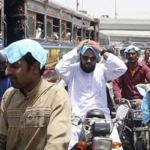
There was a time when summer in Pakistan meant long days, mangoes, and evening breezes. Today, it often feels like stepping into a furnace. Cities like Karachi, Lahore, and Jacobabad are now among the hottest urban areas in the world. In fact, Jacobabad, Larkana & Sukkur have recorded temperatures above 50°C, a level that scientists describe as close to the limits of human survival.
This is not just “weather.” It is a warning.
According to global climate reports, the Earth’s average temperature has already increased by about 1.1°C since pre-industrial times. That number may look small, but its effects are enormous. Heatwaves are becoming more frequent, more intense, and more deadly. In Pakistan alone, the 2015 heatwave caused over 1,200 deaths in Karachi. Since then, such extreme events have only become more common. Our cities are heating up even faster than rural areas. Why? Because of something called the “urban heat island effect.” Concrete buildings, asphalt roads, and glass structures absorb heat during the day and release it slowly at night. This means cities remain hot even after sunset. Studies show that urban areas can be 3 to 7°C hotter than surrounding regions.
But here is the hopeful part, this is not beyond our control.
Trees are one of the simplest and most powerful solutions. A single mature tree can cool the surrounding air by up to 2 to 4°C. It can also absorb around 20 kilograms of carbon dioxide every year. Imagine the impact if millions of trees were planted and protected across our cities. Unfortunately, Pakistan’s forest cover is less than 5 percent, far below the global average of 31 percent. Increasing this is not just an environmental goal, it is a survival strategy.
Water is another critical piece of the puzzle. Pakistan is among the top ten countries facing severe water stress. Per capita water availability has dropped from around 5,000 cubic meters in 1951 to less than 1,000 today. Conserving water, fixing leakages, and adopting rainwater harvesting are no longer optional habits, they are essential actions.
Then comes pollution. Pakistan is consistently ranked among the countries with the worst air quality. In major cities, air pollution levels often exceed safe limits by five to ten times. Vehicles, industries, and burning of waste are major contributors. By choosing public transport, reducing unnecessary travel, and shifting to cleaner energy like solar power, we can cut down harmful emissions significantly.
The role of individuals cannot be underestimated. Simple actions, planting a tree, reducing plastic use, conserving electricity, or even educating others, can collectively create a powerful movement. When millions of people make small changes, the impact becomes enormous.
World Environment Day is not just a date on the calendar. It is a reminder that the Earth is speaking to us through rising temperatures, melting glaciers, and polluted air. The question is, are we listening?
The future of our cities does not depend only on governments or policies. It depends on us, on our awareness, our choices, and our willingness to act. If we act now, we can make our cities cooler, cleaner, and more livable. If we delay, the cost will only grow heavier.
This World Environment Day, let us not just celebrate nature, let us stand for it. Let us plant, protect, and preserve. Because saving the environment is no longer a choice, it is a responsibility we owe to ourselves and to generations yet to come.
We welcome your contributions! Submit your blogs, opinion pieces, press releases, news story pitches, and news features to [email protected] and [email protected]