Summary
- Clean elections are not judged only on polling day; the whole process must be free of doubt.
- If the world is to be convinced that Kashmiris deserve free and fair voting rights, then GB’s elections must become a model of transparency, equal opportunity and public confidence.
- It is not enough for the results to look clean; the entire process must stand above suspicion.
Gilgit Baltistan heads to the polls on 7 June 2026 to elect its Legislative Assembly. On paper it looks like a standard democratic exercise. In reality, the region’s geography, politics and strategic location make these elections anything but routine. The eyes of the entire country are fixed on the process.
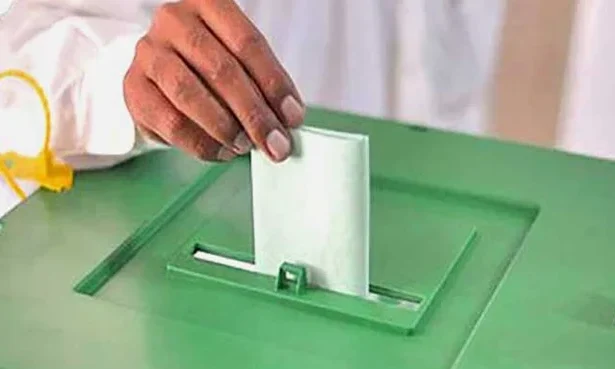
Election Commission data shows 958,480 registered voters, 503,772 men and 454,708 women. Voting will take place at 2,450 polling stations, manned by 7,678 officials. The assembly has 33 seats, 24 general and nine reserved. For the general seats, 396 candidates are contesting. A party needs 17 votes in the house to form a government. The tightest race is in Gilgit’s GBA-2, where 58 candidates are locked in battle. One constituency in Diamer has 11 contestants.
GB’s electoral history carries a familiar sting. The party that rules in Islamabad has almost always taken power here too. PPP formed the government in 2009, PML-N in 2015 and PTI in 2020. In each case the same party held sway at the centre and in the region. After Khalid Khurshid’s disqualification in 2023 over a fake degree, Haji Gulbar Khan became chief minister with backing from PTI’s Forward Block and smaller parties. The contest has too often been about grabbing power rather than serving the public.
This campaign season, PML-N, PPP and IPP leaders have been highly visible. Nawaz Sharif, Bilawal Bhutto Zardari and Khawaja Saad Rafique addressed rallies across GB. PTI’s space by contrast, has been heavily restricted. Junaid Akbar, the party’s Khyber Pakhtunkhwa president, was arrested and expelled from the region. Asad Qaiser and Salman Akram Raja were denied permission to campaign. PTI candidates are also contesting without the party symbol. The question that keeps surfacing is whether every party has been given an equal chance. Clean elections are not judged only on polling day; the whole process must be free of doubt.
Rallies are loud with slogans, yet most parties have offered no serious, workable manifesto for Gilgit-Baltistan. The problems that matter to people have stayed the same for years severe electricity shortages, weak health services, broken roads in far-flung areas, joblessness, poor education and crumbling infrastructure. The region is blessed with natural resources, tourism potential and immense strategic value, but ordinary citizens remain deprived of basic facilities. Campaign promises have not been matched by any clear plan to fix these issues for good.
GB is not just another administrative unit. It is a highly sensitive and strategic territory whose fate is tied to the Kashmir question. Its elections directly affect Pakistan’s democratic credibility and the broader Kashmir narrative. The 1987 elections in Indian occupied Jammu and Kashmir remain a warning. Widespread rigging allegations shattered public faith in the process. Before that, many Kashmiris still saw hope in electoral politics. Pakistan’s own martial law years had already weakened democratic norms, and Kashmiri sentiment was tilting toward Indian politics. Once trust in the ballot collapsed, the mood shifted sharply. Large numbers of young people walked away from democratic politics. The chant “Kashmir banega Pakistan” grew louder. One disputed election altered the valley’s entire political and security landscape a cost India continues to bear.
Pakistan should draw the obvious lesson. If the world is to be convinced that Kashmiris deserve free and fair voting rights, then GB’s elections must become a model of transparency, equal opportunity and public confidence. It is not enough for the results to look clean; the entire process must stand above suspicion. The Election Commission, judiciary, security institutions and media all carry the same responsibility. Voters in GB must also guard their ballot as a sacred trust neither to be bought nor bullied. They should choose representatives who truly speak for the region, because this vote is not just for the next five years. It will shape the future of generations yet to come.
On 7 June the people of Gilgit-Baltistan will speak. Real success, however, will not be measured by any party’s win or loss. It will be measured by whether the electoral process itself restores public trust and tells the world that, even in sensitive and contested territories, democracy remains the only lasting answer.
We welcome your contributions! Submit your blogs, opinion pieces, press releases, news story pitches, and news features to [email protected] and [email protected]