Summary
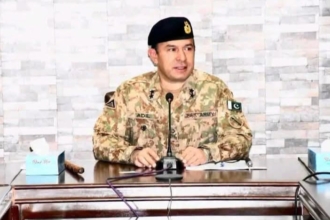
- It has been two years since Governor of Punjab Sardar Saleem Haider Khan assumed office as Governor.
- A few days ago, Governor Punjab Sardar Saleem Haider Khan hosted an interactive session at the Governor House with students from the Film and Broadcasting Department of Punjab University.
- Some students questioned him about his relationship with the Punjab government and the powers of the Governor.
It has been two years since Governor of Punjab Sardar Saleem Haider Khan assumed office as Governor. During this period, he has carried out his constitutional responsibilities with seriousness, restraint, and composure. In the past, we have also witnessed times when the Governor House had turned into a Centre of intense political activity and confrontation. However, the situation today appears quite different. While the doors of the Governor House remain open for Pakistan Peoples Party workers, supporters, and the general public, and political meetings and interactions continue regularly, one no longer hears aggressive anti-government rhetoric or bitter political sloganeering.
Sardar Saleem Haider Khan has had a long-standing association with the Pakistan Peoples Party and is considered one of President Asif Ali Zardari’s trusted companions. He has served as a federal minister in the cabinets of three prime ministers, including Raja Pervaiz Ashraf, Yousaf Raza Gillani, and Shehbaz Sharif. Yet, when his name emerged for the office of Governor, many people were unfamiliar with him. The reason perhaps lies in the fact that despite his closeness to the party leadership and having served as a minister three times, he preferred a quiet style of politics. He maintained strong connections with his party, workers, and constituents, but consistently stayed away from publicity and self-promotion.
Over the past two years, his working relationship with the Punjab government has also remained balanced. This does not mean that he never objected to or criticized any governmental decisions or legislation. Rather, while remaining within the constitutional limits of his office, he conveyed his objections and suggestions to the government without turning such matters into media controversies.
A few days ago, Governor Punjab Sardar Saleem Haider Khan hosted an interactive session at the Governor House with students from the Film and Broadcasting Department of Punjab University. The purpose of the session was to allow students to raise questions regarding various educational matters and hear direct responses from the Governor. The group also included students associated with newspapers and television channels alongside their studies. Consequently, the discussion did not remain confined to educational issues alone.
The students raised political questions as well, asking about his personal life, childhood, education, lifestyle, and religious views. They even questioned him about his relationship with the Punjab government and the powers vested in the office of Governor. Perhaps the most commendable aspect of the lengthy session was that the students were given complete freedom to ask any kind of question. Unlike many traditional politicians, the Governor responded candidly and without vagueness.
In recent years, Pakistani politics has increasingly become marked by bitterness and toxic rhetoric, while political intolerance has reached alarming levels. In such circumstances, it was refreshing to observe that the Governor mentioned even his political opponents with respect and, on certain occasions, openly appreciated them. He spoke highly of his leaders, Zulfikar Ali Bhutto, Benazir Bhutto, and Bilawal Bhutto Zardari. He discussed Zulfikar Ali Bhutto’s role in Pakistan’s nuclear program, the Islamic Summit Conference, and the country’s defense technology initiatives. He also highlighted the importance of President Asif Ali Zardari’s Iran-Pakistan gas pipeline project.
At the same time, he spoke positively about Mian Nawaz Sharif as well. Some students questioned him about his relationship with the Punjab government and the powers of the Governor. His response was rather surprising. He remarked: “As Governor, what mandate of votes have I brought with me? Those who have been elected through public votes, meaning the Chief Minister and the Assembly, should naturally possess greater decision-making powers.”
When the decline of Pakistan’s film industry came under discussion, he praised the Punjab government’s Film City project. He paid tribute to Chief Minister Maryam Nawaz and Senior Minister Marriyum Aurangzeb and strongly appreciated the government’s proposed Film Authority Bill.
The students also highlighted the lack of employment opportunities and limited avenues for progress. They complained about the rising fees in public universities. The Governor acknowledged that these problems genuinely exist and that the public is facing severe hardships. He candidly admitted that politicians, along with all powerful sections of society, bear responsibility for the current difficulties. However, he also delivered a message of hope, expressing confidence that conditions would eventually improve.
When the topic of official protocol came up, he explained that he was personally against excessive protocol. However, due to the prevailing security situation, the nature of his office required adequate security arrangements. At the same time, he admitted that the burden of such protocol ultimately has to be borne by the public.
In response to questions from students of the Film Department, he shared that he had been extremely mischievous during childhood and narrated a few incidents involving parental scolding. He revealed that during his youth, he would secretly visit cinemas to watch films. However, political responsibilities later consumed so much of his time that he could not devote attention to other interests. He remarked humorously that he had not watched a complete film in nearly forty years, though he laughingly clarified that this should not be interpreted as a religious decree against watching films. When asked why he was often seen reciting Tasbeeh, he replied that Allah commands believers to remember Him while sitting, standing, walking, and in every state of life, and that he merely tried to act upon this divine instruction.
Fundamentally, the Governor appears to be a religiously inclined individual. Various religious and welfare activities are regularly organised at the Governor House, including gatherings of Milad. Some members of his own party jokingly remark that he seems more like the governor of a religious organization than of the Pakistan Peoples Party. During the session, he also spoke about the importance of modesty and veil for women and young girls, mentioning that he personally wished for his daughter to attend university wearing an abaya. He advised the youth to strive for worldly success while maintaining a strong connection with Allah. Overall, he conveyed a positive message regarding morality and religious values.
Finally, it is also important to mention that when he assumed office as Governor, university appeals had been pending for nearly two years, while appeals before the Provincial Ombudsman had remained unresolved for almost three years. He cleared these backlogs and issued decisions on all pending cases.
A few days ago, during a meeting with the Governor, I observed him hearing appeals related to various universities. I quietly watched the proceedings and noticed that in several cases, he delivered decisions not only on legal grounds but also with consideration for human compassion and empathy. Readers may also find it interesting that some time ago he had to hear an appeal involving the daughter of one of his very close relatives. The staff assumed that the verdict would naturally favor the girl. However, the Governor not only decided the matter strictly in accordance with justice and the law, but also reprimanded the girl firmly in the manner of an elder.
(The author is a Professor of Media and Communication Studies and a broadcast media expert. She currently serves as Chairperson of the Department of Film and Br
oadcasting at Punjab University)
We welcome your contributions! Submit your blogs, opinion pieces, press releases, news story pitches, and news features to opinion@minutemirror.com.pk and minutemirrormail@gmail.com