Summary
- So when I read that Washington is moving to “dismantle” the International Criminal Court just as India and Pakistan trade nuclear threats over a suspended water treaty, I am not reacting as an activist.
- That is the real danger for an engineer watching Kashmir: not that Washington’s sanctions strip the ICC of authority it held over India and Pakistan, but that they starve, intimidate, and delegitimize the entire ecosystem of investigators, financiers, and diplomatic pressure that makes any international law credible.
- Mr Secretary-General: Do you still consider the Geneva Conventions’ prohibition on attacking dams, irrigation works, power plants and water infrastructure a live, enforceable norm — and what mechanism, absent a Security Council referral to the ICC, will you actually use to deter or punish such an attack between two nuclear states that are not ICC members?
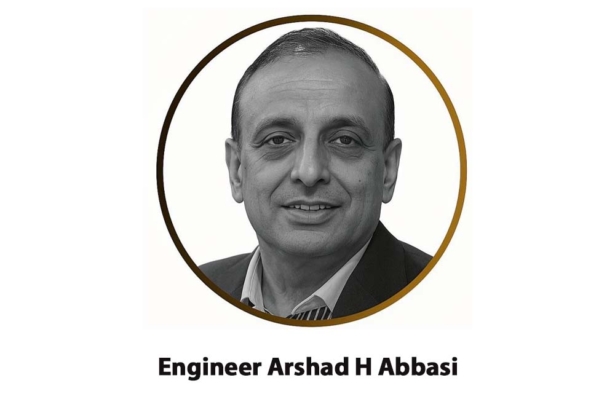
I have never fired a bullet. I have never had so much as a traffic challan against my name in my whole life. My toolbox has no weapon in it — only the instruments of my trade: pyranometers, anemometers and wind vanes, thermometers and thermal imagers, flow meters, pH and ORP meters, pliers, and wrenches. My work has been rivers, turbines, power plants and treaties — the quiet infrastructure that keeps 300 million people in the Indus Basin fed, lit, and alive. So when I read that Washington is moving to “dismantle” the International Criminal Court just as India and Pakistan trade nuclear threats over a suspended water treaty, I am not reacting as an activist. I am doing the arithmetic of catastrophe, as someone who measures rivers for a living and now has to wonder what protects them.
The legal backdrop is not ambiguous. Article 56 of Additional Protocol I to the Geneva Conventions bars attacks on dams, dykes, and nuclear electrical generating stations where such attacks “may cause the release of dangerous forces and consequent severe losses among the civilian population.” Article 54 separately prohibits destroying objects indispensable to civilian survival — drinking-water installations and irrigation works, chief among them. These are not aspirational norms. Most international lawyers treat the core of this protection as customary law, binding even on states that never signed the Protocol.
That last point matters enormously here, because neither India nor Pakistan ratified Additional Protocol I, and neither is a party to the Rome Statute that created the ICC. Pakistan voted for the Statute’s adoption in 1998 but never signed it; India never signed at all. This means that even before any American sanctions campaign, the ICC’s jurisdiction over an India-Pakistan war would already depend almost entirely on a UN Security Council referral — one that Beijing, Moscow, or Washington could veto in an afternoon. So the honest starting point here is uncomfortable: the Hague was never going to be the first line of defence for the Indus Basin’s dams and canals. The primary safeguards were always the Geneva Conventions’ customary rules, the International Court of Justice, the UN Security Council, and each state’s own willingness to comply.
What US sanctions on the ICC actually change, then, is not South Asia’s jurisdictional map — it is the global infrastructure of accountability that everyone, including non-member states, quietly relies on. Since February 2025, Executive Order 14203 has frozen assets and imposed travel bans on ICC prosecutors and judges. Harvard Law’s Alex Whiting, the court’s former deputy prosecutor, calls this “A DRAMATIC ESCALATION” of a long-standing but previously more restrained US scepticism of the court. By mid-2026, Secretary of State Marco Rubio had gone further, vowing a “whole-of-government” campaign to dismantle the institution entirely and pressing allied governments to withdraw their funding and recognition. Sanctioned ICC judges have sued the administration; so have American researchers and lawyers who say they can no longer share evidence of atrocities in Myanmar, Sudan, or Gaza without risking prison. Amnesty International has warned that this damages “all of the ICC’s investigations, not just those opposed by the US” — Ukraine, Darfur, and Uganda included.
That is the real danger for an engineer watching Kashmir: not that Washington’s sanctions strip the ICC of authority it held over India and Pakistan, but that they starve, intimidate, and delegitimize the entire ecosystem of investigators, financiers, and diplomatic pressure that makes any international law credible. When the world’s most powerful state treats the court of last resort as an enemy to be dismantled rather than reformed, it tells every government — nuclear-armed or not — that the cost of violating Article 56 is smaller than it used to be.
And the stakes are not hypothetical. India suspended the Indus Waters Treaty in April 2025; the Permanent Court of Arbitration has since ruled the suspension has no basis in the treaty’s text, a ruling New Delhi rejects outright. Pakistan’s army chief has publicly threatened to destroy any new Indian dam “with ten missiles.” India’s water minister has vowed Pakistan will not receive “a single drop.” SIPRI puts India’s arsenal at roughly 190 warheads; both nations fought a four-day conflict in May 2025 involving drones, missiles, and strikes on air bases housing nuclear-capable assets. The Indus Basin holds all 21 of Pakistan’s hydroelectric plants and irrigates over 90 percent of its farmland. An attack on a single major barrage, on either side of the border, would not be a tactical strike — it would be a humanitarian catastrophe measured in millions.
So, I have questions, asked in good faith, not rhetoric, and I would like to put them directly to the UN Secretary-General and to President Trump.
Mr Secretary-General: Do you still consider the Geneva Conventions’ prohibition on attacking dams, irrigation works, power plants and water infrastructure a live, enforceable norm — and what mechanism, absent a Security Council referral to the ICC, will you actually use to deter or punish such an attack between two nuclear states that are not ICC members?
Mr President Donald Trump: if your administration’s stated goal is protecting American servicemembers and Israeli officials from prosecution, how do you justify a sanctions regime that simultaneously weakens the court’s capacity to document and deter attacks on civilian water and power infrastructure elsewhere, including in a conflict where U.S. diplomacy has twice had to step in to prevent nuclear escalation?
And to both of you: where does a peace-loving engineer — someone trying to help restore a 1960 treaty that has kept two nuclear powers from fighting over water for sixty-five years — file a complaint when a dam or a canal is deliberately struck? If the answer is “nowhere effective,” then the erosion of the ICC is not an abstract institutional dispute in The Hague. It is the removal of one more guardrail between a regional water dispute and a war neither side can fully control once it starts.
I keep coming back to my own toolbox, because it is the honest measure of what I actually have to offer. I am an engineer. If a dam or a power station on either side of the border is struck, what does an unarmed global citizen — someone whose entire arsenal is a flow meter and a set of wrenches — actually do about it, once the one international court built to hold someone accountable has been sanctioned into paralysis? Can my yellow helmet stop a missile or a drone? Of course not. Some days, the only honest answer feels like packing up and moving to Mars or the Moon, somewhere no one has yet found a reason to go to war. But that is despair talking, not a plan, and I would rather stay here and ask the people who actually hold power to do their jobs. I cannot interpose myself between a missile and a barrage. I cannot arrest a general. All I can do is measure the damage after it happens and ask, as I am asking now, who is supposed to stop it before it does. I am not asking anyone to take a side in Kashmir. I am asking that the rivers, the dams, and the millions of people downstream of them not become collateral to a fight over who gets to police the world’s worst crimes.
We welcome your contributions! Submit your blogs, opinion pieces, press releases, news story pitches, and news features to opinion@minutemirror.com.pk and minutemirrormail@gmail.com