Summary
- In a post on X, Araghchi argued that Aoun’s remarks suggested Iran was responsible for Lebanon’s current difficulties.
- Araghchi also dismissed claims that Iran uses Lebanon as a bargaining tool in negotiations.
- Araghchi reiterated that blaming Iran for Lebanon’s internal crises misrepresents the situation and diverts attention from what he described as the broader regional conflict dynamics affecting the country.
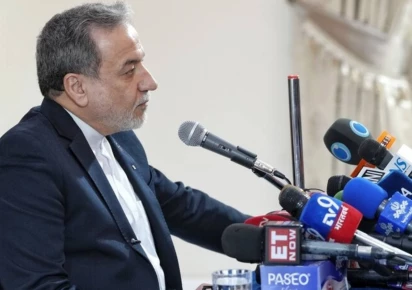
Iranian Foreign Minister Abbas Araghchi criticised Lebanese President Joseph Aoun over comments about Tehran’s role in Lebanon.
In a post on X, Araghchi argued that Aoun’s remarks suggested Iran was responsible for Lebanon’s current difficulties. He said such a view ignored the actions of other parties that, according to him, have occupied parts of Lebanon, displaced large numbers of people, and carried out repeated attacks on the country.
Araghchi also dismissed claims that Iran uses Lebanon as a bargaining tool in negotiations. He stated that if Lebanon had served as leverage for Tehran, Iran would have already reached an agreement in its diplomatic talks.
He ended his message by calling on the Lebanese president to focus on what he described as Lebanon’s “real enemy.”
Araghchi’s response followed Aoun’s interview with CNN, where the Lebanese president discussed Iran and the Islamic Revolutionary Guard Corps (IRGC).
Araghchi reiterated that blaming Iran for Lebanon’s internal crises misrepresents the situation and diverts attention from what he described as the broader regional conflict dynamics affecting the country. He argued that such narratives risk oversimplifying Lebanon’s political and security challenges.
He also emphasized that Iran supports Lebanon politically and diplomatically, insisting that cooperation between the two countries should not be framed as interference. According to him, constructive dialogue should replace public accusations if stability is to be achieved.
We welcome your contributions! Submit your blogs, opinion pieces, press releases, news story pitches, and news features to [email protected] and [email protected]