Summary
- Planning and Development Minister Ahsan Iqbal has proposed dividing Pakistan’s four provinces into 12 to 15 smaller provinces, calling for a national and political debate on the country’s administrative structure.
- Under his proposal, each of the four provinces could potentially be divided into three smaller administrative units.
- The debate is therefore not only about the number of provinces but also about how political, administrative and financial powers would be distributed.
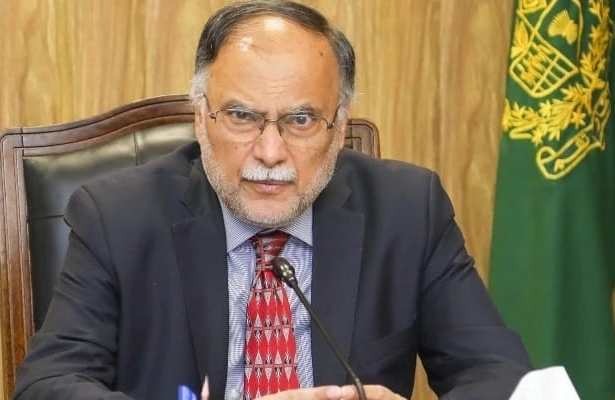
Planning and Development Minister Ahsan Iqbal has proposed dividing Pakistan’s four provinces into 12 to 15 smaller provinces, calling for a national and political debate on the country’s administrative structure.
Iqbal said he had suggested forming a committee on administrative reforms to examine the proposal and determine what changes could be made to improve governance.
He said the creation of new provinces would ultimately require political consensus among all stakeholders.
The minister added that he was waiting for Prime Minister Shehbaz Sharif to return from Kyrgyzstan before discussing the proposal with him.
‘Four provinces have become too centralised’
Iqbal argued that Pakistan’s existing provincial structure had become increasingly centralised over the years.
He linked the concentration of authority to weaknesses in the delivery of essential public services, particularly health and education.
Under his proposal, each of the four provinces could potentially be divided into three smaller administrative units.
However, Iqbal stressed that any redistribution of provinces would need to follow an equitable formula, particularly in relation to representation in the Senate.
He said an abrupt change in provincial representation could create new political imbalances.
No formal decision yet
Despite the proposal, there is currently no formal federal process for creating new provinces.
Prime Minister’s Coordinator Rana Ihsaan Afzal Khan said no committee had been established at the federal level and that no official decision had been taken on the issue.
He added that, if new provinces were eventually created, they would likely be established in time for the next general election cycle.
The proposal comes amid renewed discussion over Pakistan’s provincial structure.
Interior Minister Mohsin Naqvi recently called for changes to the country’s administrative system, arguing that the existing governance structure was no longer delivering effectively.
The remarks were followed by a call for serious debate from Inter-Services Public Relations Director General Lt Gen Ahmed Sharif Chaudhry.
Supporters of smaller provinces argue that decentralisation could bring government closer to citizens and improve access to public services.
However, critics fear that dividing existing provinces could intensify political and ethnic tensions.
The issue has triggered particularly strong opposition in Sindh.
Nationalist political groups have staged demonstrations against any proposal to divide the province.
They argue that Sindh should remain a single administrative and political unit.
The proposal has also drawn criticism from political figures in other provinces, with some describing the debate as premature and politically motivated.
Experts remain divided over whether smaller provinces would automatically lead to better governance.
Supporters say smaller administrative units could improve access to government and bring decision-making closer to local communities.
Critics, however, warn that decentralisation without stronger accountability mechanisms could simply transfer power to new local elites.
The debate is therefore not only about the number of provinces but also about how political, administrative and financial powers would be distributed.
Creating new provinces would also require substantial financial resources.
Each new province would need its own administrative machinery, including government departments, senior bureaucracy and other institutions.
New assemblies and other constitutional and legal structures would also have to be established.
Pakistan is already facing considerable fiscal pressures, making the financial implications of creating multiple new provinces a major issue.
The redistribution of federal resources, water, land and natural resources could create further disputes.
The division of existing water allocations could prove especially sensitive because the provinces currently have agreed shares under the 1991 Water Apportionment Accord.
We welcome your contributions! Submit your blogs, opinion pieces, press releases, news story pitches, and news features to opinion@minutemirror.com.pk and minutemirrormail@gmail.com