Summary
- On 17 July 2025, in Kabul, the transport ministers of Uzbekistan, Afghanistan and Pakistan signed a framework agreement to prepare a feasibility study for the Trans-Afghan Railway from Naibabad to Kharlachi.
- We urge the Special Investment Facilitation Council (SIFC) to take ownership of this line as the one flagship of CPEC’s second phase: a double-track, electrified railway from Karachi and Gwadar to Peshawar, onward across Afghanistan to Termez, with a spur to China.
- One of us began his career as a junior engineer in the winter the last Soviet troops left Afghanistan in February 1989, and has dreamed ever since of a train leaving Tashkent or Mazar-i-Sharif, crossing Kabul and the Khyber, and arriving in Pakistan.
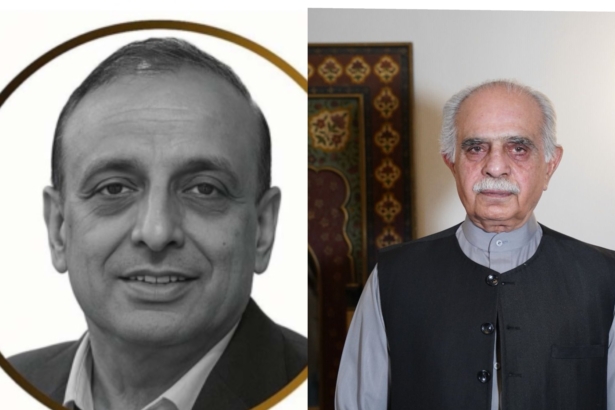
Afghans live under Taliban rule, and neither of us pretends that is a small matter. But poverty does not wait for politics to be settled. Aid keeps people alive; trade lets them live better. Each of us has worked, in our own way, to ease poverty in Afghanistan, and we keep arriving at the same low-hanging fruit: a railway that joins Central Asia, Afghanistan and Pakistan’s ports. This is not an endorsement of any government. It is a bet on ordinary Afghans, who need jobs, cheaper food and a route to the sea.
On 17 July 2025, in Kabul, the transport ministers of Uzbekistan, Afghanistan and Pakistan signed a framework agreement to prepare a feasibility study for the Trans-Afghan Railway from Naibabad to Kharlachi. Uzbekistan’s president ratified it in February 2026. The line would run roughly 570 to 650 kilometres, depending on alignment, with transit potential of up to 20 million tonnes a year. The idea was first floated in 2018, and a 2010 railway MOU signed in Islamabad was never implemented.
Even the numbers are unsettled. Uzbek officials put the cost near $4.8 billion; Pakistan’s Ministry of Railways has assessed $8.2 billion. A gap that wide tells us nobody has yet done the one job that matters: a single, independent, bankable design.
Meanwhile the road keeps failing. Torkham, the main crossing, has been largely shut to trade since 12 October 2025 after border clashes, with brief and fragile reopenings. Bilateral trade was about $1.6 billion in 2024, well below the roughly $2.5 billion peak of 2010. A road that closes at every clash cannot carry anyone’s prosperity. A railway built under a treaty, with transit guarantees and Afghan workers on its payroll, gives every party a stake in keeping it open.
The British opened the Khyber Railway in 1925: 34 tunnels, zigzag reversing sections and a climb from 1,500 to 3,500 feet. Engineering was not the hardest part. The Afridi tribes had to be persuaded, and they were, through allowances, contracts and jobs. Kabul closed the line in 1932, but the lesson survives: in contested lands, railways are built on trust and shared income, not force. Any Trans-Afghan plan should reserve construction jobs, supply contracts and station-town benefits for local Afghan communities from day one.
Russia has sought warm-water access to the Indian Ocean for centuries, and the Central Asian republics are landlocked, in Uzbekistan’s case doubly so. The shortest rail route from Termez to Karachi, Gwadar and Port Qasim runs through Afghanistan. Tashkent calls the project its second most strategic infrastructure undertaking, after the China–Kyrgyzstan–Uzbekistan railway, and Uzbek officials say it would link Russia, Europe, India and Southeast Asia to southern ports. For Pakistan, which has long exported a tiny share of what Central Asia imports, it is a chance to open the markets its surgical goods, textiles, rice and cement already suit.
We urge the Special Investment Facilitation Council (SIFC) to take ownership of this line as the one flagship of CPEC’s second phase: a double-track, electrified railway from Karachi and Gwadar to Peshawar, onward across Afghanistan to Termez, with a spur to China. One owner, one design, one deadline.
The Pakistani spine must come first. ML-1 was cut from a $10 billion high-end design to a $6.8 billion version, and the CPEC Authority itself once attributed its delays to design faults and weak consultancy capacity. An Afghan line feeding a Karachi–Peshawar track that cannot carry freight would be a bridge to nowhere.
The best rail route to China is the same one. The Karakoram Highway climbs from the Hazara region through Thakot and Raikot to Khunjerab and Kashgar. Its Havelian–Thakot section is built. The Thakot–Raikot stretch is already being realigned because the Indus dams will submerge parts of the old road; a CPEC committee approved a 250-kilometre realignment in 2022. Dig that corridor once, and lay rail beside the road.
The same valley hosts the hydropower: Dasu (4,320 MW, in two stages), Diamer-Bhasha (4,500 MW, which WAPDA now schedules for completion in 2030) and Mohmand (800 MW). Together that is close to 9,600 MW. Electrified rail through that valley would turn cheap hydroelectricity into traction power instead of imported fuel.
China already builds trains for such a corridor. CRRC Tangshan unveiled its 350 km/h freight train in December 2020, designed for hauls of 600 to 1,500 kilometres and about 120 tonnes per trainset. We should be candid: it is aimed at premium, time-sensitive cargo, not coal or grain, and mountain grades will hold speeds far below 350. A realistic design pairs conventional heavy electric freight for bulk with high-speed units for premium goods, and it could begin on the flatter Pakistani sections.
Here is the uncomfortable part. The greatest danger to this railway is not the Hindu Kush, nor even politics. It is planning, and ours in particular.
Energy projects under CPEC are valued at roughly $21 billion in government and press accounts (estimates range from about $18 billion for completed projects to $22 billion). Yet Pakistan’s power-sector circular debt stood at Rs1.675 trillion at the end of June 2026, above the Rs1.614 trillion ceiling agreed with the IMF, and combined power and gas circular debt reached about Rs5.29 trillion. By our calculation, Pakistan accumulated approximately $15.03 billion in new energy-sector circular debt between 2018 and mid-2026.
The causes are well documented: capacity payments guaranteed whether or not the electricity was needed, dollar indexation, generous returns, and no incentive to cut costs. These are failures of planning and approval, and the planning machinery that sat over the CPEC portfolio, the Planning Commission and its ministry, must answer for them. We allege no crime here; where investigators find wrongdoing, the law should take its course. But incompetence on this scale needs no allegation. If the Guinness Book of World Records kept a category for planning failure, $21 billion of power plants followed by $15 billion of new debt would be a serious contender.
If the same machinery plans the railway the same way, we will get the same result.
We propose five safeguards. First, one owner: SIFC should hold the mandate, with a single project company (the special purpose vehicle Pakistan and Uzbekistan agreed to in 2022) and a legal deadline.
Second, one design: commission an independent international feasibility study, reconcile the $4.8 billion and $8.2 billion estimates, and publish the result.
Third, pay for cargo, not for capacity: no take-or-pay guarantees that can balloon into circular debt; contracts should reward tonnes moved.
Fourth, treaty-level guarantees: transit rights, border protocols and security arrangements should be written into the agreement, with Afghan communities employed and paid along the route, as the Khyber Railway’s builders learned.
Fifth, phase the work: finish ML-1 and the Peshawar–Kharlachi link, then the Afghan line, then the China spur, tying hydropower to electrified traction at each step.
One of us began his career as a junior engineer in the winter the last Soviet troops left Afghanistan in February 1989, and has dreamed ever since of a train leaving Tashkent or Mazar-i-Sharif, crossing Kabul and the Khyber, and arriving in Pakistan. Almost 35 years after Central Asian independence, that dream is still unrealised, not for lack of studies but for lack of delivery.
Afghans do not need another conference. They need a railway that employs them, cheapens their food and connects them to the sea. The mountains can be tunnelled; the neighbours can be persuaded. The only thing that can spoil it is us. Let us not.
We welcome your contributions! Submit your blogs, opinion pieces, press releases, news story pitches, and news features to opinion@minutemirror.com.pk and minutemirrormail@gmail.com