Summary
- This benchmark evaluates the degree to which nations implement core governance principles derived from the Seerah, including rule of law, economic fairness, institutional transparency, and human dignity.
- These empirical findings underscore a critical truth: societies that embed universal principles of accountability, justice, and social protection into their governance systems achieve stability and prosperity, whereas those that rely solely on religious rhetoric while ignoring structural ethics inevitably experience moral and institutional decline.
- First, religious pulpits must broaden their focus beyond historical narratives to actively address modern civic ethics, transactional integrity, social responsibility, and human rights.
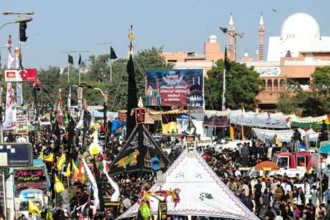
A rigorous and dispassionate examination of contemporary Pakistani society exposes a haunting structural paradox. Across every city and village, minarets rise with impressive architectural splendor, congregational rows swell to capacity, and public declarations of faith resonate deeply throughout the civic sphere. Yet, running parallel to this ubiquitous display of devotion lies a sobering reality. In our commercial marketplaces, judicial halls, administrative offices, and daily social interactions, the foundational attributes of a functional society—truthfulness, integrity, institutional justice, and respect for human dignity—remain perilously scarce. Pakistani society finds itself trapped in a profound moral dilemma, where the outward performance of religious rituals continues to expand, even as transactional transparency, collective honesty, and the protection of basic human rights steadily erode.
We have increasingly conflated the true essence of faith with external appearances, emotional symbolism, and vocal allegiance, while distancing ourselves from the core message brought by the Prophet Muhammad (\text{PBUH})—a message grounded in elevated moral character, social justice, and unconditional service to humanity.
This systemic dislocation stems from a departure from the intellectual and spiritual foundations articulated by prominent Islamic thinkers, notably Allama Muhammad Iqbal in his Reconstruction of Religious Thought in Islam and Imam Al-Ghazali in his Ihya Ulum al-Din. For Iqbal, faith is not a rigid set of mechanical rituals or inherited dogmas; it is a dynamic, transformative inner experience intended to reconstruct human character and inspire an active moral consciousness. When religion is stripped of its vital ethical core and reduced to empty ceremonialism, it enables individuals to compartmentalize their devotion, performing rituals while remaining indifferent to personal and social wrongdoing. Similarly, in Ghazali’s analytical framework, spiritual devotion and ethical behavior are intrinsically connected rather than competing ideals. Ritual worship serves as the training ground for moral excellence: prayer is designed to deter wrongdoing, fasting cultivates self-discipline and empathy for the vulnerable, and institutional charity ensures economic equity.
However, when a society treats these practices as mere mechanical obligations rather than instruments for internal transformation, a dangerous disconnect emerges—one where ritual adherence flourishes while public morality collapses.
This societal breakdown is not merely anecdotally observable; it is empirically corroborated by global metrics such as the Islamicity Index, developed by scholar Hossein Askari and his colleagues. This benchmark evaluates the degree to which nations implement core governance principles derived from the Seerah, including rule of law, economic fairness, institutional transparency, and human dignity. The findings present a striking mirror to the Muslim world. Non-Muslim nations such as New Zealand, Sweden, Ireland, and Norway consistently top the index, whereas most Muslim-majority countries, including Pakistan, languish near the bottom.
These empirical findings underscore a critical truth: societies that embed universal principles of accountability, justice, and social protection into their governance systems achieve stability and prosperity, whereas those that rely solely on religious rhetoric while ignoring structural ethics inevitably experience moral and institutional decline.
Crucially, attributing this moral decay solely to individual shortcomings or private hypocrisy presents an incomplete sociological analysis. Applying the insights of Ibn Khaldun alongside modern social science reveals that individual human behavior is heavily shaped by the economic, political, and legal structures in which it operates. In Pakistan, a fractured economic model, persistent inflation, a strained judicial system, and the enduring influence of entrenched elites create an environment where adhering to ethical standards often threatens personal survival. When state institutions fail to protect the vulnerable and the law operates unequally, citizens are systematically pushed toward informal, unethical, or corrupt coping mechanisms. Thus, the issue extends beyond individual ethical failure; it represents a profound institutional crisis where non-compliance becomes a rationalized collective survival strategy.
The life and legacy of the Prophet (\text{PBUH}) offer a timeless blueprint that transcends mere political or military history, standing as one of the most comprehensive ethical and social transformations in human record. In articulating the primary purpose of his mission, the Prophet (\text{PBUH}) affirmed that he was sent to perfect noble character. Long before his prophetic call, his defining identity within the harsh social landscape of Mecca was not merely that of a recluse, but that of Al-Sadiq (the Truthful) and Al-Amin (the Trustworthy). Prior to inviting people to a new faith, he established an unshakeable foundation of personal integrity, earning public trust through his actions. The Charter of Medina subsequently materialized this ethical vision into governance, establishing the world’s first written multicultural constitution that guaranteed equal rights, religious freedom, and collective security for a diverse society—a model that remarkably aligns with modern frameworks of pluralism and human rights.
Similarly, the Farewell Sermon delivered during the final pilgrimage established a universal declaration of human equality, dismantling prejudices based on race, ethnicity, or social status. The Prophet (\text{PBUH}) explicitly safeguarded women’s rights, prohibited predatory economic practices such as usury, and declared the sanctity of human life, property, and honor to be inviolable. Yet in contemporary Pakistan, while the concept of Riyasat-e-Madina is frequently invoked in public discourse, its core pillars—uncompromising rule of law, economic solidarity, meritocracy, and institutional compassion—remain largely absent from public policy and institutional practice. Furthermore, the profound magnanimity demonstrated during the Conquest of Mecca, where former adversaries were granted unconditional amnesty, stands in sharp contrast to the prevailing climate of polarization, intolerance, and vigilante violence often committed under the guise of religious zeal.
Pakistan faces an overarching institutional, intellectual, and moral challenge that requires a clear, actionable path forward. Reversing this trajectory demands a comprehensive approach across three distinct domains. First, religious pulpits must broaden their focus beyond historical narratives to actively address modern civic ethics, transactional integrity, social responsibility, and human rights. Second, educational curricula must move beyond passive memorization of historical facts, incorporating the Seerah as a dynamic case study in character development, critical thinking, and social responsibility. Finally, the state must undertake substantive structural, legal, and economic reforms to ensure that the rule of law applies equally to all citizens, creating an environment where living honestly is a viable choice for every individual. Until our spiritual practices translate into integrity in our marketplaces, fairness in our courts, and empathy in our daily interactions, structural renewal will remain elusive. True progress lies not in symbolic rhetoric, but in the deliberate, systematic application of the Prophet’s universal ethical revolution to our contemporary national life.
We welcome your contributions! Submit your blogs, opinion pieces, press releases, news story pitches, and news features to opinion@minutemirror.com.pk and minutemirrormail@gmail.com