Summary
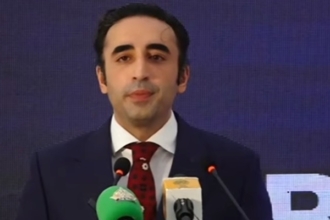
- Pakistan Peoples Party (PPP) Chairman Bilawal Bhutto Zardari has called for general elections within six months, urging the government to introduce electoral reforms instead of holding a referendum on the creation of new provinces.
- Recalling the political situation in Sindh during the 1980s and 1990s, Bilawal said attempts to create divisions in the province had previously contributed to serious tensions.
- Describing the PPP as a major stakeholder in the current political arrangement, Bilawal said he was offering suggestions to improve the situation rather than creating confrontation.
Pakistan Peoples Party (PPP) Chairman Bilawal Bhutto Zardari has called for general elections within six months, urging the government to introduce electoral reforms instead of holding a referendum on the creation of new provinces.
Speaking in a television interview, Bilawal said the government should focus on electoral reforms and hold general elections within six months. He expressed confidence that he would win again and demonstrate why the people of Sindh had voted for his party.
Discussing the possibility of a referendum on provincial boundaries, Bilawal said law enforcement agencies would have to guarantee peace and security in Sindh if such a process were initiated. He added that no formal discussions had taken place on holding a referendum to create new provinces.
The PPP chairman said neither the meeting between President Asif Ali Zardari and Interior Minister Mohsin Naqvi in Nawabshah nor the meeting between the president and prime minister in Lahore had included any discussion about a referendum.
Bilawal criticised those advocating the creation of new provinces, saying they were individuals who had neither won elections in the past nor had the prospects of winning in the future.
He accused the country’s leadership of diverting attention from pressing national challenges and questioned why discussions about restructuring the political system and creating new provinces were being initiated by individuals outside the political leadership.
Warning against any attempt to divide Sindh without public consent, Bilawal said such a move could trigger serious law and order problems and potentially lead to bloodshed. He clarified that his remarks were a warning rather than a threat.
He also questioned Interior Minister Mohsin Naqvi’s understanding of Sindh’s geography, saying those advocating a referendum on provincial boundaries could not even identify the locations of the province’s cities on a map.
Recalling the political situation in Sindh during the 1980s and 1990s, Bilawal said attempts to create divisions in the province had previously contributed to serious tensions. He warned that similar circumstances could emerge again if decisions were imposed through force.
The PPP chairman said he was raising concerns about the possible consequences of forcibly pursuing provincial division. He added that attempts to disrupt the movement of goods from Karachi Port could also have serious economic implications for the country.
Bilawal maintained that if other stakeholders were discussing the possibility of a collapse or reset of the existing political system, he had an equal right to present his own proposals. He questioned what such a reset would involve and whether it should be political or non-political.
He said he had not withdrawn his position and believed the country’s political and economic difficulties required serious attention. According to him, the economic hardships faced by ordinary citizens were not fully understood by the country’s elite.
Describing the PPP as a major stakeholder in the current political arrangement, Bilawal said he was offering suggestions to improve the situation rather than creating confrontation.
He also criticised the manner in which the debate over provincial boundaries had begun, saying no meaningful consultations had taken place with ministers, the prime minister or other political stakeholders.
Bilawal argued that important national decisions should not be discussed unilaterally, adding that every political party and stakeholder must have the opportunity to express its position. He questioned why the debate over restructuring the system had been initiated through individuals he described as intermediaries rather than through proper political consultations.
Discussing the 27th Constitutional Amendment, Bilawal described the establishment of constitutional courts as a historic achievement.
He said he stood by the amendment and had never called for its withdrawal or the abolition of constitutional courts.
However, he acknowledged that the PPP had been unable to secure opposition parties’ input during the passage of the 27th Amendment, unlike the 26th Constitutional Amendment, for which consultations were conducted through Jamiat Ulema-e-Islam-Fazl chief Maulana Fazlur Rehman.
Bilawal said the reaction of judges following the passage of the 27th Amendment had surprised him. He pointed out that judges had not resigned following the 26th Amendment, whereas resignations came after the 27th Amendment.
He said he had advocated seeking input from the judiciary and legal community and questioned what constitutional red line he had crossed by making that suggestion.
The PPP chairman also proposed restoring the opposition’s reserved seats as a possible starting point for rebuilding political trust.
He clarified that the proposal was a suggestion rather than a red line or an ultimatum to the government. He said the government was free to consider or reject it, adding that political issues could not be resolved through force.
Bilawal said the PPP had supported the government even when the reserved seats were not part of its arrangement and would continue doing so if they were not restored.
He acknowledged that supporting the current political setup had also brought political costs for his party but maintained that he wanted Prime Minister Shehbaz Sharif to succeed.
Bilawal also expressed concern over the government’s treatment of its political allies, saying the PPP continued supporting the coalition despite disagreements.
He questioned whether the party’s political future depended on holding positions such as the governorship or the chairmanship of the Senate, suggesting that its political strength went beyond government offices.
Commenting on the detention of former prime minister Imran Khan, Bilawal questioned whether he could be considered a political prisoner, given that he was both a politician and an inmate.
He said he found it difficult to accept the idea that every prime minister of Pakistan was corrupt and expressed his desire to see a day when a Pakistani prime minister could complete his political journey without ending up in prison.
The PPP chairman said Pakistan was facing serious economic challenges, particularly following the Iran-US war and its impact on economies around the world.
He said resolving people’s financial difficulties remained the public’s primary expectation from the government and urged the leadership to concentrate on issues directly affecting ordinary citizens.
Bilawal also cautioned against the assumption that announcing a decision was enough to make it happen, saying the authority to bring about outcomes ultimately rested with God.
He warned that decisions imposed without proper consultation could have far-reaching consequences for society, the federation, politics and people’s lives.
He questioned why his remarks had triggered such a strong reaction if other stakeholders believed they had the authority to make major political decisions.
We welcome your contributions! Submit your blogs, opinion pieces, press releases, news story pitches, and news features to opinion@minutemirror.com.pk and minutemirrormail@gmail.com