Summary
- The International Court of Justice (ICJ), the United Nations’ highest judicial body, is set to deliver a landmark judgment on Thursday in a case accusing Myanmar of committing genocide against its Rohingya Muslim minority.
- The long-awaited ruling comes seven years after Gambia launched legal proceedings against Myanmar, alleging that its military carried out a campaign of genocide against the Rohingya population.
- The ruling could also provide important legal guidance for other ongoing genocide cases, including South Africa’s proceedings against Israel over its military offensive in Gaza.
The International Court of Justice (ICJ), the United Nations’ highest judicial body, is set to deliver a landmark judgment on Thursday in a case accusing Myanmar of committing genocide against its Rohingya Muslim minority.
The long-awaited ruling comes seven years after Gambia launched legal proceedings against Myanmar, alleging that its military carried out a campaign of genocide against the Rohingya population.
The 15-member court is scheduled to begin reading its decision at 10am local time (0900 GMT). The proceedings are expected to last up to 90 minutes.
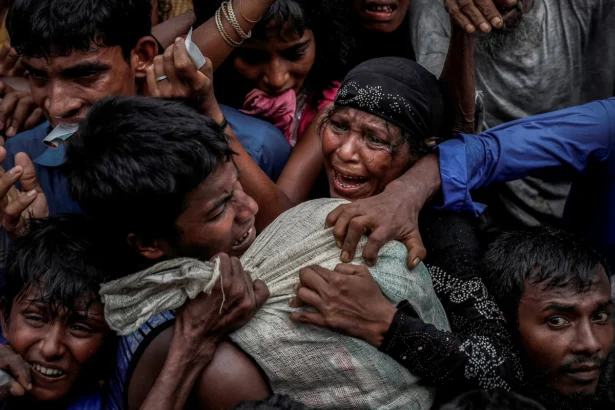
The judgment is being closely watched by Rohingya refugees in Bangladesh, where around 1.2 million people remain in camps in Cox’s Bazar after fleeing widespread violence in Myanmar in 2017.
The violence forced at least 730,000 Rohingya to leave their homes in Myanmar, a predominantly Buddhist country. Survivors have reported mass killings, sexual violence and the burning of entire villages during the military crackdown.
A United Nations fact-finding mission previously concluded that the military campaign involved acts of genocide.
Gambia has argued that Myanmar should be held internationally responsible for the alleged atrocities and violations of the 1948 Genocide Convention. It has also asked the court to order compensation for victims and ensure conditions for the safe return of Rohingya refugees.
The ICJ’s decision could have significant implications for international law and future genocide proceedings. Legal experts are particularly interested in how the judges assess a state’s responsibility for alleged genocidal acts committed by its military and other state institutions.
The ruling could also provide important legal guidance for other ongoing genocide cases, including South Africa’s proceedings against Israel over its military offensive in Gaza. Both Myanmar and Israel have rejected accusations of genocide.
Proving genocide before an international court is particularly challenging because it requires establishing the specific intention to destroy, wholly or partly, a national, ethnic, racial or religious group.
International courts have recognised genocide in only a limited number of cases since the Holocaust, including the 1994 genocide in Rwanda, the 1995 Srebrenica massacre in Bosnia and atrocities committed under Cambodia’s Khmer Rouge regime.
Although ICJ judgments are final and legally binding, the court has limited powers to enforce its decisions.
The ICJ deals with legal disputes between states and cases involving alleged violations of international treaties. It is separate from the International Criminal Court, which prosecutes individuals accused of genocide, war crimes and crimes against humanity and can impose prison sentences.
We welcome your contributions! Submit your blogs, opinion pieces, press releases, news story pitches, and news features to opinion@minutemirror.com.pk and minutemirrormail@gmail.com