Summary
- He said the impact of climate change, glacier melting and water pollution required a long-term national strategy rather than temporary measures.
- Mr Khan said universities could play an important role in addressing the water crisis by promoting research in water management, conservation, environmental law and climate change.
- The speaker appreciated the organisation of the symposium and said recommendations developed through consultation among experts and students could help improve water policy and management of the country’s water resources.
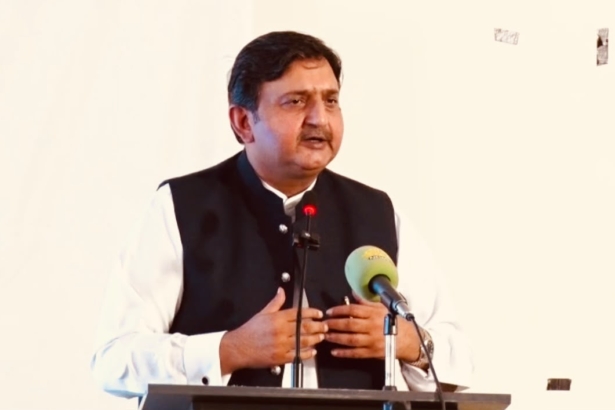
GUJRAT: Punjab Assembly Speaker Malik Muhammad Ahmad Khan has described Pakistan’s water crisis as a national issue, calling for long-term planning, construction of water reservoirs and an effective policy to protect the country’s water resources.
He was speaking at the inaugural session of a national symposium titled “Pakistan’s Water Future: Climate Change Adaptation, Sustainability and Water and Food Security” at the University of Chenab, Gujrat.
Mr Khan said the water crisis was not merely a matter of scarcity but also had political, administrative and social dimensions. He stressed the need for a national dialogue involving the government, universities, researchers, experts and students to develop a sustainable strategy for managing the country’s water resources.
“Water is a trust for future generations,” he said, adding that the present generation had a responsibility to protect it from pollution and ensure its availability for those to come.
The speaker expressed concern over pollution caused by industrial waste and untreated sewage, saying it posed serious threats to human health and the environment. Referring to industrial areas in Faisalabad and Kasur, he said effective measures were needed to control industrial pollution and address problems arising from unplanned settlements.
He also called for comprehensive planning to protect groundwater from contamination, including arsenic pollution, and said improvement in water drainage and management systems was equally important.
Mr Khan said Pakistan faced the paradox of water scarcity during normal periods and wastage of large quantities of water during floods. He stressed the need to improve water storage capacity, assess the feasibility of new reservoirs and invest in suitable projects.
He said the impact of climate change, glacier melting and water pollution required a long-term national strategy rather than temporary measures. Water management, he added, should be made part of national policy so that projects and policies continued regardless of changes in government.
The speaker called for negotiations to resolve water-related issues between Punjab and Sindh, saying such matters should be addressed through dialogue and in the larger national interest.
He also stressed the need for Pakistan and India to honour their existing water agreements and said disputes should be dealt with through negotiations and established rules rather than unilateral measures.
Mr Khan said universities could play an important role in addressing the water crisis by promoting research in water management, conservation, environmental law and climate change. Pakistan, he added, needed trained experts, lawyers and administrators capable of dealing with its future water challenges.
He said water conservation was not solely the responsibility of the government and called upon lawmakers, educational institutions, students and citizens to play their part.
The speaker appreciated the organisation of the symposium and said recommendations developed through consultation among experts and students could help improve water policy and management of the country’s water resources.