Summary
- In order to understand why The Stranger retains its status as a quintessential modernist text, one must look at how Camus intentionally hollows out classical narrative structures.
- Berlant defines cruel optimism as an intense attachment to social promises such as romantic love, career advancement, institutional religion, and family structures that actually impede an individual’s true flourishing.
- He reminds us that the social scripts we rely on for comfort are incredibly fragile and make one the ultimate stranger.
Albert Camus’s 1942 masterpiece The Stranger remains one of the most unsettling texts of the 20th century. Traditionally analysed through the lenses of existentialism and the Absurd. However, a contemporary critical reading offers an even more piercing framework utilising Lauren Berlant’s theory of Cruel Optimism. When viewed from this perspective, the novel transforms from a mere character study of an alienated man into a radical critique of the societal scripts we cling to for survival.
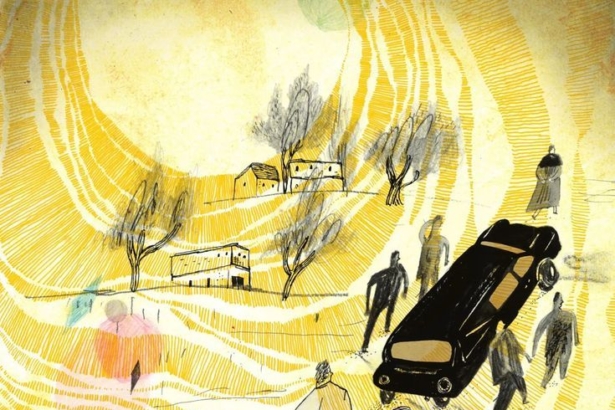
In order to understand why The Stranger retains its status as a quintessential modernist text, one must look at how Camus intentionally hollows out classical narrative structures. In a traditional tragedy, actions are heavy with moral consequence and backstories dictate fate. Camus completely discards this. Considering the pivotal turning point of the novel that’s the murder of the Arab on the sun-drenched beach. Camus strips the act of its classical tragic weight, rendering it a modernist occurrence driven purely by sensory overload by refusing a name, family, or history from the victim. The reason being oppressive glare of the sun that appealed raw impact of the bullets. The true horror is not just the gunfire, but the chilling silence that follows it. It creates a moral vacuum that society desperately tries to fill. As the narrative shifts from the beach to the courtroom, Camus exposes what can be described as society’s Meaning-Making Machine. The legal system behaves less like an instrument of justice and more like a theatrical stage to enforce emotional conformity. Interestingly, the state does not execute Meursault solely for the act of killing; they condemn him because he refuses to perform the expected social rituals of grief.
From his opening admission,
Mother died today. Or maybe yesterday; I can’t be sure.
Meursault establishes his detachment from conventional expectations. Because he smoked, drank coffee, and failed to cry at his mother’s funeral, the prosecution brands him a monster. The judicial system cannot tolerate the terrifying reality of the Absurd. The notion that a man might commit a crime simply because the weather was too hot. To maintain a false sense of security in a chaotic universe, society demands a logical motive, fabricating a monstrous identity for Meursault to make his execution feel justified. This is where Lauren Berlant’s concept of cruel optimism enlightened the text most brilliantly. Berlant defines cruel optimism as an intense attachment to social promises such as romantic love, career advancement, institutional religion, and family structures that actually impede an individual’s true flourishing. Society dictates that these standard achievements guarantee a meaningful existence. Throughout the novel, Meursault serves as a stranger entirely devoid of these optimistic illusions. When Marie asks if he loves her, he bluntly responds that the question is meaningless, though he supposes he does not. He refuses to romanticize domesticity. When offered a prestigious career transfer to Paris, he declines, noting that one life is just as good as another and that his current setup suits him perfectly. In his final hours, he vehemently rejects the chaplain’s attempts to offer divine forgiveness, choosing the stark reality of his impending death over the false comfort of an afterlife.
These attachments are optimistic because they promise flourishing; they are cruel because they can impede the very thriving they promise.
Lauren Berlant
Meursault acts as an unorganized entity rather than being a traditional sociopath who maliciously mimics human emotions to exploit others. He’s a Body without Organs whose radical honesty prevents him from participating in social theater altogether. Ultimately, The Stranger operates as a circular spiral into the void. The conclusion offers no easy redemption or neat resolution. Meursault faces execution just as his mother faced death.
Camus’s genius lies in showing that Meursault’s ultimate transgression is not malice, but his total refusal to play along with the systemic illusions of a structured life. He achieves an absolute, terrifying clarity by opening his heart to the benign indifference of the universe. He reminds us that the social scripts we rely on for comfort are incredibly fragile and make one the ultimate stranger.
We welcome your contributions! Submit your blogs, opinion pieces, press releases, news story pitches, and news features to opinion@minutemirror.com.pk and minutemirrormail@gmail.com