Summary
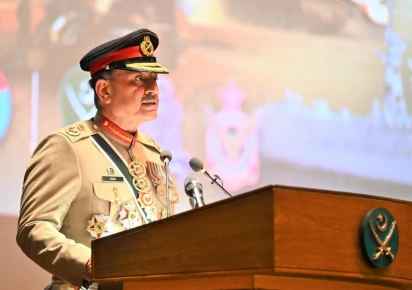
- ISLAMABAD: Chief of Defence Forces and Chief of Army Staff Field Marshal Syed Asim Munir and Interior Minister Mohsin Naqvi have left for Iran as Pakistan steps up diplomatic efforts to support regional peace and stability.
- He said the visit aims to strengthen bilateral cooperation between Pakistan and Iran and advance Islamabad’s efforts to promote peace and security in the region.
- Pakistan faces a delicate diplomatic balancing act as it maintains close relations with Iran while also preserving strategic and economic ties with the United States and Gulf states.
ISLAMABAD: Chief of Defence Forces and Chief of Army Staff Field Marshal Syed Asim Munir and Interior Minister Mohsin Naqvi have left for Iran as Pakistan steps up diplomatic efforts to support regional peace and stability.
According to the Inter-Services Public Relations (ISPR), the visit is focused on supporting efforts for a peaceful, lasting and comprehensive resolution to the ongoing conflict in the Middle East.
Iranian Foreign Ministry spokesperson Esmaeil Baghaei said Field Marshal Munir is leading an official delegation to Tehran, where he is expected to meet senior Iranian officials. He said the visit aims to strengthen bilateral cooperation between Pakistan and Iran and advance Islamabad’s efforts to promote peace and security in the region.
Munir’s latest trip marks his fourth visit to Tehran since the conflict between Iran and the United States intensified earlier this year. His repeated engagement reflects Pakistan’s attempt to maintain diplomatic channels between Tehran and Washington and support dialogue.
Pakistan has played a mediation role since tensions between Iran and the US escalated. Islamabad helped facilitate an understanding between the two sides in June that provided a framework for negotiations on issues including sanctions and Iran’s nuclear programme.
Although subsequent talks in Switzerland, mediated by Pakistan and Qatar, failed to produce a final agreement, Islamabad has continued to advocate dialogue. The initial 60-day negotiating period expired on August 17 without a breakthrough, while Iran has rejected the characterization of the period as a binding deadline.
During the latest visit, regional security is also expected to feature prominently in discussions. The situation around the Strait of Hormuz, tensions between Tehran and Washington and possible new US economic measures against Iran remain key concerns.
Pakistan faces a delicate diplomatic balancing act as it maintains close relations with Iran while also preserving strategic and economic ties with the United States and Gulf states. Munir and Naqvi’s visit is therefore being seen as another effort by Islamabad to keep diplomatic engagement alive and encourage a peaceful resolution to regional tensions.
We welcome your contributions! Submit your blogs, opinion pieces, press releases, news story pitches, and news features to opinion@minutemirror.com.pk and minutemirrormail@gmail.com