Summary
- The Challenge Fashion SEZ in Lahore aims to employ 25,000 people by 2030, a briefing note from the Chinese-led Challenge Group said.
- Challenge Fashion (Private) Limited led the export-oriented project, the note said.
- How the Challenge Fashion SEZ project began Plans for the Challenge Fashion SEZ are not new.
The Challenge Fashion SEZ in Lahore aims to employ 25,000 people by 2030, a briefing note from the Chinese-led Challenge Group said.
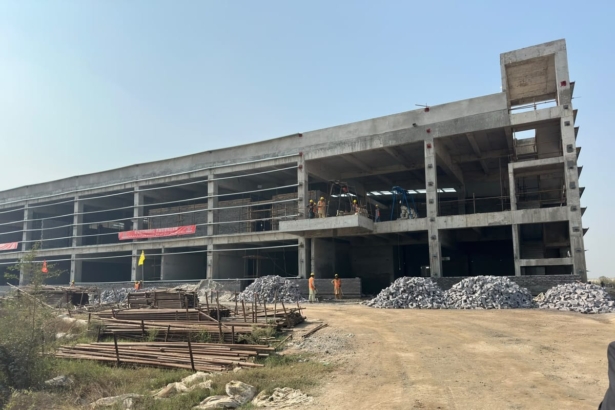
The note laid out a 100-acre industrial development built for export. Challenge Fashion (Private) Limited led the export-oriented project, the note said. The group brings Chinese technical skills, research and factory know-how. Also, the zone draws on Pakistan’s competitive production base. Developers are building it as an integrated platform for technical textiles, fabric making and apparel.
What the Challenge Fashion SEZ plans to make
The zone will focus on technical fabrics, which are cloths made for performance rather than looks. The note lists circular-knit and warp-knit technical fabrics, high-stretch synthetic performance fabrics, and premium polar fleece and merino wool.
Modern dyeing, automated smart factories and intelligent controls over production round out the list. The group said its China-Pakistan integration covers research and development, technical support, staff training and prototype development.
In addition, its customers of choice are top global sportswear and fashion labels. The zone builds on the group’s record of serving international outdoor and sportswear customers. Quality, innovation, sustainability and dependable execution are the stated focus.
Jobs and output at the Challenge Fashion SEZ
The roadmap runs year by year. In 2027, the first fabric mill is due to start at 25 tonnes a month. The employment target that year is 4,000. A year later, the zone plans another 25 tonnes of fabric capacity and a garment facility. The target then rises to 7,000 jobs.
For 2029, the note lists a progressive scale-up across fabric and garment operations, with 13,000 jobs. By 2030, it adds 50 tonnes of fabric capacity and another garment facility. The employment target then reaches 25,000.
Put simply, the Challenge Fashion SEZ target grows more than six-fold in four years. The note stated a monthly rate only for the first mill, so it does not show the total capacity by 2030.
Although the roadmap carries the word export in its title, the table lists only production and employment targets. However, it gives no export revenue figure and no investment amount.
How the Challenge Fashion SEZ project began
Plans for the Challenge Fashion SEZ are not new. In 2025, the Bank of Punjab and Challenge Fashion signed an MoU. It covered a $150 million Chinese investment in a 100-acre special economic zone, official statements said at the time.
Those statements spoke of 25,000 jobs over five years, a figure that matches the new note. They added that American brand names would carry the zone’s garments abroad, and that yearly export earnings would top $100 million.
Prime Minister Shehbaz Sharif later broke ground on the project. One report on that event put the investment at $100 million over five years. It said officials expected $400 million in exports once the zone was fully operational. So the reported figures differ by source, and the briefing note gives none of them.
Chinese textile firms have looked at moving production abroad for some years. In an interview in 2021, its managing director said Pakistan offered cheaper labour and good policies for special economic zones. She also complained about red tape in getting land and utilities.
What comes next
For now, the Challenge Fashion SEZ rests on a four-year roadmap that starts with a single fabric mill in 2027. Also, the project will need to hit each milestone to reach 25,000 jobs by 2030. The note offers no dates for hiring beyond the yearly targets.
We welcome your contributions! Submit your blogs, opinion pieces, press releases, news story pitches, and news features to opinion@minutemirror.com.pk and minutemirrormail@gmail.com