Summary
- Islamabad: Serious administrative irregularities have emerged in the Ministry of National Health Services, Regulations and Coordination (NHSR&C) after a Senate committee was informed that three former employees of the Federal Directorate of Immunization (FDI) were regularized in government service in 2024 despite remaining at home without salary for nearly five years following the expiry of their contracts.
- The Senate Functional Committee on Problems of Less Developed Areas expressed concern over the appointments and directed the ministry to initiate disciplinary action against the former Joint Secretary who allegedly issued the regularization orders without following the prescribed legal procedures.
- The committee also raised concerns about the reported availability of counterfeit medicines and vaccines in rural areas, questioned the effectiveness of enforcement by the Drug Regulatory Authority of Pakistan (DRAP), and called for urgent measures to protect public health.
Islamabad: Serious administrative irregularities have emerged in the Ministry of National Health Services, Regulations and Coordination (NHSR&C) after a Senate committee was informed that three former employees of the Federal Directorate of Immunization (FDI) were regularized in government service in 2024 despite remaining at home without salary for nearly five years following the expiry of their contracts.
The Senate Functional Committee on Problems of Less Developed Areas expressed concern over the appointments and directed the ministry to initiate disciplinary action against the former Joint Secretary who allegedly issued the regularization orders without following the prescribed legal procedures.
The committee also raised concerns about the reported availability of counterfeit medicines and vaccines in rural areas, questioned the effectiveness of enforcement by the Drug Regulatory Authority of Pakistan (DRAP), and called for urgent measures to protect public health.
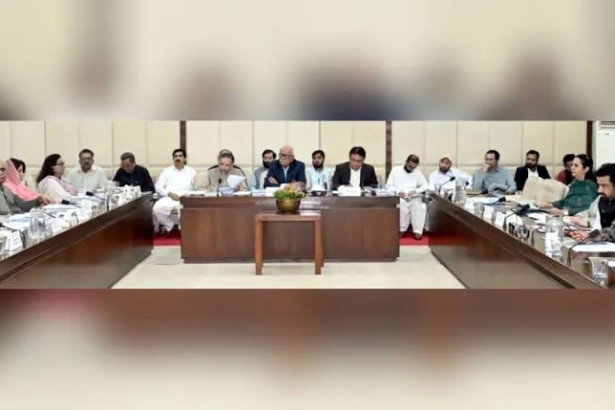
The matters were discussed during a meeting of the Senate Functional Committee on Problems of Less Developed Areas, chaired by Senator Niaz Ahmed at Old PIPS Hall, Parliament Lodges, Islamabad.
Senators Kazim Ali Shah, Jan Muhammad and Aimal Wali Khan attended the meeting along with senior officials of the Ministry of National Health Services, FDI and other concerned departments.
During the meeting, the Additional Secretary of the Ministry of National Health Services disclosed that three employees had originally been appointed on a contract basis under a Public Sector Development Programme (PSDP) project operating between 2016 and 2019.
After their contracts expired, the employees remained at home without receiving salaries for approximately five years.
However, the committee was informed that they were regularized in 2024 without completing the required legal and administrative formalities.
According to the ministry’s briefing, an audit objection had declared the regularization irregular and outside the lawful authority of the then Joint Secretary who issued the orders.
The committee was further informed that show cause notices had already been issued to the three employees.
Taking serious notice of the matter, Senator Niaz Ahmed directed the ministry to initiate disciplinary proceedings against the official responsible for issuing the disputed orders.
The chairman emphasized that accountability should not be limited to the employees who benefited from the decisions but should also extend to the official who allegedly acted beyond his authority.
The development raised questions about how employees whose contracts had expired several years earlier were brought back into government service without completing the required procedures.
Meanwhile, the committee expressed concern about the reported presence of counterfeit medicines and vaccines in rural and less developed areas of Pakistan.
Members questioned whether DRAP was taking sufficient action to prevent the circulation of fake pharmaceutical products, particularly in remote communities where access to proper healthcare services is already limited.
The committee observed that counterfeit medicines and vaccines could pose serious risks to patients and weaken public confidence in healthcare services.
Lawmakers called for stronger monitoring, effective enforcement and better coordination between federal and provincial health authorities to address the reported problem.
During the discussion, ministry officials informed the committee that a new 2D barcode tracking system had been introduced for pharmaceutical products, with the stated effective date of October 10, 2026.
Under the system described by officials, citizens would be able to use their mobile phones to check the authenticity of medicines by scanning the barcode printed on pharmaceutical packaging.
The committee was informed that the system was intended to improve the tracking of medicines and help identify counterfeit products.
Officials also stated that a formal inauguration of the system by the Prime Minister was expected soon.
The committee stressed the need for effective implementation of the new tracking system and stronger enforcement by DRAP.
The Federal Directorate of Immunization also presented a detailed briefing on the country’s vaccination programme and its performance during the past three years.
The Director General of FDI informed lawmakers that Pakistan’s Expanded Programme on Immunization (EPI), established in 1978, currently targets 13 vaccine preventable diseases.
The programme aims to provide protection to an annual group of approximately 7.3 million children across Pakistan.
According to the briefing, national immunization coverage currently stands at approximately 80 to 81 percent.
Azad Jammu and Kashmir was reported to have achieved vaccination coverage of 93 percent, while Punjab recorded approximately 90 percent.
The committee was further informed that the number of zero dose children, meaning children who have not received routine vaccination, had declined from approximately 400,000 to 160,000 over the past three years.
The reduction was presented as an important improvement in the country’s vaccination efforts.
However, the remaining 160,000 children without routine vaccination raised concerns about the need to reach families living in remote and underserved areas.
Officials informed the committee that Balochistan had recorded a 19 percent improvement through community engagement initiatives involving local populations.
The committee was also briefed on new vaccination initiatives, including the introduction of the Human Papillomavirus (HPV) vaccine.
According to officials, HPV vaccination coverage had reached 78 percent in Khyber Pakhtunkhwa.
The directorate also informed lawmakers that the government planned to introduce a hexavalent vaccine in January 2027.
The hexavalent vaccine is designed to provide protection against six diseases through a single combined vaccine, helping simplify routine childhood immunization.
During the discussion, committee members raised concerns about the continued presence of polio in Pakistan and Afghanistan.
They questioned why the disease remained a major public health challenge despite years of vaccination campaigns and substantial efforts to eradicate it.
The committee emphasized the need for improved vaccination coverage, stronger public awareness campaigns and more effective cooperation between health authorities.
Officials also informed the committee that a National Vaccine Policy had been prepared and was awaiting approval from the federal cabinet.
The proposed policy is intended to provide a national framework for vaccination planning and coordination.
Another important development discussed during the meeting concerned efforts to improve the local production of essential medicines and vaccines.
Ministry officials disclosed that negotiations were underway with Russian pharmaceutical firms regarding possible joint ventures for manufacturing insulin and vaccines in Pakistan.
The discussions are aimed at exploring opportunities for local production, although the committee was not informed of any finalized agreement, investment amount or confirmed production schedule.
Members also raised concerns about salaries and working conditions of immunization field staff serving in remote areas of Khyber Pakhtunkhwa and Balochistan.
The committee observed that frontline workers play an important role in reaching children in difficult areas and that their employment and salary issues require attention.
Following the detailed discussion, Senator Niaz Ahmed called for a special meeting dedicated entirely to public health concerns involving DRAP, FDI and provincial health departments.
The committee directed that the meeting be arranged within 10 days to examine the reported circulation of counterfeit medicines, the salaries of immunization field workers and the challenges facing polio eradication.
We welcome your contributions! Submit your blogs, opinion pieces, press releases, news story pitches, and news features to opinion@minutemirror.com.pk and minutemirrormail@gmail.com