Summary
- China has issued a sharp warning against Japan’s growing military ambitions in space, cautioning that Tokyo’s latest defence reforms risk accelerating the weaponisation of space and fuelling a broader global arms race.
- Responding to media queries, Chen said Japan has “openly designated space as an operational domain” and is actively pursuing a military build-up beyond Earth’s atmosphere a shift that Beijing views with deep concern.
- Chen stressed that space should remain a domain for peaceful use, warning that its militarisation could undermine global security, economic development, and technological cooperation.
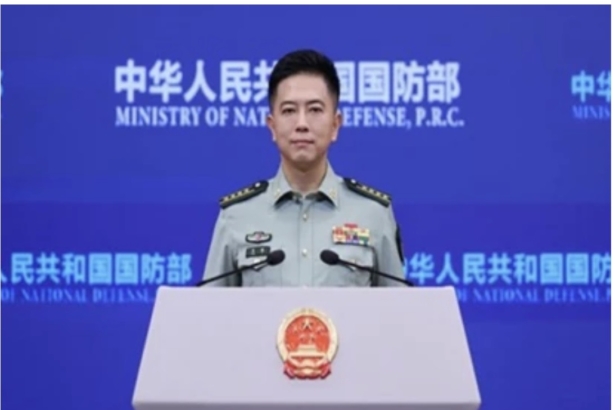
China has issued a sharp warning against Japan’s growing military ambitions in space, cautioning that Tokyo’s latest defence reforms risk accelerating the weaponisation of space and fuelling a broader global arms race. Senior Colonel Chen Xi, spokesperson for China’s Ministry of National Defence, criticised Japan’s recent legislative move to rename its Air Self-Defence Force as the Aerospace Self-Defence Force and establish a specialised Space Operations Wing.
Responding to media queries, Chen said Japan has “openly designated space as an operational domain” and is actively pursuing a military build-up beyond Earth’s atmosphere a shift that Beijing views with deep concern. “Over the past five years, Japan’s military spending has increased tenfold, while its operational forces have expanded more than 30-fold,” Chen added. “These moves have accelerated the weaponisation and militarisation of space and fuelled a space arms race.”
He described the developments as further evidence that “neo-militarism in Japan has become a real threat,” urging the international community to remain vigilant and take steps to counter what he termed Tokyo’s accelerated remilitarisation. Chen stressed that space should remain a domain for peaceful use, warning that its militarisation could undermine global security, economic development, and technological cooperation. “The lasting peace and security of space bear on the prosperity of all countries,” he said.
Japan has defended its evolving security posture, arguing that its reforms are aimed at strengthening deterrence amid a rapidly changing security environment. Tokyo maintains that its moves are defensive in nature and necessary to address emerging threats. However, Beijing’s criticism reflects a broader pattern of concern in the region, particularly across Southeast Asia, where Japan’s shifting military stance is being closely watched.
Analysts say Japan’s transformation marks a visible departure from its post-World War II pacifist framework, under which it limited its military capabilities and emphasised economic cooperation. Recent developments, including increased defence spending to around two per cent of GDP, expanded security partnerships, and the potential deployment of long-range missile systems, have raised questions about Tokyo’s long-term strategic intentions. As competition among major powers increasingly extends into space, the risk of miscalculation and escalation is becoming a growing concern for policymakers worldwide. Whether Japan’s evolving role ultimately contributes to regional security or exacerbates existing fault lines will depend not only on its policies but also on how they are perceived and responded to by its neighbours.
We welcome your contributions! Submit your blogs, opinion pieces, press releases, news story pitches, and news features to opinion@minutemirror.com.pk and minutemirrormail@gmail.com