Summary
- Consequently, China’s image among Pakistani Public has become increasingly positive Beyond Pakistan, the survey also suggests that China is increasingly perceived as a contributor to global peace and stability.
- The survey also explores whether people believe China considers the interest of developing countries when making international policy decisions.
- Many developing countries view China as a partner that understands their development challenges and provides economic cooperation through investment, trade, infrastructure financing, and technology transfer.
By Absara Kashaf
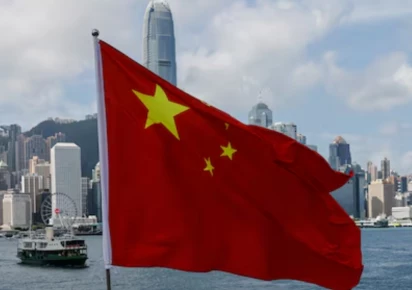
The international political landscape is undergoing a noticeable transformation. For many years, the United States was widely regarded as the world’s most influential political, economic and military power. However, recent global opinion surveys indicate that public perceptions are changing. Countries around the world are increasingly evaluating global powers not only by their military strength but also by their economic cooperation, development assistance, investment and diplomatic engagement. The Latest Pew Research Center Global Attitudes Survey (july 2026) provides important evidence of this shift. Based on interviews with 42,151 adults across 36 countries, the survey reveals that China now enjoys a more favorable public image than the United States in a majority of the countries included in the study. The findings highlights China’s growing international influence, particularly among developing and middle-income nations. One of the survey’s most significant findings is that China is viewed more favorably than the United States in 30 of the 36 countries surveyed. This represents a remarkable change in global public opinion. While the United States continues to enjoy strong support in few countries, particularly among some of its long-standing allies, China has gained considerable public approval across Asia, Latin America, and parts of Europe. This shift suggests that many people now associate China with economic opportunity, infrastructure development, and long-term cooperation rather than viewing it solely as an emerging global competitor.
China’s growing popularity is closely linked to its expanding economic partnerships around the world. Over the past two decades, China has invested billions in infrastructure projects, transportation networks, energy development, industrial zones, digital connectivity and trade agreements. Through initiatives such as Belt and Road Initiative (BRI), China has financed highways, railways, ports, power plants, and industrial zones in numerous developing countries. These projects have contributes to economic growth, employment opportunities and improved connectivity in many regions. As a result, public opinion in several countries increasingly reflects appreciation for China’s contribution to national development.
The survey further shows that 69 percent of respondents in 17 middle-income countries consider China to be somewhat or very reliable international partner. This finding is particularly important because middle-income countries often seek foreign investment, technology and infrastructure financing to support their development goals. Many respondents appear to believe that China provides practical economic cooperation without imposing extensive political conditions. Whether this perception fully reflects reality remains a subject of academic debate, but it undoubtedly contributes to China’s improving international image.
Another major finding concerns confidence in Chinese President Xi Jinping. According to the survey, global confidence in Xi Jinping has improved compared to previous years. Across many countries, larger number of respondents believe that President Xi will make responsible decisions regarding international affairs. Although confidence levels differ from one country to another, the overall trend indicates that China’s leadership is gaining broader international acceptance. Leadership perceptions often influence how countries are viewed internationally, making this finding particularly significant for understanding China’s growing diplomatic influence.
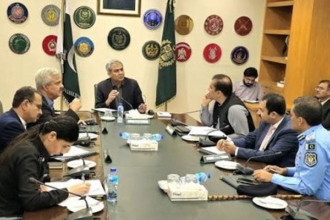
Among all the countries surveyed, Pakistan recorded one of the strongest levels of support for China. According to the survey, 90 percent of Pakistanis expressed a favorable opinion of China, while 83 percent reported confidence in President Xi Jinping to do the right things regarding world affairs. These are among the highest approval ratings recorded anywhere in the survey. In contrast, only 15 percent of Pakistanis expressed a favorable opinion of the United States, while confidence in former U.S President Donald Trump stood at just 12 percent. These figures demonstrate the exceptionally positive image that China currently enjoys among the Pakistani public.
Several factors help explain Pakistan’s strong support for China. The two countries have maintained close diplomatic and strategic relations for decades, often referring to their friendship as an “all-weather strategic partnership”. In recent years, this relationship has expanded significantly through the China-Pakistan Economic Corridor (CPEC), one of the flagship projects under the Belt and Road Initiative. CPEC includes investments in roads, highways, ports, power generations, industrial zones, and communication infrastructure. Many Pakistanis associate these projects with improved economic opportunities, enhanced connectivity, and future development. Consequently, China’s image among Pakistani Public has become increasingly positive
Beyond Pakistan, the survey also suggests that China is increasingly perceived as a contributor to global peace and stability. One notable example is South Africa, where the proportion of respondents who believe China contributes positively to global peace increased from 47 percent in 2023 to 64 percent in 2026. Similar improvements were observed in several other developing countries. China’s active participation in diplomatic negotiations, peacemaking missions, humanitarian assistance, and international development initiatives appears to have strengthened its reputation among many respondents.
The survey also explores whether people believe China considers the interest of developing countries when making international policy decisions. Among respondents in the 17 middle-income countries, 57 percent stated that China takes the interests of countries like their own into account. This finding reflects an important aspect of China’s international strategy. Many developing countries view China as a partner that understands their development challenges and provides economic cooperation through investment, trade, infrastructure financing, and technology transfer. Whether this perception continues in the future will depend on China’s policies and long-tern outcomes of its international projects
Despite China’s growing popularity, the survey also demonstrates the global opinion remains diverse. Several countries continue to express stronger support for the United States than for the China. These include Japan, India, Philippines, Israel, Poland, and South Korea. Historical alliances, security partnerships, regional geopolitical concerns, and territorial disputes continue to influence public opinions across countries.
The findings also illustrated the growing importance if soft power illustrates the growing importance of soft power in international relations. Soft power refers to a country’s ability to influence others through attraction, cooperation, culture, diplomacy and economic engagement rather than military force. China’s engagement in infrastructure, trade, education techonolgy in many developing countries have strengthened its soft power in many developing countries. Public opinion surveys such as Pew’s demonstrate that these efforts are increasingly shaping how ordinary citizens perceive China’s global role.
The finding offer important insights for policy makers and researchers into the changing nature of global influence. Public opinion shapes diplomacy, trade, and international partnerships, making China’s improving image significant for future global governance and international cooperation.
We welcome your contributions! Submit your blogs, opinion pieces, press releases, news story pitches, and news features to opinion@minutemirror.com.pk and minutemirrormail@gmail.com