Summary
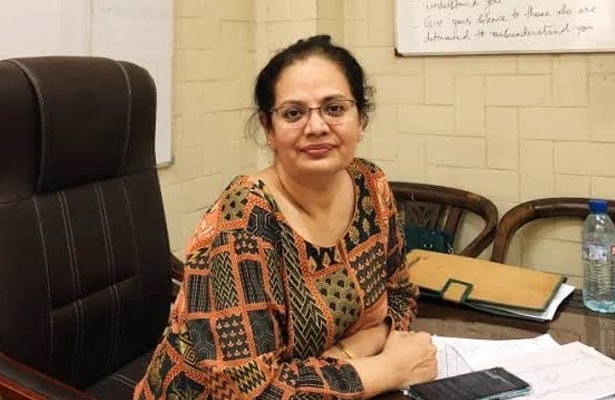
- The commission asked Dr Summaiya how long she had been serving as police surgeon.
- Dr Summaiya said a body can be brought to the hospital by relatives, police or an ambulance.
- The commission asked Dr Summaiya about a statement by Dr Usama that a sweeper had assisted him during the post-mortem.
The judicial commission investigating the Mir Raza murder case continued its proceedings on Tuesday, questioning key officials about the post-mortem and medico-legal procedures.
Mir Raza’s father and sister appeared before the commission along with investigating officer DSP Siraj Lashari, SHO Adeel Afzal, head moharrir Zeeshan, Police Surgeon Dr Summaiya and head of the medical board Naseem Ahmed.
The commission asked Dr Summaiya how long she had been serving as police surgeon. She said she had been working as Karachi’s police surgeon since June 10, 2022.
She told the commission that she had conducted 99 exhumations in Karachi and Thatta. She also said she completed her MBBS from Dow Medical College in 1996.
The commission asked about the standard procedure followed when a dead body is brought to a hospital.
Dr Summaiya said a body can be brought to the hospital by relatives, police or an ambulance. A medico-legal certificate is issued for every body received, and police are informed if they are not already present.
She said police documents required under the Code of Criminal Procedure are necessary for a post-mortem. A post-mortem proforma was prepared in 2021, she added.
According to Dr Summaiya, DNA samples are collected from unidentified bodies. Photographs of the body are mandatory during a post-mortem, while the external condition and level of decomposition must also be recorded.
She said injuries are examined from head to toe and each injury must be photographed. Doctors determine whether injuries occurred before or after death and also examine the body for signs of sexual assault or fractures.
The time between death and the post-mortem is also assessed. A final post-mortem report is issued after chemical examination, she said.
The commission asked Dr Summaiya about a statement by Dr Usama that a sweeper had assisted him during the post-mortem.
Dr Summaiya rejected the statement, saying the person present was a laboratory assistant, not a sweeper. She identified him as lab assistant Shoaib Rashid and said he was trained to assist in post-mortem examinations.
She said 15 to 18 post-mortems are conducted daily at Jinnah Hospital, making it impossible for her to personally attend every case. However, she personally supervises high-profile and suspicious cases.
The commission also asked whether medico-legal officers were properly trained.
Dr Summaiya said MLOs receive training and are provided with protocols, but they often do not take sufficient interest in their duties despite receiving the required training.
We welcome your contributions! Submit your blogs, opinion pieces, press releases, news story pitches, and news features to opinion@minutemirror.com.pk and minutemirrormail@gmail.com