Summary
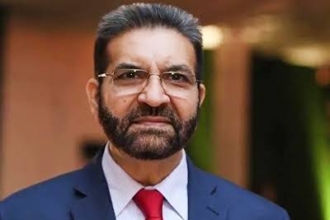
- Maulana Fazlur Rehman, chief of the Jamiat Ulema-e-Islam-Fazl (JUI-F), sparked widespread controversy after remarks made during a political gathering were widely interpreted as equating the sacrifices of Pakistan’s martyrs with the concept of a monthly salary.
- Political leaders from rival parties, including the Pakistan Muslim League-Nawaz (PML-N) and the Pakistan Peoples Party (PPP), jointly condemned the remarks, emphasizing that a soldier’s sacrifice cannot be measured in financial terms and that martyrdom reflects devotion, duty, and an enduring bond between the armed forces and the nation.
- It is a matter of profound national consensus that such remarks are not acceptable to the people of Pakistan, and the public has demonstrated this through a powerful and vociferous show of condemnation.
Maulana Fazlur Rehman, chief of the Jamiat Ulema-e-Islam-Fazl (JUI-F), sparked widespread controversy after remarks made during a political gathering were widely interpreted as equating the sacrifices of Pakistan’s martyrs with the concept of a monthly salary. The comments triggered strong public backlash across the country, with many viewing the comparison as disrespectful to those who gave their lives for the nation’s sovereignty and security. The controversy has grown beyond a political dispute into a broader debate about patriotism, sacrifice, honor, and the nation’s obligation to remember its fallen soldiers. Many Pakistanis regard the perceived comparison as morally unacceptable and believe it undermines the values associated with the country’s history of conflict and counterterrorism efforts.
Political leaders from rival parties, including the Pakistan Muslim League-Nawaz (PML-N) and the Pakistan Peoples Party (PPP), jointly condemned the remarks, emphasizing that a soldier’s sacrifice cannot be measured in financial terms and that martyrdom reflects devotion, duty, and an enduring bond between the armed forces and the nation. They argued that the families of martyrs mourn the loss of loved ones rather than lost income and rejected the idea that patriotism can be reduced to material compensation. Intellectuals, retired bureaucrats, academics, and artists also criticized the comments, describing them as offensive to the nation’s collective memory and particularly painful for the families of martyrs from the wars of 1948, 1965, 1971, and the fight against terrorism. They maintained that the sacrifices of martyrs symbolize selflessness, inspire future generations, and form an important part of Pakistan’s moral and national identity, making any perceived attempt to diminish or trivialize them deeply hurtful and widely condemned.
The nationwide condemnation has been nothing short of extraordinary, with critics from every walk of life arguing that the JUI-F chief’s remarks amount to a blatant and calculated insult to the sacrifices of Pakistan’s martyrs. This sentiment is not confined to the urban elite or the political class; it has permeated every village, every town, and every city, where ordinary citizens have expressed their outrage through protests, social media campaigns, and public discussions. The critics have meticulously dissected the logic, or the lack thereof, behind the Maulana’s statement, pointing out that a soldier’s decision to embrace martyrdom is driven by a complex interplay of duty, honor, faith, and an unshakable love for the motherland, none of which can be quantified in terms of currency. They have drawn attention to the fact that Pakistan has lost thousands of its finest young men and women in the line of duty, and each one of these martyrs made a conscious choice to prioritize the nation’s survival over their own personal safety and well-being. To suggest, even implicitly, that these individuals were merely doing a job for a salary is to grossly misrepresent the reality of their commitment and to show a complete disregard for the cultural and religious significance of martyrdom in Pakistani society. In Islam, the status of a martyr, or a “shaheed,” is considered to be among the highest in the afterlife, and the families of martyrs are held in great esteem for their sacrifice. By making his controversial remarks, the critics argued, the Maulana has not only offended the sensibilities of the nation but has also transgressed the boundaries of religious respect, a particularly ironic offense given his standing as a religious cleric.
Political and social circles have unanimously described the statement as utterly unacceptable, emphasizing that it has managed to deeply hurt the emotions of millions of Pakistanis who view the martyrs as their personal heroes and the protectors of their way of life. The emotional resonance of this issue cannot be overstated, as the Pakistani identity is inextricably linked to the concept of sacrifice, a concept that has been repeatedly tested and proven throughout the country’s turbulent history. The families of those who sacrificed their lives in service of the country are regarded as the living symbols of this national virtue, and they are entitled to the utmost respect and reverence from every citizen and every public figure. The statement from the JUI-F chief has therefore been perceived as a violation of this sacred social contract, a breach of the implicit trust that the people place in their leaders to uphold the dignity of the nation’s heroes. The widespread condemnation is thus not merely a reaction to a single political gaffe; it is a collective defense mechanism of a society that is determined to protect the sanctity of its most cherished symbols. The people are sending a clear and unambiguous message that the martyrs are beyond reproach and beyond political point-scoring, and any attempt to use them as a tool for political rhetoric will be met with fierce and unyielding resistance. This is a matter of national pride and collective self-respect, and the public has made it abundantly clear that they will not allow anyone, regardless of their political stature, to tarnish the legacy of the fallen.
It is a matter of profound national consensus that such remarks are not acceptable to the people of Pakistan, and the public has demonstrated this through a powerful and vociferous show of condemnation. The common citizen, who may not be deeply involved in the intricacies of political maneuvering, understands intuitively that the peace and security they enjoy today are the direct results of the blood shed by the soldiers of the Pakistan Army. From the snow-capped peaks of Siachen, where soldiers brave the harshest conditions on earth, to the treacherous deserts of Balochistan and the dense forests of Khyber Pakhtunkhwa, the men and women in uniform are perpetually engaged in a relentless struggle to safeguard the nation’s borders and its internal stability. The people acknowledge the remarkable services of the Pakistan Army with a profound sense of gratitude, recognizing that without the army’s dedication, the nation would have long succumbed to the forces of chaos, extremism, and external aggression. The army has not only defended the country from foreign threats but has also played a pivotal role in disaster relief, providing essential aid during floods, earthquakes, and other natural calamities, thereby earning the enduring affection and trust of the populace. This deep-seated respect is not cultivated through propaganda but is earned through decades of consistent sacrifice and service, and it is this genuine appreciation that has been affronted by the Maulana’s thoughtless words. The people’s love for the Pakistan Army is a testament to their understanding that the army is the ultimate guarantor of their freedom, and this love is inextricably tied to the reverence they hold for the martyrs who have made the ultimate contribution to that freedom.
The nation is acutely aware that the Pakistan Army has ensured our peace by giving their very blood, and this fundamental truth has been the bedrock of the civil-military relationship throughout the country’s history. Every inch of Pakistani soil is soaked with the sweat and blood of its soldiers, who have fought valiantly to repel invaders, crush insurgencies, and maintain law and order in the face of overwhelming odds. The war against terrorism, which spanned over two decades, was a particularly brutal chapter in this history, where the army bore the brunt of the enemy’s fury, losing thousands of its personnel in the process. These brave individuals did not fight for a paycheck; they fought for an idea, an idea of Pakistan as a peaceful, stable, and prosperous nation where future generations could live without fear. Their sacrifices have created a buffer of safety that allows the rest of the nation to sleep peacefully at night, to pursue their livelihoods, to educate their children, and to dream of a better future. To attempt to reduce this colossal contribution to a mere economic transaction is not only factually incorrect but also incredibly disrespectful to the memory of the fallen and the enduring grief of their families. The people of Pakistan understand this reality with absolute clarity, and they have forcefully rejected the Maulana’s narrative, deeming it a deliberate attempt to sow discord and undermine the morale of the armed forces. This rejection is a testament to the national maturity and the collective wisdom of the populace, who refuse to be swayed by divisive rhetoric and remain steadfast in their support for their defenders.
Given the gravity of the offense, the nation has strongly rejected the remarks and issued a resounding call for immediate apologies from the elements who have so carelessly hurt the families of the martyrs and the sentiments of the entire nation. The demand for an apology is not rooted in a desire for political vengeance but in the simple and just expectation that those in positions of influence should adhere to a certain standard of decency and respect. An apology is seen as the minimum possible reparation that can be offered to mend the emotional damage that has been inflicted, and it would serve as a public acknowledgment that the remarks were a grave error in judgment. The people believe that a sincere and unconditional apology would go a long way in restoring some measure of trust and in reaffirming the national consensus that the martyrs are sacred. The outrage has been so overwhelming that the Maulana’s own politicali allies have found themselves in a difficult position, forced to either defend the indefensible or to distance themselves from the controversy to protect their own political futures. This isolation further underscores the strength of the public sentiment, which has effectively cornered the JUI-F chief and forced the nation to confront the broader issue of how the sacrifices of its heroes are discussed in public discourse. The controversy has thus served as a critical moment of national introspection, a reminder that the language of politics must be tempered with the language of respect, especially when it concerns those who have given their lives for the country. Ultimately, the entire episode has reaffirmed the unshakeable and durable bond between the people of Pakistan and their armed forces, a bond that is built on a foundation of mutual sacrifice, unwavering respect, and a shared vision for a secure and sovereign Pakistan. The collective voice of the nation, speaking in a thunderous chorus of unity, has defended the honor of its martyrs and has sent a powerful and enduring message that their sacrifices will never be forgotten, nor will they ever be trivialized by any political expediency or rhetorical misstep.
We welcome your contributions! Submit your blogs, opinion pieces, press releases, news story pitches, and news features to opinion@minutemirror.com.pk and minutemirrormail@gmail.com