Summary
- However, recent election data and digital trends reveal that right-wing movements are vastly attracting young people.
- Traditional centrist and left-leaning governments are increasingly viewed by youth as ineffective. Young people face a economic outlook where homeownership and stable careers feel out of reach.
- The way history and politics are consumed online has fundamentally altered how young people view the past.
Recent political shifts across Europe and the West have initiated specific global conversation nobody saw it coming. A growing segment of Generation Z is embracing far-right populist ideologies. Conventional wisdom assumed that younger generations would inherently lean more progressive climate action and social justice. However, recent election data and digital trends reveal that right-wing movements are vastly attracting young people.
To understand this phenomenon, we must examine the intersection of economic anxiety, digital algorithms, and online radicalization. One of the primary spark igniting Gen Z toward right-wing politics is the decent use of short video platforms like TikTok. In countries like Germany, the far-right Alternative für Deutschland (AfD) party completely dominated the digital space during election cycles. Right-wing political actors use high-volume strategies. They consume artificial intelligence and automated content to pump thousands of videos into social feeds daily. Video platforms are built to maximize engagement rather than historical nuance. Algorithms naturally amplify content that triggers strong emotional responses like outrage, fear, or national pride. Then, it bestow polarizing political movements a massive advantage. Rather than leading with aggressive extremism, many modern right-wing influencers mask their political agendas. They hide under the guise of lifestyle content, dating advice, or relatable humor. This move makes their underlying ideologies highly palatable to young viewers.
It is a mistake to assume that young people are being influenced solely by their phone screens. Generation Z has come of age during a tumultuous era. The global markets are shattered by soaring inflation, housing crises, and geopolitical instability. Traditional centrist and left-leaning governments are increasingly viewed by youth as ineffective. Young people face a economic outlook where homeownership and stable careers feel out of reach. So, the protectionist promises of right-wing populism can feel like a solution to their stressful situation.
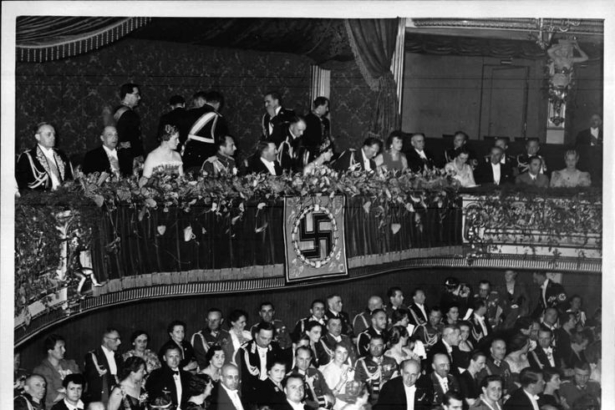
The way history and politics are consumed online has fundamentally altered how young people view the past. In digital spaces, complex historical atrocities are frequently subjected to context collapse. History neatly broken down into decontextualized soundbites, memes, and aesthetic videos. Within online gaming communities, authoritarian imagery is frequently recycled under layers of irony and dark humor. What begins as trolling to push societal boundaries can gradually desensitize young users. Eventually, the pushed boundaries morph into genuine ideological alignment. When history is reduced to a viral aesthetic, the gravity of totalitarianism is lost. All it leaves behind is a void that right-wing radicalization is quick to fill.
Ultimately, Gen Z’s rightward tilt is not a random anomaly. It’s asymptom of generation searching for certainty in an unstable world. As traditional institutions lose credibility, the forces controlling the digital economy are the ones affecting the future politics.
We welcome your contributions! Submit your blogs, opinion pieces, press releases, news story pitches, and news features to opinion@minutemirror.com.pk and minutemirrormail@gmail.com