
Summary
- A modern governance system should therefore consider the creation of new provinces or constitutionally recognized administrative units, based on population, geography, economic viability, administrative accessibility, historical and cultural considerations, and the ability to provide effective public services.
- Where existing provinces have become too large to administer effectively, new administrative units could bring government closer to citizens, improve resource allocation, strengthen accountability and allow regional development plans to be tailored to local needs.
- Now, keeping in view the concept of new provinces or new administrative units, under a Democratic Technocracy model, each administrative unit could have an elected political government supported by professional technocratic administration.
A truly democratic-technocratic model for Pakistan should also address the country’s administrative structure. Pakistan is too large and administratively complex to depend on highly centralized decision-making from Islamabad and provincial capitals. A modern governance system should therefore consider the creation of new provinces or constitutionally recognized administrative units, based on population, geography, economic viability, administrative accessibility, historical and cultural considerations, and the ability to provide effective public services. This distribution must not be based on the ground of nationality. In my personal opinion, in Pakistan, there is a very emotional and stimulation mind sets found everywhere, they create prejudice mentality among the whole nation. All provinces names should be on the basis of their respective specialty of that particular area. Sindh, Punjab, Khaiber pakhtoon kha, Balochistan, these names also must be changed to other names. This will remove the nation base mentality.
The objective should not be to divide Pakistan on the basis of ethnicity, language or political rivalry. Rather, administrative boundaries should be designed around governance and public welfare. Where existing provinces have become too large to administer effectively, new administrative units could bring government closer to citizens, improve resource allocation, strengthen accountability and allow regional development plans to be tailored to local needs.
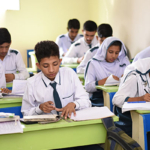
Here is a very common example, as if there is a school, when strength of the students increases, school starts to produce more campus, this is just because of good administration, to deliver good services, to provide better education to all students equally. So same case is in Pakistan, now the population has been reached out more than 250 million. While, at the time of 1947, the population was 70-75 million, that was combined, west and East Pakistan both, and West Pakistan comprised of only 32-33 million. Now imagine, now the population is more than 250 million and provinces are same. The population has been increases up to 681%. Imagine….!
Punjab population was 20 million in 1947, now in 2026 is 127 million. Sindh population was 6 million in 1947 and now in 2026 is 56 million. Similarly KPK was 11 million in 1947 and now is 41 million, Baluchistan was 4.3 million in 1947 and now is 15 million. By these figures, more provinces or administrative units must have been developed many years ago. When we look for cities of Sindh, as the largest opposition found in Sindh against this proposal, we see, Karachi population was 1 million and in 2026 is more than 20 million, Hyderabad was 5-6 lacs, means 500 to 600 thousands, and now in 2026 is 2.4 million. Similarly Tharparker population was almost 300 thousand only, now near to 2 million, Nawabshah, currently is SBA was 500 thousand in 1947 now in 2026 is almost 2 million, Larkana was 420 thousands and now is 1.7 million, Sukkur was 340 thousand in 1947 and now is 1.6 million. If I write the whole country data then we need many pages, so these main examples are presented to elaborate that new provinces or administrative units are compulsory in the country for the betterment of Pakistan and the people of Pakistan.
Now, keeping in view the concept of new provinces or new administrative units, under a Democratic Technocracy model, each administrative unit could have an elected political government supported by professional technocratic administration. Citizens would elect their representatives, while key departments would be managed by qualified professionals and career administrators. Health systems could be led by experienced health administrators and public-health professionals; education by education-policy specialists; municipal development by professional urban planners and engineers; finance by qualified public-finance specialists; and agriculture, water, energy and industry by relevant technical experts. In current system, our all ministries have, very unfortunately, absolute irrelevant Persons to run that particular area, except a very few.
Now see this model, would create a three-level governance architecture:
Federal Government → Provincial/Regional Governments → Empowered Local Governments
At the federal level, matters such as defense, foreign affairs, currency, national economic policy and other genuinely national responsibilities would remain centralized. At the regional level, governments would concentrate on sectors such as health, education, agriculture, provincial infrastructure and regional economic development. At the local level, elected governments would become directly responsible for municipal services, sanitation, water supply, local roads, primary healthcare, local education, waste management and other services that directly affect citizens.
A New Map for Better Governance
Pakistan should therefore be willing to have a serious national debate about whether the present administrative map remains optimal for the country’s future.
The creation of additional provinces or administrative regions should be based on objective criteria rather than political convenience. A proposed new unit should undergo an independent feasibility assessment covering:
– Population and geographic size
– Administrative accessibility
– Economic and revenue potential
– Existing infrastructure
– Healthcare and education requirements
– Natural resources
– Urban and rural population distribution
– Connectivity and transportation
– Fiscal sustainability
– Public opinion and consultation
– Protection of minority and regional rights
No new unit should be created merely because a political group demands it, nor should a legitimate administrative reform be rejected simply because existing political interests oppose it.
The principle should be simple:
“Administrative boundaries should serve citizens-not political elites”.
A smaller and more manageable administrative structure, combined with empowered local governments and professional administration, could make it easier to identify responsibility, measure performance and deliver public services.
However, creating new provinces alone will not solve Pakistan’s governance problems. A smaller province with the same inefficient institutions would simply reproduce the same problems on a smaller scale. Administrative restructuring must therefore occur simultaneously with civil-service reform, fiscal decentralization, digital governance, merit-based appointments, independent oversight and strong local governments.
The ultimate objective should be to create a Pakistan in which every citizen can reach an effective government institution without travelling hundreds of kilometers to a distant provincial capital, while every level of government remains constitutionally accountable to the people.
This is where administrative reform and Democratic Technocracy meet: democracy determines representation, technocracy ensures competence, decentralization brings government closer to citizens, and constitutional accountability keeps every level of government within the law.
We welcome your contributions! Submit your blogs, opinion pieces, press releases, news story pitches, and news features to opinion@minutemirror.com.pk and minutemirrormail@gmail.com