Summary
- Pakistan expects political parties to produce democratic governments while many parties themselves remain concentrated around individuals, families, closed leadership circles and financially powerful groups.
- Article 21 of the German Basic Law requires the internal organisation of political parties to conform to democratic principles and obliges parties to account publicly for their assets and the sources and use of their funds.
- The German Political Parties Act reinforces this framework through rules governing internal organisation, candidate selection and finance.
Political parties are the gateways to elected office. If they remain hereditary, financially opaque and internally closed, new provinces and empowered districts may decentralise power without democratising it.
Part I of this series argued that Pakistan is discussing devolution, new provinces and autonomous administrative units without first repairing the electoral process through which political authority acquires legitimacy. That argument leads directly to a second, even more neglected question: what kind of political organisations are asking to receive and exercise the redistributed power?
The answer is uncomfortable. Pakistan expects political parties to produce democratic governments while many parties themselves remain concentrated around individuals, families, closed leadership circles and financially powerful groups. If this structure remains unchanged, creating smaller provinces or stronger districts may simply relocate political control. The map will change; the method of choosing those who rule, may not.
Democracy does not begin when a voter enters a polling station. By that time, much of the real choice has already been made. Political parties have selected candidates, allocated tickets, distributed campaign resources, decided alliances, fixed priorities and often determined who may realistically rise within the organisation. The voter chooses mainly from the political choices already filtered by parties. This makes internal party democracy not a private organisational matter, but part of the constitutional structure of representation.
The Elections Act, 2017 read with relevant rules recognises this in form. Section 207 requires political parties to have elected general councils at federal, provincial and local levels where applicable. Section 208 requires office-bearers to be elected in accordance with party constitutions, allows no more than five years between intra-party elections and provides that members should have an equal opportunity to contest party office. The difficulty lies in moving from compliance on paper to democracy in substance.
The Election Commission of Pakistan’s Annual Report 2024 shows the problem in the Commission’s own record. Intra-party elections of 31 political parties became due during the year. Only 15 completed them within the required process. Show-cause notices went to 16; some later complied, three parties were delisted after failing to conduct valid elections and a number of proceedings remained pending at year-end.
This is not a minor regulatory lapse. A party unable or unwilling to conduct credible elections within itself can hardly be expected to become a natural carrier of democratic decentralisation after acquiring public power. Formal compliance, however, is only the first test. An intra-party election can be held without meaningful competition. A general council can meet without controlling leadership. Office-bearers can be returned from predetermined panels. Party constitutions can contain democratic language while actual authority remains personalised. Leadership succession can occur through family inheritance while every statutory certificate remains complete.
The distinction is between procedural certification and democratic participation. Pakistan’s major political formations display this weakness in different ways. Some are family-centred, some personality-centred, some dominated by narrow committees, some organisationally stronger but ideologically closed, and some dependent on wealthy candidates who can finance their own campaigns. This is not an accusation against one party. It is a structural problem across the political system.
The same problem appears in candidate selection. A citizen who cannot secure a party ticket may never reach the stage where voters can judge him or her. Ticket distribution therefore becomes one of the most consequential acts in the entire electoral process. If nominations are based principally on wealth, lineage, local coercive influence, personal loyalty or the label of ‘electability’, the electorate is presented with a restricted democratic menu. That helps explain why the same families, patrons and economic interests repeatedly reproduce themselves across legislatures even when party labels and governments change.
Any serious electoral reform must examine how parties select candidates. Local party organisations should have an institutional voice. Selection criteria should be publicly stated. Reserved-seat lists require particular transparency because voters do not directly choose those candidates. Party members should know who decided a nomination and on what basis.
Germany offers a useful principle rather than a model to be copied mechanically. Article 21 of the German Basic Law requires the internal organisation of political parties to conform to democratic principles and obliges parties to account publicly for their assets and the sources and use of their funds. The German Political Parties Act reinforces this framework through rules governing internal organisation, candidate selection and finance.
The point is simple. Once a political party becomes a constitutional gateway to public office, its internal structure cannot be treated as an entirely private affair.
Article 17 of Pakistan’s Constitution already recognises a public dimension by requiring political parties to account for their sources of funds. The Elections Act, 2017 adds annual audited accounts. What is missing is a transparent public chain showing whether party finance, political donations, assets, expenditure and tax obligations are being examined as one coherent system rather than separate filing exercises.
This is where the issue of tax compliance of political parties becomes important. The public can see that parties are required to file audited accounts with the Election Commission of Pakistan (ECP), but there is no equally transparent public mechanism demonstrating systematic cross-verification of those accounts with income-tax compliance before the Federal Board of Revenue (FBR). A political organisation seeking the authority to tax citizens should not itself operate behind uncertainty over its fiscal compliance. The same standard must apply to individual political leaders.
Pakistan has progressively weakened public accessibility of legislators’ asset declarations instead of making verification stronger. FAFEN has documented recent restrictions and proposed limitations on public disclosure. This direction is difficult to reconcile with Article 19A and with the elementary democratic principle that those exercising public power should be more transparent, not less.
Our earlier writings repeatedly highlighted another weakness: declarations are often received as a statutory formality while verification remains inadequate. The question should not merely be whether a form was filed. It should be whether declared income, assets, liabilities, expenditure, beneficial ownership and tax records tell a coherent story.
Political finance is inseparable from internal democracy. A party dependent on a few large financiers will inevitably give those financiers greater influence over nominations, policy and leadership. Campaign expenditure ceilings become meaningless if party-level expenditure, third-party spending, media support and informal financing remain opaque.
S.Y. Quraishi, former Chief Election Commissioner of India, has long argued that internal party democracy, transparent political finance and independent auditing are central to electoral reform. His relevance to Pakistan lies precisely here. Elections cannot become credible merely through better polling arrangements if the organisations supplying candidates remain closed and money-driven.
India itself should not be romanticised. Its Election Commission and political-finance regime are under intense debate. That makes comparison more useful, not less. Democracies survive by continuously examining the institutions that organise political competition.
Pakistan also needs to reconsider the legal status of political parties. They are voluntary associations, but once enlisted for elections they receive public recognition, electoral symbols, access to ballots and the opportunity to control legislatures and governments. Their decisions can determine who becomes prime minister, chief minister, minister or legislator.
This does not justify bureaucratic management of political parties by the State. The Election Commission should not dictate political ideology or manufacture leadership contests. The correct approach is to establish enforceable democratic minimums: verifiable membership, periodic and competitive intra-party elections, transparent electoral colleges, auditable finance, published constitutions, meaningful local organisation, transparent candidate selection and timely remedies for violations. These reforms are directly connected with the present debate on restructuring Pakistan.
Imagine fifteen provinces created tomorrow while candidates for their assemblies continue to be chosen by a few party leaders in Islamabad, Lahore, Karachi or elsewhere. Imagine powerful district governments whose tickets go mainly to local patrons with money and influence. Imagine metropolitan councils in which nominations are settled through closed bargains. Administrative units will have multiplied, but democratic power will not have moved to ordinary citizens.
This is the danger of devolution without representation. National oligarchy can become provincial oligarchy; provincial oligarchy can become district oligarchy. Bringing government physically closer to citizens does not guarantee that citizens become politically stronger.
Part I ended with the proposition that democratic representation must come before redistribution of power. Part II adds the necessary corollary: democratic representation itself cannot be credible while the organisations controlling entry into elected office remain substantially undemocratic.
Pakistan must democratise not only the State but the gateways to the State. Without that reform, new provinces may give us new assemblies, new chief ministers, new budgets and new patronage networks. They will not necessarily give us a deeper and participative democracy.
_______________________________________________________
Huzaima Bukhari, lawyer and author, has been Adjunct Faculty at Lahore University of Management Sciences (LUMS), member Advisory Board and Senior Visiting Fellow of Pakistan Institute of Development Economics (PIDE). She also served Civil Services of Pakistan from 1984 to 2003.
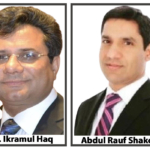
Dr. Ikramul Haq, Advocate Supreme Court, Adjunct Faculty at Lahore University of Management Sciences (LUMS), member Advisory Board and Visiting Senior Fellow of Pakistan Institute of Development Economics (PIDE), holds an LLD in tax laws. He was full-time journalist from 1979 to 1984 with Viewpoint and Dawn. He also served Civil Services of Pakistan from 1984 to 1996.
We welcome your contributions! Submit your blogs, opinion pieces, press releases, news story pitches, and news features to opinion@minutemirror.com.pk and minutemirrormail@gmail.com