Summary
- The request for a PIDE review carries irony. Tax Reforms in Pakistan: Historic and Critical View, published by PIDE in 2020, documents the fate of the Tax Administration Reform Project (TARP).
- He has coauthored with Huzaima Bukhari many books that include, Tax Reforms in Pakistan: Historic & Critical Review, Towards Broad, Flat, Low-rate, and Predictable Taxes (third edition, 2024), Pakistan: Enigma of Taxation, Towards Flat, Low-rate, Broad and Predictable Taxes (revised/enlarged edition of December 2020), Law & Practice of Income Tax, Law , Practice of Sales Tax, Law and Practice of Corporate Law, Law & Practice of Federal Excise, Law & Practice of Sales Tax on Services, Federal Tax Laws of Pakistan, Provincial Tax Laws, Practical Handbook of Income Tax, Tax Laws of Pakistan, Principles of Income Tax with Glossary and Master Tax Guide, Income Tax Digest 1886-2011 (with judicial analysis).
- His notable publications are Rauf’s Compilation of Corporate Laws of Pakistan, Rauf’s Company Law and Practice of Pakistan and Rauf’s Research on Labour Laws and Income Tax and others.
Pakistan has approved another $200 million foreign loan to reform the Federal Board of Revenue (FBR). The institution has already passed through commissions, consultants, reorganisations, automation and donor programmes for decades.
A Press report [$200 million more approved for FBR] provides the details that should end all pretence. With this loan, official estimates place cumulative foreign borrowing for tax-system reform at $4.9 billion. An administration unable to reform itself has converted reform into a recurring, debt-financed function.
The Central Development Working Party (CDWP) has recommended the Rs. 57.1 billion Transforming and Digitalising Revenue Administration (TADRA) project to the Executive Committee of the National Economic Council (ECNEC). Of the $200 million, $81 million is earmarked for consultancy services and another $10 million for project management.
It must be highlighted that 45.5 percent of the borrowed sum will finance advice and administration. Those services run for five years. Taxpayers will repay the loan over 25 years, after a five-year grace period, with annual interest of 1.5 to 2 percent.
The sequence is equally disturbing. CDWP recommended TADRA subject to the Pakistan Institute of Development Economics (PIDE) reviewing its business model. A parallel report on the proceedings records that the Planning Commission wanted an impact assessment of earlier projects, a gap analysis, a needs assessment, a feasibility study, measurable indicators and a sustainability plan.
External experts also questioned the proposed artificial intelligence model and the absence of a comprehensive data-security framework. These inquiries belong before recommendation and commitment. Conditional clearance first and appraisal later turns scrutiny into post-facto paperwork.
The request for a PIDE review carries irony. Tax Reforms in Pakistan: Historic and Critical View, published by PIDE in 2020, documents the fate of the Tax Administration Reform Project (TARP). It cost $149 million, including $102.9 million borrowed from the World Bank. During its life, the tax-to-gross domestic product (GDP) ratio fell from 10.6 percent in 2005 to 8.2 percent in 2012.
The World Bank’s own completion assessment found that the general sales tax base remained almost unchanged and tax productivity declined. Pakistan is now asking the same institute to rediscover a warning already available in print.
TADRA also arrives before an independent value-for-money assessment of TARP, Pakistan Single Window, Integrated Transit Trade Management System and the Pakistan Raises Revenue Project (PRRP). The last programme began in 2019 with a $400 million World Bank credit. Another $70 million was approved in 2025, taking it to $470 million.
The lender cites new registrations, fewer withholding lines, a common portal, upgraded information technology and analytical tools. These are inputs. They do not establish how many new registrants became active assessed taxpayers, how much sustainable revenue arose after appeal, or whether compliance became cheaper and fairer.
The outcome data remain unforgiving. In fiscal year 2025-26, FBR collected Rs13.010 trillion, equal to 10.3 percent of GDP, unchanged from the preceding year. The original target of Rs14.130 trillion was reduced repeatedly to Rs12.957 trillion.
Crossing the last revised figure was celebrated as reform, although the original shortfall was about Rs1.12 trillion. TADRA now promises a tax-to-GDP ratio of 13.5 percent by 2029. Its public case does not clearly separate federal and provincial contributions or reconcile the different starting ratios used in official presentations.
Collection quality is worse than the headline. As we recently demonstrated in FBR’s 5.2pc direct-tax illusion, net income tax for fiscal year 2024-25 was Rs5.713 trillion. Withholding taxes produced Rs3.372 trillion. So-called voluntary payments yielded Rs2.115 trillion, including Rs1.894 trillion in advance tax. Collection from current and arrear demand was only Rs266.7 billion.
The FBR obtains most income tax automatically through banks, businesses, utilities, import stages and taxpayers’ own advance payments. More storage does not cure an administration that has outsourced its core collection work.
FBR says PRRP created only foundational information and communication technology capacity. Its data centres, designed for conventional transactions, are allegedly inadequate for graphics-processing-unit-intensive machine learning. This is an admission requiring accountability, not a self-proving business case for another loan.
Why did a $470 million programme not secure scalable architecture, interoperability, institutional ownership and a credible upgrade path? Technological obsolescence cannot become a renewable claim on borrowed money.
TADRA proposes expanding storage from 850 terabytes to three petabytes, partly for video-camera data from production lines in five major sectors. Data can assist risk analysis. Volume, however, is not intelligence.
Cameras cannot simplify contradictory statutes, distinguish real income from gross transactions, restore blocked input credits, pay refunds, or resolve federal-provincial fragmentation. Artificial intelligence trained on defective law and selective data will scale the defect. Without explainable models, human review, audit trails, privacy safeguards, cybersecurity and appeal rights, digital administration may simply make coercion faster.
Our Reform the reformers series reached a simple conclusion. Pakistan has never lacked reform projects. It has lacked a settled philosophy of taxation and the political will to apply it. Technology cannot decide who should bear the burden, which incomes deserve relief, how tax expenditures should be withdrawn, or what services citizens receive in return. These are constitutional and democratic choices. Leaving them to FBR, consultants and lenders allows administrative convenience to replace equity, growth and consent.
Before ECNEC considers TADRA, the government should publish a ledger of the $4.7 billion: lender, project, principal, interest, disbursement, consultant, asset, promised output and verified outcome. The Auditor-General, parliamentary committees and an independent multidisciplinary panel should examine it.
FBR cannot grade its own examination. The review must also disclose procurement methods, vendor ownership, conflicts of interest, intellectual-property rights, data residency, maintenance costs and the fate of systems already purchased. No new disbursement should precede that record. If a genuine gap survives this audit, financing should be confined to precisely identified public digital infrastructure.
Payments must follow independently verified milestones. Success cannot be measured by servers bought, cameras installed, consultants hired, notices issued or names added to an inactive filer list. It should be measured by reduction in the tax gap, voluntary payment on assessed net income, sustained audit yield after appeals, refund time, fewer unlawful demands, lower compliance cost, wider burden-sharing and increased taxpayer confidence. These measures would expose whether technology serves reform or merely decorates extraction.
The alternative is already available. Parliament should frame a transparent national tax policy after public debate. The federation and provinces should establish a genuinely federalised National Tax Authority through the Council of Common Interests and place its strategic supervision under the National Economic Council. Laws should be simplified.
Withholding and minimum taxation should cease to substitute for assessment of net income. A taxpayer bill of rights, time-bound refunds, accountable audits and an independent National Tax Tribunal should accompany a broad, low-rate and predictable system. Technology should implement this settlement, not determine it.
The most sordid detail in the proposal is its familiarity. Pakistan will borrow for consultants who will advise it to assess past borrowing, while the institution being examined designs the next examination. After $4.9 billion, the burden of proof has shifted. Taxpayers need not prove that another reform loan may fail.
The sponsors must prove, project by project and dollar by dollar, what earlier money changed in real terms. Until they do, ECNEC should defer TADRA. FBR does not need newer machines to repeat old extraction. Pakistan must first reform the reformers before borrowing another dollar in their name.
_____________________________________________________________
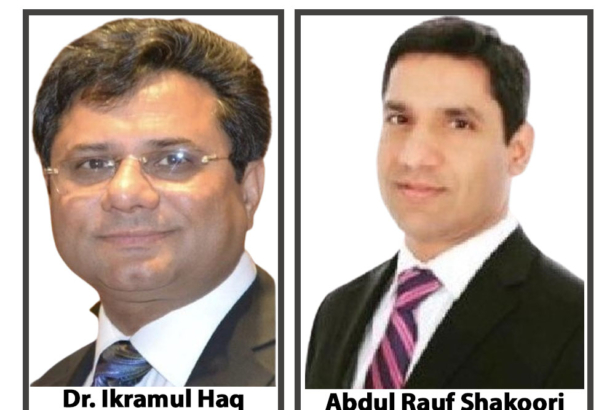
Dr. Ikramul Haq, Advocate Supreme Court, specializes in constitutional, corporate, environment, media, ML/CFT related laws, IT, intellectual property, arbitration and international tax laws. He holds an LLD in tax laws with specialization in transfer pricing. He was full-time journalist from 1979 to 1984 with Viewpoint and Dawn. He served Civil Services of Pakistan from 1984 to 1996.
He established Huzaima & Ikram in 1996 and is presently its chief partner. He studied journalism, English literature and law. He is Chief Editor of Taxation. He is country editor and correspondent of International Bureau of Fiscal Documentation (IBFD) and member of International Fiscal Association (IFA).
He is Visiting Faculty at Lahore University of Management Sciences (LUMS) and member Advisory Board and Visiting Senior Fellow of Pakistan Institute of Development Economics (PIDE).
He has coauthored with Huzaima Bukhari many books that include, Tax Reforms in Pakistan: Historic & Critical Review, Towards Broad, Flat, Low-rate, and Predictable Taxes (third edition, 2024), Pakistan: Enigma of Taxation, Towards Flat, Low-rate, Broad and Predictable Taxes (revised/enlarged edition of December 2020), Law & Practice of Income Tax, Law , Practice of Sales Tax, Law and Practice of Corporate Law, Law & Practice of Federal Excise, Law & Practice of Sales Tax on Services, Federal Tax Laws of Pakistan, Provincial Tax Laws, Practical Handbook of Income Tax, Tax Laws of Pakistan, Principles of Income Tax with Glossary and Master Tax Guide, Income Tax Digest 1886-2011 (with judicial analysis).
He is author of Commentary on Avoidance of Double Taxation Agreements, Pakistan: From Hash to Heroin, its sequel Pakistan: Drug-trap to Debt-trap and Practical Handbook of Income Tax. Two books of poetry are Phull Kikkaran De (Punjabi 2023) and Nai Ufaq (Urdu 1979 with Siraj Munir and Shahid Jamal).
He regularly writes columns/article/papers for many Pakistani newspapers and international journals and has contributed over 3500 articles on a variety of issues of public interest, printed in various journals, magazines and newspapers at home and abroad.
_______________________________________________________________
Abdul Rauf Shakoori, Advocate High Court, is a subject-matter expert on AML-CFT, Compliance, Cyber Crime and Risk Management. He has been providing AML-CFT advisory and training services to financial institutions (banks, DNFBPs, Investment companies, Money Service Businesses, insurance companies and securities), government institutions including law enforcement agencies located in North America (USA & CANADA), Middle East and Pakistan.
His areas of expertise include legal, strategic planning, cross-border transactions including but not limited to joint ventures (JVs), mergers & acquisitions (M&A), takeovers, privatizations, overseas expansions, USA Patriot Act, Banking Secrecy Act, Office of Foreign Assets Control (OFAC).
Over his career he has demonstrated excellent leadership, communication, analytical, and problem-solving skills and have also developed and delivered training courses in the areas of AML/CFT, Compliance, Fraud & Financial Crime Risk Management, Bank Secrecy, Cyber Crimes & Internet Threats against Banks, E–Channels Fraud Prevention, Security and Investigation of Financial Crimes. The courses have been delivered as practical workshops with case study driven scenarios and exams to ensure knowledge transfer.
His notable publications are Rauf’s Compilation of Corporate Laws of Pakistan, Rauf’s Company Law and Practice of Pakistan and Rauf’s Research on Labour Laws and Income Tax and others.
His articles include: Revenue collection: Contemporary targets vs. orthodox approach, It is time to say goodbye to our past, US double standards, Was Due Process Flouted While Convicting Nawaz Sharif?, FATF and unjustly grey listed Pakistan, Corruption is no excuse for Incompetence, Next step for Pakistan, Pakistan’s compliance with FATF mandates, a work in progress, Pakistan’s strategy to address FATF Mandates was Inadequate, Pakistan’s Evolving FATF Compliance, Transparency Curtails Corruption, Pakistan’s Long Road towards FATF Compliance, Pakistan’s Archaic Approach to Addressing FATF Mandates, FATF: Challenges for June deadline, Pakistan: Combating the illicit flow of money, Regulating Crypto: An uphill task for Pakistan. Pakistan’s economy – Chicanery of numbers. Pakistan: Reclaiming its space on FATF whitelist. Sacred Games: Kulbhushan Jadhav Case. National FATF secretariat and Financial Monitoring Unit. The FATF challenge. Pakistan: Crucial FATF hearing. Pakistan: Dissecting FATF Failure, Environmental crimes: An emerging challenge, Countering corrupt practices .
The recent publication, coauthored by these writes with Huzaima Bukhari is:
Pakistan Tackling FATF: Challenges & Solutions, available at:
https://aacp.com.pk/book-detail/pakistan-tackling-fatf-challenges-and-solutions-35
https://www.amazon.com/dp/B08RXH8W46
We welcome your contributions! Submit your blogs, opinion pieces, press releases, news story pitches, and news features to opinion@minutemirror.com.pk and minutemirrormail@gmail.com