Summary
- PMA Punjab President Dr Kamran Saeed Sheikh said the medical community was ready to fight the issue through courts, public protests, banners and awareness campaigns if its concerns were not addressed.
- According to Dr Kamran Saeed Sheikh, the proposed system could create additional technical and financial difficulties for doctors and ultimately increase the cost of healthcare for ordinary patients.
- Dr Kamran Saeed Sheikh also warned that doctors were already leaving Pakistan and that healthcare establishments in some areas were closing rather than opening.
Islamabad: The Pakistan Medical Association Punjab has warned the Federal Board of Revenue that doctors could launch legal action, protests and even withdraw medical services if the proposed Point of Sale system is imposed on private healthcare establishments.
PMA Punjab President Dr Kamran Saeed Sheikh said the medical community was ready to fight the issue through courts, public protests, banners and awareness campaigns if its concerns were not addressed. He said the doctors could also consider token strikes or withdrawal of services.
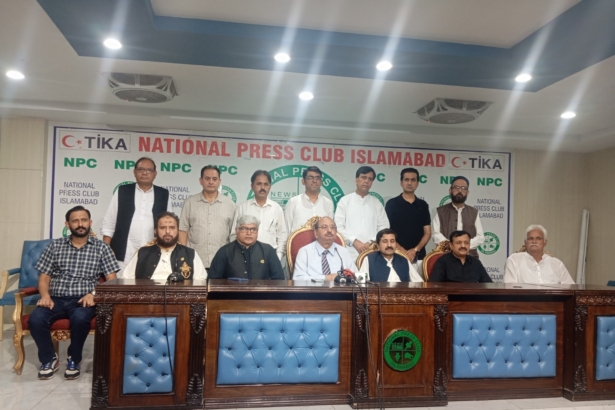
The warning came during a press conference at the National Press Club, where the PMA Punjab provincial council met in Islamabad. Doctors from different parts of Punjab discussed the FBR initiative concerning POS systems and the requirements linked to Section 175C.
Dr Kamran Saeed Sheikh said doctors were not refusing to pay taxes. He stressed that the medical profession should not be treated like an ordinary business because healthcare is an essential public service. According to Dr Kamran Saeed Sheikh, the proposed system could create additional technical and financial difficulties for doctors and ultimately increase the cost of healthcare for ordinary patients.
He also raised concerns about patient privacy. He said information about a patient’s illness, visits and expenses must remain confidential and should not be exposed through systems that could allow unnecessary access or monitoring.
The PMA Punjab president said private healthcare providers were already paying taxes on several areas, including electricity, equipment, water, gas and buildings. He argued that adding more technical requirements could take doctors away from their main responsibility of treating patients.
Dr Kamran Saeed Sheikh also warned that doctors were already leaving Pakistan and that healthcare establishments in some areas were closing rather than opening. He said further administrative pressure could make the situation worse. The PMA leadership said it had already held two meetings with the FBR and had also sent written communications explaining its position. According to Dr Kamran Saeed Sheikh, the discussions had not produced the result the doctors wanted.
He said the medical community was prepared to keep all legal and democratic options open. “We will fight legal battles, go to court and protest,” Dr Kamran Saeed Sheikh said during the briefing. He also warned that doctors could come onto the streets and consider withdrawal of services if the issue was not resolved.
Dr Maqsood Zahid, President Elect of PMA Punjab, also questioned whether POS technology was suitable for medical services. He argued that healthcare was different from selling ordinary products because doctors provide services that can be required at any time, including emergencies during the night.
He said doctors could not stop treating an emergency patient simply because a machine was not working or an internet connection had failed. Dr Maqsood Zahid said many patients also receive treatment without paying the full amount. Some patients receive services at half rates, while others are treated free of charge. He questioned how such cases would be properly reflected through a system designed mainly around payment records.
He gave the example of a hospital in Mian Channu, Khanewal, where doctors reportedly deal with many patients without charging them. He said that out of 100 patients, around 60 could be treated without receiving even a single penny, making a simple payment based system difficult to apply to real medical practice.
The doctors also argued that medical treatment cannot be measured in the same way as the sale of a retail product because the cost and complexity of treatment can change from patient to patient. Dr Maqsood Zahid said the medical community was willing to discuss a suitable tax formula with the government if a system could be designed according to the realities of medical practice.
The PMA representatives said doctors across the country were being represented in discussions on the issue. They said representatives from Sindh, Khyber Pakhtunkhwa, Balochistan, Karachi, Islamabad and Punjab had participated in consultations.
The PMA also raised the problem of smaller clinics in remote areas. Doctors argued that poor internet services, electricity problems, shortage of technical workers and maintenance costs could create serious difficulties for clinics outside major cities.
Dr Muzaffar Niazi said doctors would not accept a situation in which the medical profession was treated like a normal retail business. He said doctors were prepared to pursue legal action, demonstrations, public awareness campaigns and other forms of protest.
The PMA leadership also stressed that it was not against taxation itself. Dr Maqsood Zahid said doctors were law abiding citizens and accepted that taxes were necessary to run the country.
The main demand was for the government to develop a system that recognised the special nature of healthcare and did not place unnecessary financial and administrative pressure on doctors or patients.
The PMA Punjab had already formally raised the issue with the FBR. In a letter dated January 20, 2025, Dr Kamran Saeed Sheikh, President PMA Punjab, asked the FBR Chairman to defer the installation of POS systems in private healthcare establishments.
The letter warned that additional administrative, technical and financial requirements could increase the cost of healthcare and reduce the time available for doctors to provide medical treatment. It also pointed to problems such as unreliable electricity and internet services, shortage of technical staff and difficulties faced by small and medium sized clinics.
PMA Punjab also warned in the letter that additional pressure on private healthcare could discourage young doctors and female doctors from starting private practices in remote and less developed areas and could contribute to further brain drain from Pakistan.
The letter was also copied to the President of Pakistan, Prime Minister, Governor Punjab, Federal Minister for Finance and Revenue, Chief Minister Punjab, Speaker Punjab Assembly, provincial health ministers and the Chairman Punjab Health Care Commission.
The PMA leadership has now made clear that the dispute is no longer limited to a technical discussion over a machine. Doctors say the issue involves taxation, patient privacy, the cost of healthcare and the ability of small clinics to continue providing services.
If the disagreement remains unresolved, the doctors have indicated that the next phase could move from meetings and letters to court action, demonstrations and a wider protest campaign.
We welcome your contributions! Submit your blogs, opinion pieces, press releases, news story pitches, and news features to opinion@minutemirror.com.pk and minutemirrormail@gmail.com